Choosing custom sandwich paper bags looks straightforward on the surface — pick a size, add a logo, done. But the wrong bag can turn a premium sandwich into a soggy, greasy, unappetizing product before it even reaches the customer.
A bag built for a dry cold deli sandwich will not perform the same for a grilled panini, a loaded baguette, or a sauce-heavy signature sandwich. Grease bleed, torn seams, and poor shelf presentation are all avoidable mistakes — if you source the right way.
For cafés, bakeries, sandwich shops, and foodservice packaging buyers, the right approach starts with your finished sandwich and real serving conditions, not generic size charts. This guide breaks down how to source custom sandwich paper bags with confidence, covering materials, sizing, bag structures, grease resistance, printing options, sampling, and smart bulk purchasing.
Key Takeaways
- Select your bag based on the actual sandwich size, thickness, filling profile, and serving temperature.
- Plain kraft paper works for relatively dry, low-moisture items; grease-resistant paper is required for oily fillings, butter, or creamy sauces.
- Flat bags and gusseted bags deliver different internal capacity and loading flexibility for different sandwich styles.
- A window boosts product visibility on shelves, but it impacts material construction, barrier performance, and sustainability.
- Always confirm bag dimensions using your fully assembled sandwich, not just bread measurements.
- Plan custom printing alongside your paper material selection and production method for optimal results.
- Test physical samples with your actual sandwich recipe before approving bulk production.
- When comparing suppliers, evaluate full specifications and performance, not just unit price.
What Are Sandwich Paper Bags?
Sandwich paper bags are food packaging bags designed to hold sandwiches, paninis, filled rolls, wraps and similar ready-to-eat products. Unlike general-purpose paper bags, sandwich bags are normally designed around the shape, thickness and handling requirements of the food.
For example, an open-top bag can allow staff to load sandwiches quickly during busy service. A gusseted design can provide additional space for thicker products, while grease-resistant paper can reduce oil penetration when the sandwich contains butter, cheese, sauces or other oily ingredients.
The key point is that “paper sandwich bag” describes the application, not one universal construction. Different sandwiches may require different paper, dimensions and bag structures.

How Do You Choose the Right Sandwich Bag Structure?
The bag structure should make packing easy while providing enough space for the finished sandwich.
Flat Sandwich Bags
Flat bags are simple and economical. They work well for relatively thin sandwiches, wraps, bakery items and products that do not require much expansion. The limitation is internal space. A thick sandwich can be difficult to insert into a flat bag without compressing the product.
Gusseted Sandwich Bags
Gusseted bags have expandable side or bottom sections that provide additional internal volume. They are useful for thicker sandwiches, filled rolls and products with irregular or bulky fillings. For high-volume foodservice operations, the opening and loading motion are particularly important. Staff should be able to place the sandwich into the bag quickly without forcing it through a narrow opening.
Open-Top Bags
Many sandwich bags use an open top because the food is intended for quick service. This keeps the packing process simple and allows customers to access the sandwich easily. For immediate takeaway, a complicated closure may not provide much additional value.
Fold-Over or Sealed Options
A fold-over top or sticker closure can provide additional protection when the sandwich needs to remain closed during display or transportation. The right closure depends on the service workflow rather than simply the appearance of the bag.

What Paper Is Best for Sandwich Bags?
There is no single paper that is best for every sandwich. The material should be selected according to the food’s weight, moisture, oil content, temperature and required presentation.
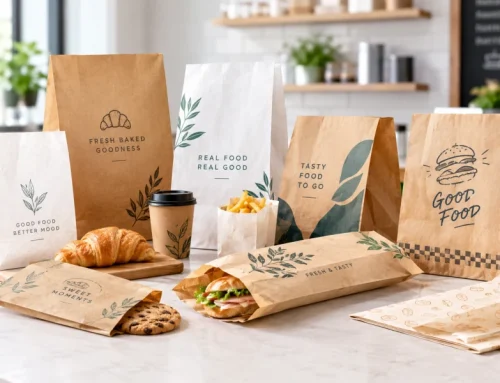
Kraft Paper
Kraft paper is widely used for food bags because it provides a natural appearance and good basic strength.
Brown kraft can be a suitable choice for relatively dry sandwiches and brands that prefer a natural packaging appearance.
White kraft provides a cleaner printing background and can make brand colors appear more consistent.
Current wholesale sandwich-bag guidance also highlights the difference between brown and white kraft: brown paper can change the appearance of printed colors, while white paper generally provides a cleaner printing surface.
Greaseproof Paper
Greaseproof paper is useful when the sandwich contains oil, butter, cheese, sauces or other ingredients that can transfer grease to the packaging. The important point is that grease resistance should be selected according to the actual food rather than simply choosing the highest possible specification. A dry cold sandwich and a hot grilled sandwich do not necessarily need the same level of grease resistance.
Coated or Lined Paper
Some sandwich bags use an additional barrier layer to improve resistance to grease or moisture. This can provide useful performance for particularly oily or wet foods, but the construction can affect recycling or composting considerations.
Therefore, buyers should ask the supplier exactly what the inner barrier is rather than relying on general terms such as “eco-friendly” or “biodegradable.”

How Much Grease Resistance Does a Sandwich Bag Need?
Grease resistance is one of the most critical performance specifications for sandwich paper bags. A bag that looks thick and sturdy can quickly fail when oil, butter, or sauce seeps through the paper, leaving unsightly stains, soggy packaging, and a poor impression on customers.
Start by evaluating the greasiest, most demanding ingredient in your sandwich recipe. A simple vegetable-only sandwich on dry bread has relatively low grease exposure. A toasted sandwich loaded with butter, melted cheese, and creamy sauces creates a far more challenging barrier requirement.
Many buyers default to asking, “Which paper is the strongest?” — but this rarely leads to the best value. The smarter question to ask your supplier is: “What level of oil and moisture resistance does this specific sandwich actually require?”
This targeted approach helps you land on an appropriate material specification, and avoids paying for premium barrier performance you don’t need.
Industry grading methods such as the Kit Test are widely used to compare grease resistance across paper stocks. That said, lab ratings don’t always match real-world use. Always finalize specifications with your packaging manufacturer and validate performance using your actual sandwich product before bulk ordering.
How Do You Choose the Right Sandwich Bag Size?
When sizing custom sandwich paper bags, always base your dimensions on the fully assembled, finished sandwich — not just the bread alone. Measure the sandwich at its widest and thickest points once all fillings are added, and share the complete Length × Width × Thickness specifications with your supplier. You can then work together to define the optimal bag width, height, and gusset for your product.
An undersized bag causes cascading operational and quality issues: it slows down packing as staff struggle to load the sandwich, compresses fillings and ruins in-store presentation, and risks tearing the paper during handling. Customers end up with a damaged, messy product that hurts perceived brand quality.
Oversizing is just as poor a choice. Excess material creates a sloppy, unprofessional appearance on retail shelves, drives up unnecessary material waste and unit cost, and allows the sandwich to shift freely inside the bag, which can damage delicate fillings during transport.
This is why physical sampling is particularly valuable for sandwich bag orders. Always test prototype bags using the largest, most heavily filled sandwich in your product range to validate fit, packing efficiency, and final presentation before locking in specifications.
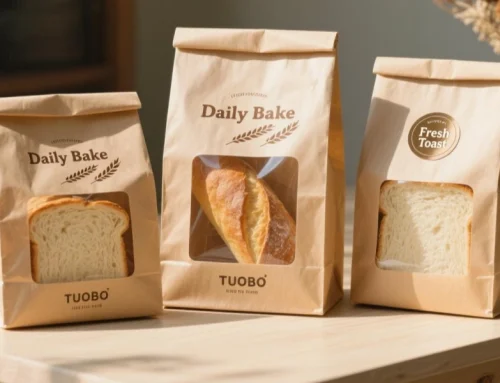
Should Your Sandwich Bag Include a Clear Window?
Displaying fresh ingredients like colorful vegetables, sliced meats, and cheese can drive impulse sales in grab-and-go cabinets.
Advantages of Window Bags:
Visual Appeal: Customers can inspect product freshness before buying.
Operational Efficiency: Allows retail staff and consumers to identify sandwich contents instantly without opening sealed packages.
Technical & Sustainability Considerations:
Material Recycling: Combining paper with a plastic window film (such as PET or PP) creates a multi-material package that must be separated for conventional paper recycling unless a certified PLA (polylactic acid) or cellulosic biodegradable film is specified.
Structural Rigidity: Die-cut windows reduce overall paper stiffness; window size and positioning must leave adequate paper margins to maintain bag stability.
How Should You Choose Between Kraft and White Paper?
This is partly a performance decision and partly a branding decision.
| Option | Main Advantage | Considerations |
|---|---|---|
| Brown kraft | Natural appearance and common foodservice look | Printed colors can appear different on the brown background |
| White kraft | Cleaner background for branding | May provide a different visual positioning from natural kraft |
| Greaseproof paper | Better suited to oily food | Exact performance depends on construction |
| Coated/lined paper | Stronger grease or moisture barrier | Disposal and recycling considerations need checking |
The correct choice depends on the food and the brand.
If your sandwich is relatively dry and your brand uses a natural kraft aesthetic, a simple kraft construction may be sufficient.
If strong branding and accurate color reproduction are important, white paper may provide a better printing surface.
If grease is the primary problem, performance should take priority over appearance.
What GSM Should You Use for Sandwich Paper Bags?
GSM (grams per square meter) measures the weight of paper per square meter, and is a useful baseline metric for comparing paper specifications. However, it should never be treated as a one-size-fits-all measure of bag strength — heavier paper is not automatically the better choice.
A bag’s real-world performance depends on far more than grammage. Paper type, bag structure, gusset design, overall dimensions, printing coverage, and your sandwich’s grease, moisture and serving conditions all shape how well it holds up in use. A heavier stock with poor barrier properties will still fail for sauce-heavy hot sandwiches, while a lighter, properly coated paper can deliver better results at a lower cost.
Typical sandwich bag paper stocks fall in the 30–60 GSM range, with heavier grades reserved for more demanding applications like thick, loaded sandwiches or delivery use cases. Keep in mind these are general supplier reference ranges, not a universal industry standard. The ideal GSM always ties back to your specific product and operating needs.
For custom orders, the most reliable approach is to avoid locking in a GSM number upfront. Instead, share your full context with the manufacturer: your finished sandwich’s weight, thickness and filling profile, plus how the bags will be used. They can then recommend the right paper specification matched to your actual performance requirements and budget.
Why Can Custom Sandwich Paper Bags Have a Higher MOQ?
If you’ve ever wondered why custom printed sandwich paper bags carry a higher minimum order quantity than plain stock bags, it all comes down to fixed production setup costs.
Custom orders require dedicated upfront preparation before production can begin. Depending on the manufacturing process, setup typically includes paper stock preparation, printing plate production, machine calibration, color matching, bag-forming tooling adjustments, initial production waste, and pre-run quality inspection.
These are fixed costs that apply fully regardless of how small the order is. When spread across fewer units, they push the unit cost up significantly. This is the core reason manufacturers set separate, higher MOQs for custom printed bags than for standard plain stock.
How Much Do Custom Sandwich Paper Bags Cost?
Cost depends on the complete specification rather than the word “sandwich bag.”
Important variables include paper type, GSM, bag dimensions, structure, grease resistance, window, printing, quantity, packing and shipping.
For supplier comparison, the most important rule is simple: Compare equivalent specifications, not just unit prices.
A lower quotation may use a different paper, smaller dimensions, simpler printing or a different packing method.
Common Sandwich Bag Sourcing Mistakes
- Ordering Based on Bread Size Alone: Ignoring filled thickness causes seam splits and compressed ingredients.
- Using Plain Kraft for Oily Foods: Standard paper will show grease stains within minutes if butter or melted cheese is present.
- Specifying Oversized Bags: Excessive space allows food to slide around, creating a messy presentation.
- Neglecting PFAS Compliance: Purchasing non-compliant greaseproof paper risks customs clearance rejection in European and North American markets.
- Overlooking Kitchen Loading Speed: Selecting complex closures for high-volume counter service creates kitchen bottlenecks.
- Ignoring Color Shift on Brown Kraft: Expecting bright pastel colors to look identical on brown paper versus white paper.
- Skipping Hot-Food Hold Testing: Testing bags only with cold products fails to reveal how heat and steam affect paper strength.
Frequently Asked Questions
What paper grammage (GSM) is recommended for sandwich bags?
Standard sandwich bags typically use 35 GSM to 50 GSM paper. For heavy, sauce-laden paninis or large baguettes, 50 GSM to 70 GSM greaseproof paper provides superior structural integrity and tear resistance.
Are all paper sandwich bags greaseproof?
No. Standard unbleached or bleached kraft paper is porous and absorbs oils quickly. You must specifically request greaseproof paper with a verified Kit Test rating (e.g., Kit 7–9) for oily or hot foods.
How do I ensure my sandwich bags are environmentally compliant?
Specify PFAS-Free greaseproof paper certified under FDA food contact regulations or EU 1935/2004. If selecting a window bag, opt for home-compostable PLA films or ensure the paper and film can be separated easily for recycling.
What is the typical MOQ for custom printed sandwich bags?
Minimum Order Quantities (MOQs) generally range from 10,000 to 50,000 units for custom flexographic factory runs. Digital printing options may allow lower quantities for trial orders.
How to Order Custom Sandwich Paper Bags
The best way to order custom sandwich paper bags is to start with the food product and service conditions, rather than asking for a generic bag.
First, provide the finished sandwich dimensions, thickness and weight. Then explain whether the product is hot or cold, dry or greasy, and whether it will be consumed immediately or displayed for later sale.
The supplier can then recommend the appropriate bag structure, paper, grease resistance and size.
After the specification is confirmed, request a physical sample and test it with the actual sandwich. Once the fit and performance are approved, finalize the artwork and move to bulk production.
For businesses sourcing custom food packaging, RBD Packaging offers custom paper bags with different structures, materials, sizes and printing options for food and bakery applications.
Request a custom sandwich paper bag quote based on your sandwich size, material requirements, printing and order quantity.