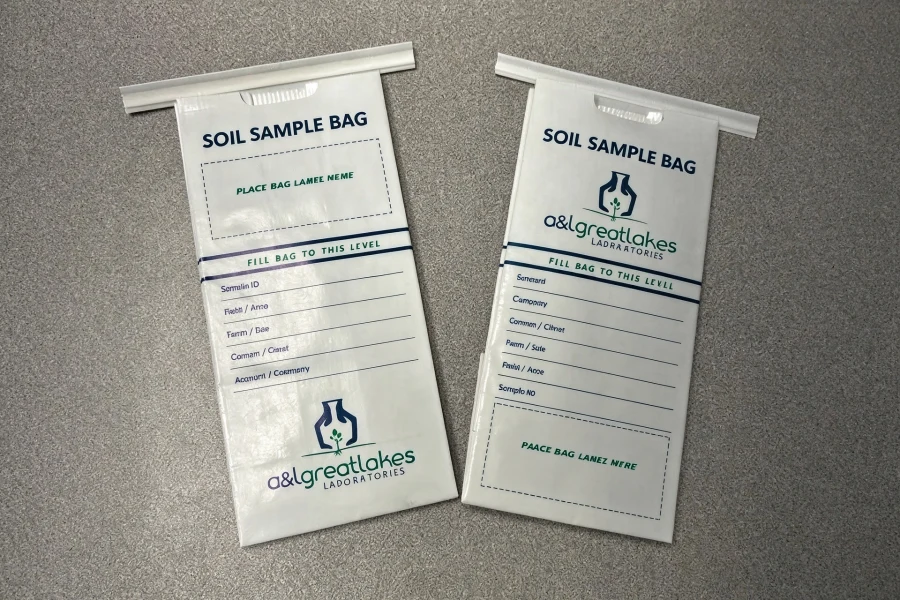
Selecting the right soil sample bag depends on your testing protocol, sample moisture levels, and laboratory handling requirements—not just bag durability. Using the wrong material can compromise sample integrity or slow down lab processing.
This guide compares paper, plastic, and poly-lined soil sample bags, outlining when to use each and what specifications to confirm when sourcing custom-printed bags in bulk.
What Type of Bag Is Best for Soil Samples?
There is no single best soil sample bag for every testing application. The correct choice depends on whether the sample needs to breathe, retain moisture, remain contained during transportation, or meet a specific laboratory preparation procedure.
Here is a quick comparison:
| Bag Type | Main Characteristics | Key Consideration |
|---|---|---|
| Paper sample bags | Breathable outer material and easy labeling | May lose strength when exposed to moisture |
| Plastic sample bags | Moisture-resistant and suitable for containment | Can restrict airflow and retain moisture |
| Plastic-lined paper bags | Paper exterior with an inner plastic lining | Combines printed identification with an additional inner layer, but may restrict moisture release |
For routine soil testing, many laboratories use dedicated soil sample bags or plastic-lined paper bags. However, samples intended for nitrogen analysis, biological testing, or other moisture-sensitive procedures may require different handling.
The most important rule: Follow the receiving laboratory’s sample packaging instructions before selecting a bag.
Paper vs. Plastic vs. Plastic-Lined Paper Soil Sample Bags
The three packaging structures serve different purposes. Understanding their differences helps laboratories choose suitable materials and avoid unnecessary packaging problems.
Paper Soil Sample Bags
Paper soil sample bags are commonly used in agricultural and laboratory sample collection.
Their main advantages are breathability and a printable exterior. Laboratories can add sample identification fields, customer details, field numbers, and collection dates directly to the bag.
Paper packaging can be useful when the sample preparation process requires airflow or moisture release. However, ordinary paper is vulnerable to moisture and may lose strength when exposed to wet soil.
Before choosing a paper bag, confirm:
- Whether the sample needs to remain moist or dry.
- Whether the bag will be exposed to damp conditions.
- Whether the laboratory accepts plain paper packaging.
- Whether the paper grade provides sufficient strength for the sample weight.
Do not assume that every paper bag is suitable for soil samples. Some laboratories specifically require a lined bag or a dedicated sample container.
Plastic Soil Sample Bags
Plastic sample bags are widely used for collecting and transporting soil samples. Compared with ordinary paper bags, plastic bags provide better resistance to moisture passing through the packaging. They are also available in different thicknesses and closure designs.
However, plastic bags can restrict airflow and retain moisture. This may be unsuitable when a soil sample needs to be air-dried or when moisture-sensitive testing requires specific storage conditions.
For example, some soil laboratories request plastic zipper bags for particular sampling procedures, while others prohibit them for certain analyses.
Plastic bags should therefore be selected according to the test requirements rather than treated as a universal solution.
Plastic-Lined Paper Soil Sample Bags
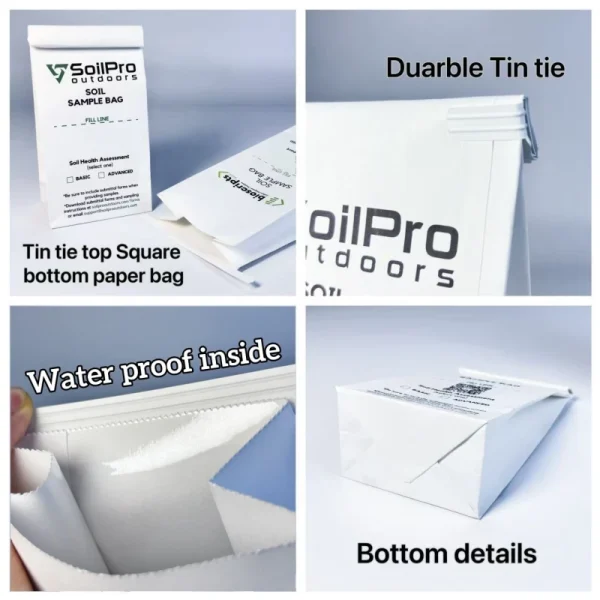
Plastic-lined paper sample bags combine a paper exterior with an inner plastic lining.
The two layers serve different functions:
- Paper exterior: Provides a surface for printing laboratory information, writing sample details, and displaying branding.
- Inner plastic lining: Adds a separate layer inside the bag. Its moisture resistance and other properties depend on the lining material and construction.
This structure is used in commercial agricultural and laboratory sample packaging. For example, commercial heavy-paper sample bags with resin linings are available through laboratory supply channels.
Plastic-lined paper bags can be useful when laboratories need a printable paper exterior together with a customized inner structure. However, the lining also changes airflow and moisture release. A plastic-lined bag should not automatically be considered suitable for every soil test.
Before ordering, confirm whether the intended testing procedure permits lined packaging and whether the selected structure meets the laboratory’s sample handling requirements.
How Does the Bag Type Affect Soil Sample Handling?
One reason bag selection matters is that soil remains biologically active after collection.
Moisture and temperature can influence microbial activity inside a soil sample. Depending on the test, these changes may affect the measured nutrient levels before the sample reaches the laboratory.
Moisture Retention and Airflow
Different bag structures allow moisture to move through the packaging at different rates.
- Breathable bags allow more air exchange and moisture release.
- Plastic bags restrict moisture transfer through the packaging.
- Plastic-lined paper bags combine a paper exterior with an inner layer that may limit moisture release.
The actual performance depends on the material, lining, closure, sample moisture, and storage conditions.
What Does Research Say About Soil Sample Bag Types?
A March 2026 study published by Oklahoma State University Extension, Importance of Soil Sample Handling for Accurate Soil Nitrogen Testing, evaluated three sample bag types:
- Ziploc bags.
- Commercial resin-lined paper bags.
- Permeable soil sample bags.
The researchers examined how bag type, storage environment, temperature, and time affected soil nitrogen measurements. Under the conditions of this study, the Ziploc and commercial resin-lined paper bags retained more moisture than the permeable bags. The permeable bags also showed more stable nitrate nitrogen measurements during the trial.
The study highlights an important point: The bag structure and storage conditions can influence soil sample handling, particularly for nitrogen testing.
However, these findings should not be generalized to every soil type, bag construction, or laboratory procedure. The study used a specific soil sample and experimental setup. For laboratories handling nitrogen-sensitive samples, it is especially important to follow the required preservation, temperature, and delivery procedures.
How to Choose a Soil Sample Bag for Different Testing Applications
Different soil testing procedures may have different packaging requirements. A bag suitable for routine nutrient analysis may not be appropriate for every biological or moisture-sensitive test.
| Testing Application | Packaging Considerations |
|---|---|
| Routine soil nutrient testing | Use the bag or container approved by the receiving laboratory |
| Soil nitrogen testing | Pay close attention to moisture, temperature, and sample delivery time |
| Soil health testing | Confirm whether the procedure requires a specific moisture condition or breathable packaging |
| Agricultural research | Follow project-specific sample preparation, labeling, and storage requirements |
| Environmental soil analysis | Confirm compatibility with the target analysis and laboratory handling procedure |
For example, Oregon State University Extension recommends following laboratory instructions and notes that soil samples should not be placed in ordinary paper bags unless the laboratory provides a plastic-lined version.
Other laboratories have different requirements. Some accept plastic bags for routine soil submissions, while others provide dedicated sample bags. The safest approach is to confirm the required packaging before collecting samples, especially when multiple testing methods are involved.
What Information Should Be Printed on a Soil Sample Bag?
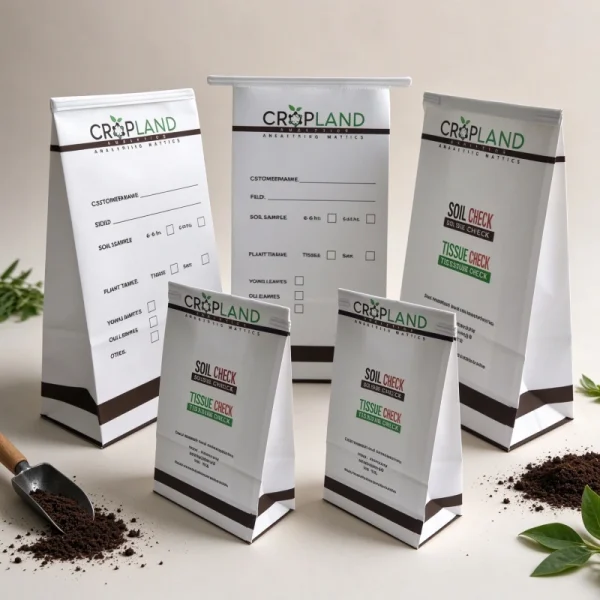
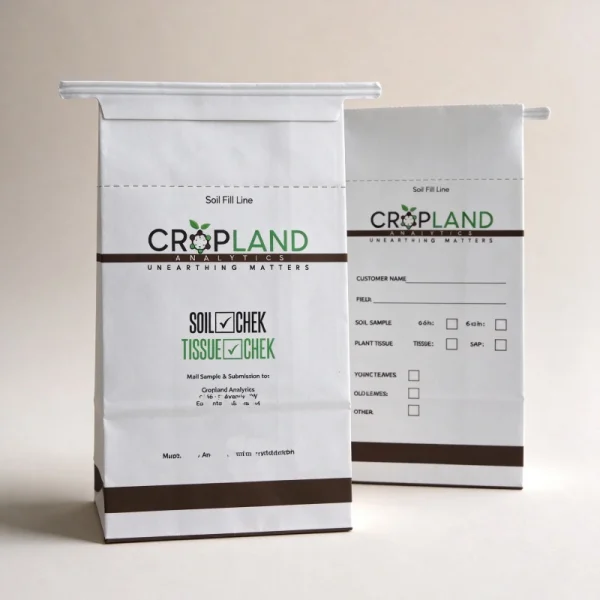
For laboratories processing large numbers of samples, clear identification is just as important as the bag material. A custom printed soil sample bag can include preprinted fields that help customers and laboratory staff identify each sample consistently.
Common information fields include:
| Printed Field | Purpose |
|---|---|
| Customer Name | Identifies the submitting customer or organization |
| Sample ID | Provides a unique sample reference |
| Field Number | Identifies the field or collection area |
| Sample Depth | Records the soil collection depth |
| Collection Date | Records when the sample was collected |
| Sample Type | Identifies the category of sample |
| Additional Notes | Provides space for special instructions |
Not every laboratory needs all these fields. The layout should reflect the actual submission process.
Why Should Sample Bag Labels Match the Submission Form?
The sample ID printed or written on the bag should match the ID recorded on the laboratory submission form. For laboratories handling hundreds or thousands of samples, consistent identification helps connect incoming samples with customer records and testing requests.
Custom printed bags can also include:
- Laboratory logos and contact information.
- Preprinted checkboxes for sample categories.
- Barcode or QR code areas.
- Designated handwriting spaces.
- Multiple identification fields.
These details can be customized according to the laboratory’s workflow.
What Should Laboratories Specify When Ordering Custom Soil Sample Bags?
When sourcing custom soil sample bags, laboratories should prepare the main specifications before requesting quotations.
A clear specification makes it easier for manufacturers to recommend a suitable construction and provide an accurate quotation.
1. Bag Dimensions and Sample Capacity
Start with the typical soil quantity placed in each bag. The bag should provide enough room for filling and handling without being unnecessarily large. If different testing programs require different sample quantities, laboratories may need multiple sizes.
2. Outer Paper and Inner Lining
Specify the required paper grade and inner lining structure. Depending on the application, customization may include:
- Different paper weights and finishes.
- PE or other suitable inner lining materials.
- Different lining thicknesses.
- Customized bag dimensions and construction.
The material should be selected according to the sample handling requirements, not appearance alone.
3. Printing Layout and Identification Fields
Prepare the information that needs to appear on each bag. For example, a laboratory may require a large sample ID area, several checkboxes, and space for customer and field information.
Providing a reference image or existing bag sample can help the manufacturer understand the required layout.
4. Bag Construction and Closure
The opening, bottom construction, and closure method should match the filling and handling process.
If samples are filled manually, the bag should be convenient to open and fill. If the laboratory uses a standardized closure procedure, the construction should accommodate it.
5. Repeat Order Consistency
Laboratories often use the same sample bags over extended periods. Maintaining consistent material specifications, dimensions, printing layouts, and construction helps avoid changes to established sample collection procedures.
Before mass production, review the physical sample and printed artwork to confirm that the specifications match the intended application.
How to Choose a Custom Soil Sample Bag Manufacturer
When purchasing soil sample bags in bulk, laboratories should evaluate more than the unit price.
A suitable manufacturer should be able to understand the intended application and translate the requirements into a clear product specification.
Before placing an order, consider these questions:
- Can the manufacturer customize both the outer paper and inner lining?
- Can the bag dimensions and construction be adjusted?
- Can the printing include sample identification fields, logos, and barcodes?
- Can the manufacturer provide physical samples for evaluation?
- Can the approved material and printing specifications be maintained for repeat orders?
A physical sample is particularly useful for checking bag dimensions, paper strength, lining construction, opening design, and print readability.
For laboratories with recurring purchasing requirements, agreeing on a confirmed specification before bulk production helps make future reorders more consistent.
Frequently Asked Questions
Are paper bags suitable for soil samples?
Yes, paper bags are used for certain soil sampling applications. However, plain paper may not be suitable for wet samples or procedures requiring moisture containment. Follow the receiving laboratory’s instructions.
What is a plastic-lined paper soil sample bag?
It is a sample bag with a paper exterior and an inner plastic lining. The paper surface can be printed with sample identification information, while the inner lining provides an additional material layer. Its suitability depends on the lining structure and testing requirements.
Are plastic-lined paper bags waterproof?
Not necessarily. Water resistance depends on the lining material, thickness, seams, and overall bag construction. A lined paper bag should not be described as fully waterproof unless its performance has been verified through appropriate testing.
Can soil sample bags be custom printed?
Yes. Custom soil sample bags can include laboratory logos, customer information fields, sample IDs, checkboxes, barcodes, and other identification details. Bag size, paper grade, lining material, and construction can also be customized.
What should laboratories consider before ordering soil sample bags in bulk?
The main considerations are sample quantity, bag dimensions, paper grade, inner lining, printing layout, closure design, and repeat-order consistency. Laboratories should also confirm that the selected structure meets their sample handling procedures.
Custom Printed Lined Paper Soil Sample Bags for Laboratories
For soil testing laboratories and agricultural testing companies, a sample bag is part of the sample collection and identification process.
RBD Packaging provides custom paper packaging solutions with customizable outer paper, inner lining, bag dimensions, printing, and construction.
Depending on your requirements, we can develop sample bags with:
- Customized paper and inner lining materials.
- Printed laboratory logos and identification fields.
- Custom dimensions and bag construction.
- Sample ID, checkbox, barcode, and QR code areas.
- OEM and ODM bulk production.
Whether you need custom printed soil sample bags for agricultural testing or lined paper bags for laboratory sample collection, RBD can work with your specifications to develop a suitable packaging solution.
Contact RBD Packaging to discuss your sample bag requirements and request a custom quotation.