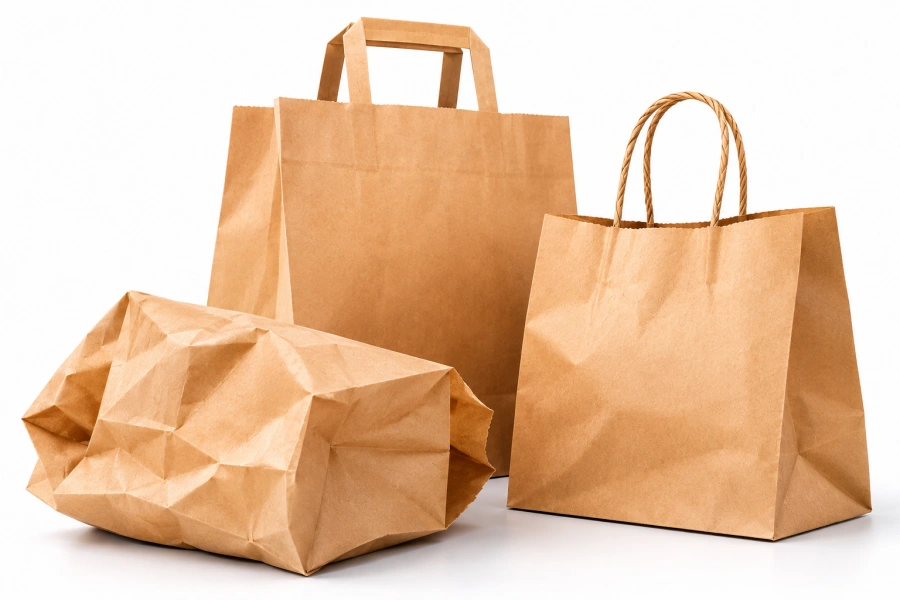
Takeaway paper bags can collapse, split at the bottom, or tear around the handles during food delivery. These problems are not always caused by low paper GSM; bag construction, handle attachment, moisture exposure, and incorrect sizing can also affect durability.
This guide explains five common causes of takeaway paper bag failure and how to prevent them before placing a bulk order.
Takeaway Bag Failure Quick Reference
| Visible Problem | Most Likely Cause | What to Check First |
|---|---|---|
| Side panels bulge or tear | Bag dimensions are too tight for the containers | Check bag width and gusset depth against actual food boxes |
| Handles pull out from the top | Weak handle attachment or insufficient reinforcement patch | Inspect handle base (twisted vs. flat) and bonding area |
| Bottom splits or opens | Poor adhesive bonding or incorrect bottom fold | Check bottom glue line and test with a loaded bag |
| Paper becomes soft or tears | Steam, condensation, or grease penetrating the paper | Verify if wet-strength or grease-resistant paper is needed |
| Bag collapses inward | Paper GSM is too low for the concentrated weight | Check GSM and the total packed weight of the order |
Paper GSM Is Not Suitable for the Intended Load
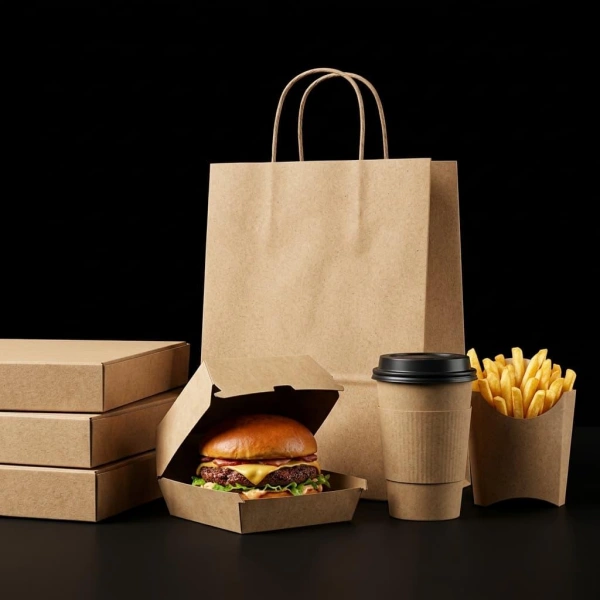
GSM refers to the grammage of paper, measured in grams per square meter. It is one factor affecting paper weight and stiffness, but it does not determine the finished bag’s load capacity on its own.
A takeaway paper bag made with heavier paper may still fail if its bottom construction is weak or its handles are poorly attached. Likewise, a lighter paper may perform adequately when the bag is appropriately sized and used for a lighter order.
When evaluating paper GSM, consider:
- Actual packed weight: Include food containers, drinks, cutlery, and other items rather than estimating from the food alone.
- Bag dimensions: Larger bags may need different material and structural support from smaller bags.
- Paper quality: Paper grade, fiber characteristics, and production consistency can influence performance.
- Handling conditions: Bags carried by hand may experience different stresses from bags stacked or moved during delivery.
The best approach is to evaluate the paper together with the complete bag construction. Do not select a takeaway paper bag based on GSM alone.
Weak Handle Attachment Causes the Bag to Tear
Handle failure is a common problem when takeaway bags carry heavy or unevenly distributed orders.
Even when the paper itself is strong enough, the handle attachment area can become a weak point. Repeated lifting, sudden pulling, and uneven loading can concentrate stress around the attachment points.
Common handle-related problems include:
- Handles attached over an insufficient bonding area.
- Inadequate reinforcement around the handle attachment.
- Poor adhesive bonding or inconsistent attachment.
- Handle materials that are unsuitable for the intended load and handling conditions.
For restaurant paper bags, handle selection should consider both the type of order and how customers carry the bag.
Twisted paper handles and flat paper handles are common options, but neither should be considered automatically stronger in every application. Their performance depends on the handle construction, attachment method, paper quality, and finished bag design.
Before bulk ordering, test the handles using representative food orders. Check whether the attachment areas stretch, loosen, or tear during repeated lifting.
Poor Bottom Construction Causes the Bag to Split
The bottom of a takeaway paper bag supports much of the load. If the base is poorly constructed, the bag may split when customers lift it or when containers shift during transport.
Several factors can contribute to bottom failure:
- Insufficient bonding at the bottom folds.
- Incorrect folding or poor alignment during production.
- A bottom structure that does not suit the bag’s dimensions and intended load.
- Food containers concentrated in one area rather than distributed evenly.
A bag may appear strong when empty but fail once filled with multiple food containers.
For this reason, buyers should examine the finished bottom structure rather than judging the bag only by its paper thickness. Check that the base is properly formed, the folds are consistent, and the bonded areas remain secure under realistic loading conditions.
For larger takeaway orders, the base should also provide enough space for the containers to sit flat without putting excessive pressure on the side panels.

Steam, Moisture and Grease Weaken Paper Bags
Hot food creates a different challenge for paper packaging. Steam released from freshly cooked food can accumulate inside a closed or tightly packed bag. Moisture may soften the paper, reduce its stiffness, and make it more vulnerable to tearing.
Grease can also affect the packaging, especially when oily food comes into direct contact with the paper.
It is important to distinguish between three different requirements:
- Grease resistance: Helps reduce the penetration of oil and grease.
- Moisture resistance: Helps limit the effect of moisture on the paper.
- Wet strength: Refers to the paper’s ability to retain strength when wet.
These properties are not interchangeable. A grease-resistant paper is not necessarily waterproof, and a moisture-resistant surface does not automatically provide strong performance under prolonged exposure to water. The right choice depends on the food being packed.
For example, a bag used for dry bakery products may have very different requirements from one used for freshly fried food or hot meals packed in containers.
Buyers should also consider how food is packed. Allowing suitable ventilation around hot food may help reduce steam accumulation, but ventilation needs to be evaluated alongside food temperature, delivery conditions, and the risk of leakage. It is not a universal solution for every takeaway order.
Incorrect Bag Dimensions Cause Food Containers to Shift
A takeaway paper bag can be made with suitable paper and strong handles but still fail if its dimensions do not match the food containers.
When a bag is too narrow, containers may press against the side panels. If the gusset is too shallow, the base may not provide enough room for the order. If the bag is excessively large, containers may shift during transportation.
This can cause:
- Side panels to bulge or tear.
- Bottom folds to experience uneven pressure.
- Food containers to tilt or slide.
- Handles to experience unbalanced loading.
When selecting restaurant paper bags, evaluate the actual dimensions of the containers rather than relying only on the nominal size of the bag.
The bag should provide sufficient width, height, and gusset depth for the complete order. For restaurants handling different meal combinations, testing several representative order configurations is more useful than testing a single empty bag.

How to Choose Takeaway Paper Bags for Different Restaurant Orders
Different food applications place different demands on paper bags. The best design depends on the food’s weight, temperature, packaging format, and delivery conditions.
Burgers, Sandwiches and Fast Food
Burgers, sandwiches, and other fast-food orders are often packed in individual wrappers or cartons before being placed inside a takeaway bag.
For these applications, buyers should focus on:
- A suitable bag size for the number of food containers.
- Enough gusset depth to accommodate the order.
- Handles that remain secure during carrying.
- Paper that maintains its shape under the expected load.
A bag that is too narrow may squeeze the food cartons, while an oversized bag may allow the order to move around during delivery.
Fried and Greasy Food
Fried chicken, French fries, and other oily foods can expose paper packaging to grease and moisture.
The key consideration is the contact between the food and the paper. If the food is packed in a separate grease-resistant wrapper or food container, the outer takeaway bag may have different requirements from packaging that directly touches the food.
Buyers should assess the entire packaging combination, including the inner food packaging, temperature, and expected delivery conditions.
Meal Boxes and Takeaway Containers
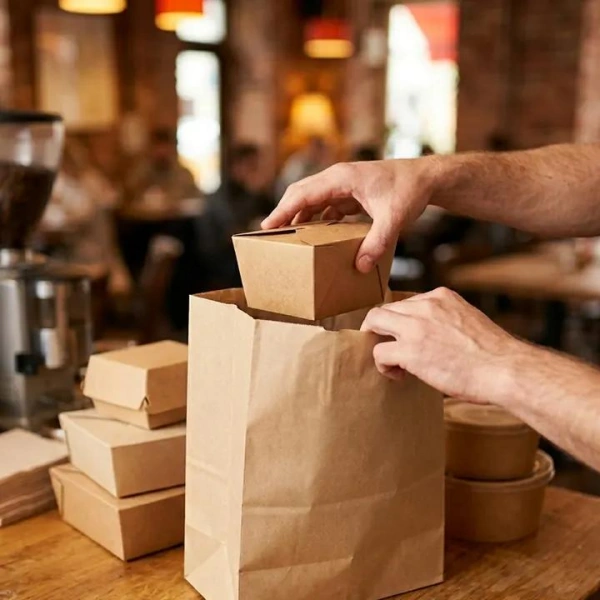
Restaurants selling rice meals, salads, noodles, or combination dishes often use takeaway containers inside paper bags.
For these orders, bag dimensions and bottom construction are particularly important. The bag should accommodate the containers without excessive pressure on the side panels or bottom folds.
If several containers are packed together, test the bag with the actual combination of container sizes and weights. A sample that works for one meal box may not perform equally well with a larger mixed order.
Drinks and Mixed Orders
Drinks add weight and create a potential leakage risk. A paper bag carrying both food and beverages must accommodate the combined load while keeping the contents stable.
For mixed orders, buyers should consider:
- Whether drinks are packed separately or together with food.
- Whether the bag dimensions allow containers to sit securely.
- Whether the base can support the combined order.
- Whether condensation or accidental leakage could affect the paper.
Where drinks are included, a separate drink carrier or suitable internal arrangement may be necessary. Do not assume that a standard takeaway bag is designed to carry multiple beverage containers safely.
How to Test Takeaway Paper Bags Before Bulk Ordering
A product sample should be tested under conditions that resemble actual restaurant use. Checking an empty bag or judging paper thickness by touch is not enough to evaluate its performance.
Before approving a bulk order, use the following checks.
1. Test with the actual food containers
Fill the sample bag with the containers, wrappers, and other items normally included in a restaurant order. Check whether the bag can accommodate the complete order without excessive pressure or deformation.
2. Check the handles and attachment areas
Lift the loaded bag and observe whether the handles stretch, loosen, or pull away from the paper. Repeat the handling process to identify weaknesses that may not appear during a single lift.
3. Inspect the bottom construction
Check whether the bottom remains closed and stable under the intended load. Look for opening folds, separation at bonded areas, or excessive deformation.
4. Simulate realistic food conditions
Test the bag with the types of food it will actually carry. Consider heat, steam, grease, condensation, and the way food is packed. A test using dry, room-temperature items cannot fully represent a hot takeaway order.
5. Confirm the production specifications
Once the sample performs as expected, record the specifications that affect the finished bag:
- Paper grade and GSM.
- Finished bag width, height, and gusset depth.
- Handle type and attachment construction.
- Bottom structure.
- Printing requirements.
- Intended food application and typical packed weight.
These details should be confirmed against the approved sample before mass production. If the paper, dimensions, handle construction, or intended use changes, the sample should be reviewed again.
A consistent approval process helps reduce the risk of receiving bags that look similar to the sample but perform differently in actual restaurant operations.
Frequently Asked Questions
Why Do Takeaway Paper Bags Get Soggy?
Takeaway paper bags can become soggy when exposed to steam, condensation, water, or food grease. Hot food releases moisture, which can soften untreated paper. The appropriate solution depends on whether the main concern is grease penetration, moisture exposure, or the paper’s ability to retain strength when wet.
Does Higher GSM Make Paper Bags Stronger?
Not necessarily. Higher GSM means more paper weight per square meter, but finished bag strength also depends on paper quality, bag dimensions, handle attachment, bottom construction, and loading conditions. Buyers should evaluate the complete bag rather than selecting by GSM alone.
How Much Weight Can a Restaurant Paper Bag Hold?
There is no universal weight limit for restaurant paper bags. Capacity depends on the paper, dimensions, handle construction, bottom design, and loading conditions. Buyers should confirm the required load with representative samples and actual-use testing before placing a bulk order.
Which Paper Bag Handle Is Better for Takeaway Orders?
Twisted paper handles and flat paper handles are both commonly used for takeaway bags. The better option depends on the bag design, expected load, customer handling, and handle attachment method. Sample testing is the most reliable way to compare their performance for a specific application.
Are Kraft Paper Bags Suitable for Hot and Greasy Food?
Kraft paper bags can be suitable for takeaway food, but their performance depends on the food packaging arrangement and exposure conditions. Hot food can release steam, while oily products may transfer grease to the paper. For demanding applications, buyers should evaluate the outer bag together with any inner wrappers or food containers.
Choose Takeaway Paper Bags That Match Your Restaurant Orders
A takeaway paper bag that collapses or breaks is not necessarily a paper-quality problem. The cause may be unsuitable GSM, weak handle attachment, poor bottom construction, moisture exposure, or incorrect dimensions.
For restaurant chains, food brands, and packaging distributors, the most reliable approach is to match the bag design to the actual order, then verify its performance with representative samples before bulk production.
RBD Packaging provides custom paper bag solutions for food service and retail applications. If you are sourcing custom takeaway paper bags for restaurants, takeaway chains, or food packaging distribution, share your required dimensions, food application, handle preference, and estimated order quantity with our team.
Contact RBD Packaging to discuss your custom paper bag requirements.