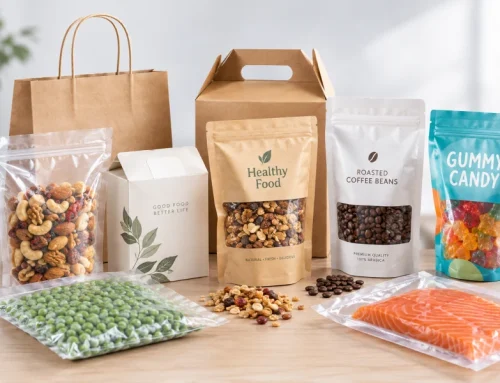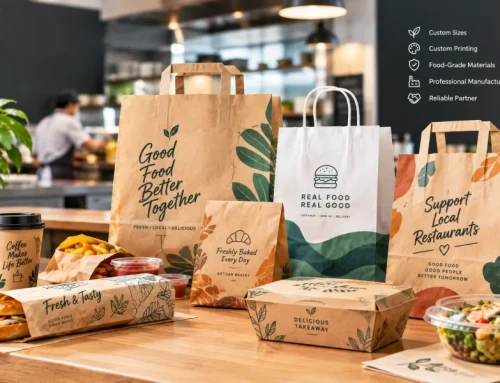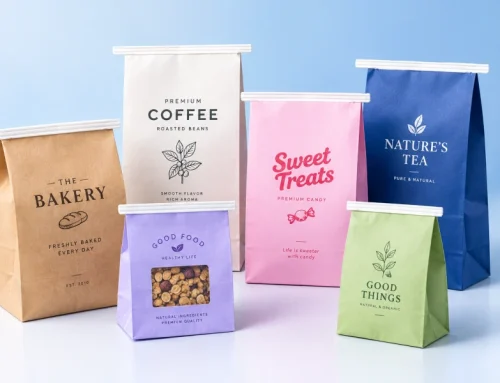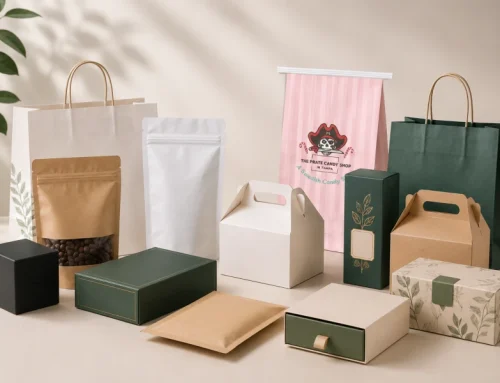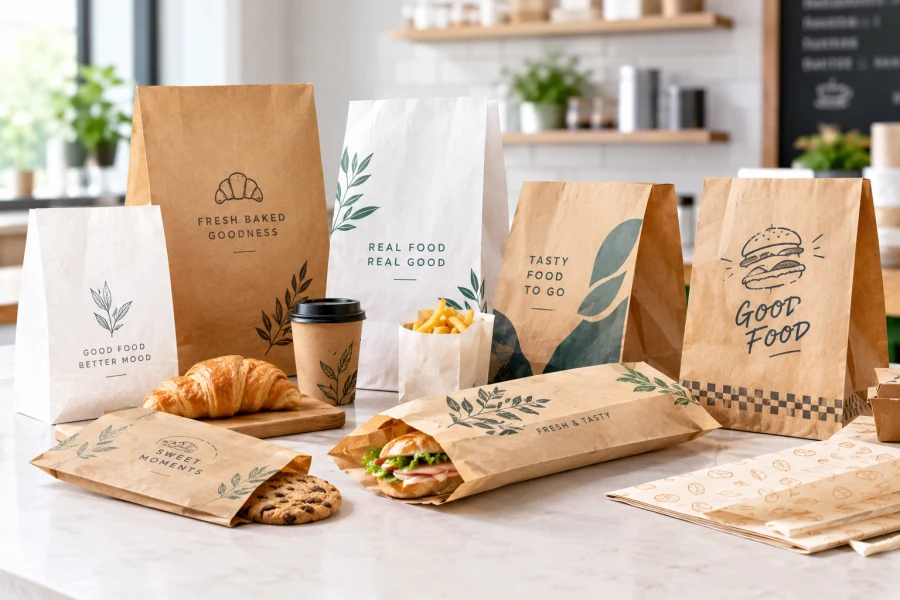
Flat paper bags are widely used for cookies, pastries, breadsticks, sandwiches, snacks, cutlery and other lightweight food products. They are simple, economical and easy to store, but choosing the right specification requires more than selecting a paper color and bag size.
For food packaging buyers, the important questions are usually practical: Will the food fit? Will the paper handle grease or moisture? Is the bag easy for staff to fill? Will the printing look consistent? And can the supplier reproduce the same specification on repeat orders?
This guide explains how to source flat paper bags for food packaging, including bag structure, size, paper material, grease resistance, printing, sampling and bulk-order specifications.
What Are Flat Paper Bags for Food Packaging?
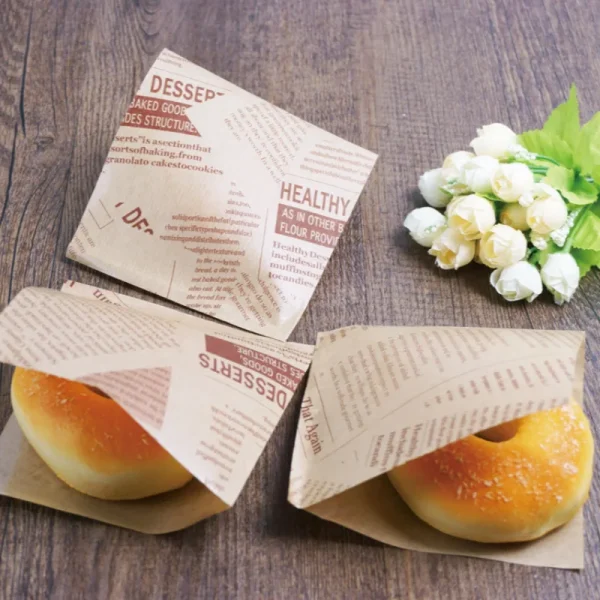
A flat paper bag is a simple paper packaging format with a flat profile and limited or no gusset. Depending on the construction, it can have one or more open sides and may be designed as a sleeve, pouch or simple food-service bag.
Flat paper bags are commonly used when the packaged product is relatively thin, lightweight or easy to slide into the bag. Typical applications include cookies, breadsticks, sandwiches, pastries, snacks, cutlery and other takeaway food items.
Their main advantage is simplicity. They generally use less material than larger gusseted bags, can be stored flat and can provide a convenient format for fast food-service packing.
However, a flat bag is not automatically suitable for every food product. Thick sandwiches, large portions, liquid-containing foods or products that require the bag to stand open may need a gusseted, SOS or other structure instead.

Is a Flat Paper Bag Right for Your Food Product?
Start with the product rather than the packaging.
A flat bag is usually a good choice when the food has a relatively flat profile and does not require much internal volume. A cookie, sandwich, baguette sleeve, pastry or breadstick can often work well in this format.
If the product is bulky or several food containers need to be placed inside one bag, a gusseted or flat-bottom structure may be more practical. RBD’s paper bag range includes different structures such as greaseproof, window, tin tie and V-bottom bags, allowing the packaging structure to be matched to the application.
The filling process also matters. A bag that looks suitable on a product drawing may become difficult to use when restaurant staff need to fill hundreds of orders during a busy service period.
Ask yourself three questions: What goes inside the bag? How is it filled? How will the customer carry or handle it?
These answers should determine the basic structure before you finalize the material or artwork.
How Do You Choose the Right Flat Paper Bag Size?
Size should be based on the actual product rather than a generic small, medium or large classification. Measure the product’s width, length and thickness. Then consider how much clearance staff need to insert the product without damaging it or slowing down the packing process.
For a simple flat bag, the key dimensions are usually the width and length, while the opening size and internal clearance are also important.
For example, a sandwich may fit the nominal dimensions of a bag but still be difficult to insert if the opening is too narrow. A pastry may technically fit but require extra clearance because it is fragile or irregularly shaped.
For procurement, provide the supplier with:
- Product dimensions
- Product thickness or height
- Number of pieces per bag
- Whether the product is packed hot or cold
- Whether additional wrapping or a tray is used
- Typical and maximum packed quantity
If you are unsure about the final bag size, send the supplier the product dimensions or photographs together with the intended use. A packaging manufacturer can then recommend a practical starting specification.
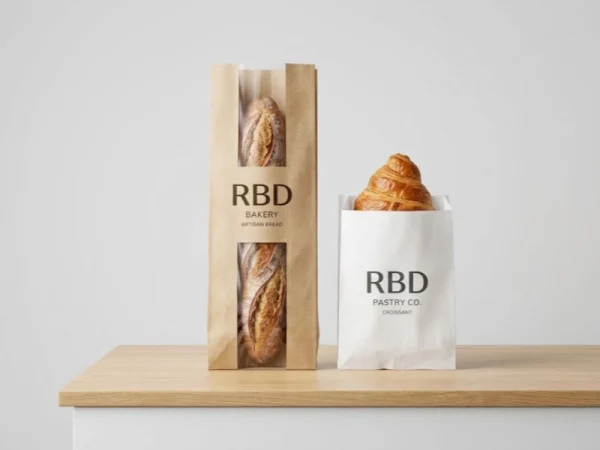
Flat Bag vs. Gusseted Paper Bag: Which Should You Choose?
The biggest structural difference is the amount of internal space.
| Feature | Flat Paper Bag | Gusseted Paper Bag |
| Internal volume | Limited | Larger |
| Best for | Flat or lightweight products | Bulky or multi-piece products |
| Storage | Very space-efficient | Requires more folded volume |
| Filling | Simple for suitable products | Better for larger orders |
| Typical applications | Sandwiches, cookies, breadsticks, snacks | Bread, pastries, takeaway orders, larger food portions |
A flat bag is often the better option when you want a simple, lightweight package with efficient storage. A gusseted structure becomes more useful when the product has significant thickness or when the package needs to accommodate multiple items.
Do not choose the structure based only on unit price. A cheaper bag that slows down filling or does not fit the food properly can create more operational problems than it saves.
What Paper Is Best for Flat Food Bags?
The right paper depends on the product and the required packaging performance.
Kraft paper is commonly selected when the brand wants a natural food-service appearance and a practical paper structure.
White paper provides a cleaner background for printing and can be useful when the packaging design relies heavily on bright colors, illustrations or detailed branding.
Greaseproof paper is more appropriate when the food contains significant oil or fat and ordinary paper could become stained or weakened.
Paper weight also matters, but a higher GSM is not automatically better. The supplier should consider paper weight together with bag dimensions, construction, printing and the actual product load.
The goal is not to buy the thickest paper. It is to use a specification that provides sufficient performance without unnecessary material cost.
Do Flat Paper Bags Need Grease Resistance?
Not every food product requires greaseproof paper.
Dry foods such as breadsticks, some cookies and certain bakery products may work with standard food-contact paper when the application does not involve significant oil or moisture.
For buttery pastries, fried foods, sandwiches with oily fillings or other greasy products, grease resistance becomes much more important.
Oil can migrate into ordinary paper, creating visible stains and potentially weakening the packaging during handling. Current food-packaging buyer guides also identify grease resistance as one of the main specification decisions for flat food bags.
The important point is to describe the actual food to the supplier.
Instead of simply asking for a “greaseproof bag,” explain whether the product is dry, oily, hot, moist or likely to release oil during storage and transportation. This gives the manufacturer enough information to recommend an appropriate paper or barrier solution.
For more detailed information about grease-resistant structures, see our guide to Greaseproof Paper Bags for Bakery: Benefits, Types & Custom Printing Guide.
Should You Use a Window on a Flat Paper Bag?
A window can be useful when product visibility is important.
For example, a bakery or snack brand may want customers to see the cookie, pastry or other food product without opening the package.
However, a window also changes the packaging construction and may affect the balance between visibility, protection and printing space.
Ask whether customers actually need to see the product before choosing this feature. If the food is already recognizable or the packaging is primarily used for takeaway service, a fully printed paper surface may provide more useful branding space.
The window should support the selling function of the package rather than being added simply because it is available.
How Should You Choose Between Kraft and White Flat Paper Bags?
The choice is mainly about brand appearance, printing requirements and application.
Kraft paper gives food packaging a natural and casual appearance and works particularly well with simple one- or two-color designs.
White paper provides a brighter printing background and can make detailed graphics, photography-style artwork and strong brand colors easier to reproduce visually.
For a restaurant or food brand with an established visual identity, ask the supplier for a printed sample rather than deciding only from a digital artwork file. The actual paper surface can affect how the printed colors appear.
How Should You Print Custom Flat Paper Bags?
Custom printing turns a basic food bag into branded packaging.
Depending on the design and production requirements, a printed flat paper bag may include a logo, brand colors, illustrations, product information, website, social media details or promotional messaging.
The important issue for B2B buyers is not simply whether a supplier can print. You also need to understand how the artwork will appear on the actual paper and whether the same design can be reproduced consistently.
Before production, confirm:
- Printing colors
- Artwork dimensions
- Logo position
- Print area
- Paper color
- Artwork around folds or openings
- Final proof or sample
RBD supports custom sizes, materials, structures and printing for paper bags, with a sample-confirmation stage before mass production.
What Should You Tell a Supplier Before Requesting a Quote?
A supplier can provide a much more accurate quotation when the packaging requirements are clear.
You do not need to prepare a complicated technical specification if you are still at the development stage. Start with the information you already know.
Product: What food will be packed?
Size: What are the product dimensions?
Quantity: How many bags do you need?
Material: Kraft, white paper, greaseproof or unsure?
Structure: Flat bag or unsure?
Printing: Logo only, one color, multiple colors or full artwork?
Delivery: Where will the bags be delivered?
If you do not know the exact bag dimensions, send product measurements and photographs. A packaging manufacturer can help convert the application requirements into a practical bag specification.
Why Can Custom Flat Paper Bags Have a Higher MOQ?
Custom production is different from purchasing standard stock bags. A manufacturer may need to prepare paper materials, printing, machine settings, artwork setup, production adjustments, packaging and quality-control processes for a custom order. These activities create fixed or semi-fixed production costs that do not decrease proportionally when the quantity becomes very small.
This is why the unit price of a custom bag can change significantly between different order quantities.
How Should You Compare Flat Paper Bag Suppliers?
Do not compare suppliers using unit price alone.
Two quotations can have completely different specifications even if both suppliers call the product a “flat paper food bag.”
Compare the same:
Size + paper + structure + printing + quantity + packaging + shipping terms
Then evaluate the supplier’s ability to provide samples, communicate clearly, reproduce the approved design and support repeat orders.
A supplier offering a slightly higher unit price may still provide better value if the specification is more suitable and the production quality is more consistent.
Frequently Asked Questions
What are flat paper bags commonly used for?
Flat paper bags are commonly used for lightweight or relatively flat food products such as cookies, breadsticks, sandwiches, pastries, snacks and similar takeaway items.
Are flat paper bags suitable for greasy food?
They can be, but the paper must be selected according to the level of oil and moisture involved. Grease-resistant or greaseproof paper may be more appropriate for oily foods.
What is the difference between a flat paper bag and a gusseted bag?
A flat bag has limited internal depth, while a gusseted bag expands to provide more internal volume. Flat bags are generally better for flatter products, while gusseted bags are useful for thicker or larger items.
Can flat paper bags be custom printed?
Yes. Custom flat paper bags can be printed with logos, brand colors, illustrations and other artwork. The available printing method and color reproduction depend on the paper and production process.
How do I choose the right size?
Measure the actual product first and consider its thickness, filling method and required clearance. If you are unsure, provide the supplier with product dimensions or photographs and ask for a packaging recommendation.
Should I order samples before bulk production?
Yes. A physical sample lets you evaluate fit, filling, paper performance, printing and overall usability before committing to bulk production.
What information should I provide for a flat paper bag quotation?
Provide the product type, product dimensions, desired quantity, paper preference if known, printing requirements, bag structure if known and delivery destination. Photos of the product or current packaging can also help the supplier recommend a suitable specification.
How to Source Custom Flat Paper Bags
The best flat paper bag is not necessarily the thickest, cheapest or most heavily printed option.
The right specification is the one that fits the food, works efficiently in your packing process, provides the required grease or moisture resistance and delivers the appearance your brand needs.
If you are sourcing custom flat paper bags, send your product dimensions, approximate quantity, printing requirements and destination to the supplier first. If you are unsure about the structure or material, provide photographs and explain how the bag will be used.
RBD Packaging provides custom paper bag solutions with support for custom sizes, materials, structures and printing, followed by sample confirmation before mass production.