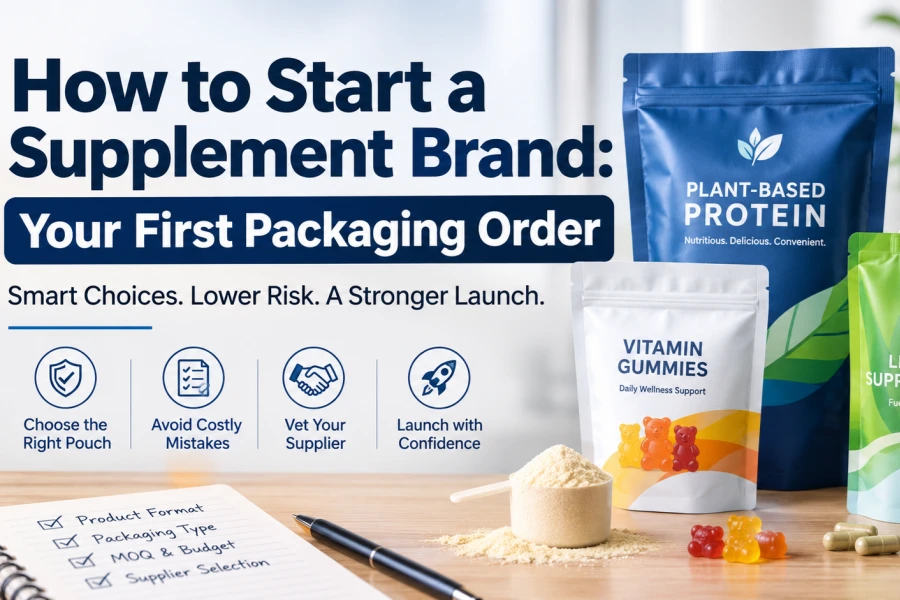
Starting a supplement brand involves more than developing a formula and designing a logo. Your first packaging order affects product protection, launch costs, inventory, and how your brand appears to customers. If you are learning how to start a supplement brand, choosing the right packaging early can help you avoid expensive changes before your first production run.
For new DTC supplement founders and private-label businesses, custom flexible packaging offers practical options for powders, gummies, refill products, and liquid supplements. The key is to match the pouch structure, material, printing method, and order quantity to your actual product and launch plan.
What to Decide Before Ordering Supplement Packaging
Before requesting a quotation, define the product and the conditions under which it will be stored, shipped, and used. A packaging supplier can recommend suitable options, but the brand needs to provide the product requirements.
Confirm Your Supplement Format and Formula
Start with the physical form of your supplement:
- Powders: Protein powder, greens, electrolyte mixes, collagen, and pre-workout products.
- Gummies: Vitamin gummies, functional gummies, and other chewable supplements.
- Liquids and gels: Liquid vitamins, nutritional concentrates, and other flowable supplement products.
- Refill products: Larger packs designed to replenish a reusable container or support repeat purchases.
The format determines the packaging structure. A dry powder usually needs a wide opening and a suitable resealable closure. A liquid supplement may require a spout, cap, and fitment designed around the product’s viscosity and filling process.
Also confirm whether the formula contains ingredients that are particularly sensitive to moisture, oxygen, light, or aroma loss. These details will influence material selection.
Define Shelf Life, Sales Channel, and Storage Conditions
Your packaging should be selected for its intended distribution conditions, not just its appearance.
Consider:
- Target shelf life and available stability information.
- Retail shelf display versus direct-to-consumer shipping.
- Warehouse and transportation conditions.
- Expected storage temperature and humidity.
- Whether customers will open the package repeatedly.
For example, a protein powder pouch sold through an online store may need a different size and closure arrangement from a single-serving electrolyte product. A liquid supplement shipped through a fulfillment network also requires careful consideration of fitment sealing and leakage risks.
Packaging alone does not establish the shelf life of a supplement. The final formula, packaging system, storage conditions, and appropriate stability evaluation all matter.
Set a First-Order Budget and Quantity
A low unit price does not necessarily mean a lower-risk first order. Large quantities can tie up cash in packaging that may need to change after customer feedback, formula adjustments, or a label revision.
Before contacting suppliers, estimate:
- Initial sales volume and launch inventory.
- Number of SKUs, flavors, or formulas.
- Expected reorder timing.
- Packaging budget, including samples and freight.
Whether you need custom printing immediately or can begin with a simpler packaging approach. For a new brand, the goal is to find a commercially workable first order—not to purchase the largest quantity to achieve the lowest quoted unit price.
Choosing the Right Packaging for Your First Supplement

Flexible pouches can be a practical choice for many supplement startups because they support custom printing, multiple sizes, and different material structures. The best format still depends on the product’s physical properties and how customers use it.
Stand-Up Pouches for Powders, Gummies, and Refills
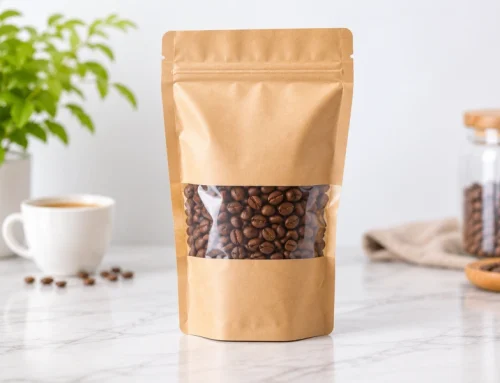
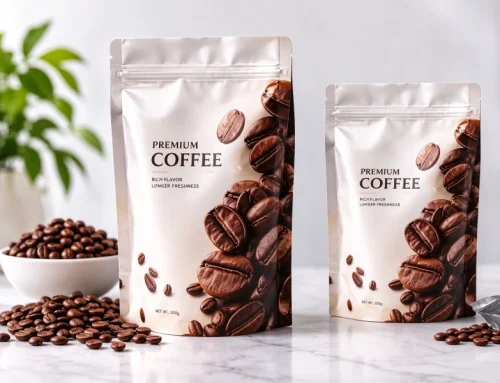
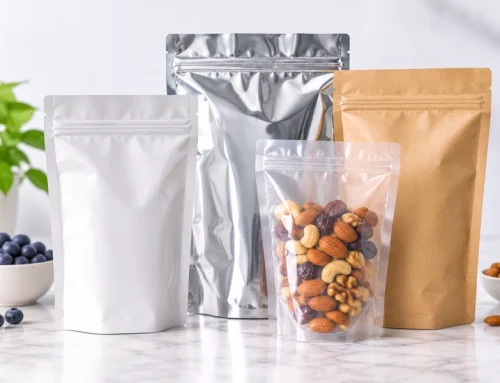
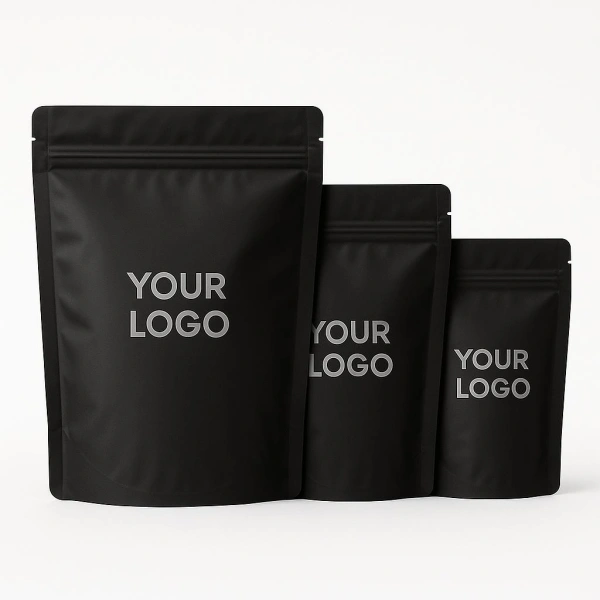
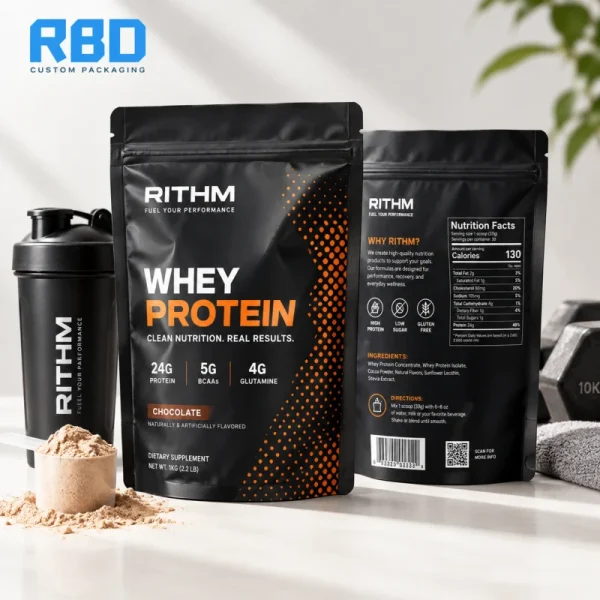
Stand-up pouches are widely used for dry supplement products because their bottom gusset allows the filled package to stand upright. They also provide printable front and back panels for brand information and product presentation.
Common applications include:
- Protein and collagen powders.
- Greens and electrolyte powders.
- Vitamin and functional gummies.
- Pre-workout and other powdered blends.
- Refill packs for existing supplement containers.
Useful features may include a resealable zipper, tear notch, and heat-sealable top. For multi-use products, a zipper can make the package easier to reopen and close after the original seal is removed.
Material selection is equally important. A suitable laminate may need to provide moisture, oxygen, light, or aroma protection depending on the formula. There is no single barrier structure that is right for every supplement.
If you are evaluating formats, review RBD Packaging’s [custom stand-up pouches for retail packaging] as a reference for pouch dimensions, closures, printing, and customization options. The final specification should be adapted to your supplement rather than copied from a food application.
Spout Pouches for Liquid Supplements
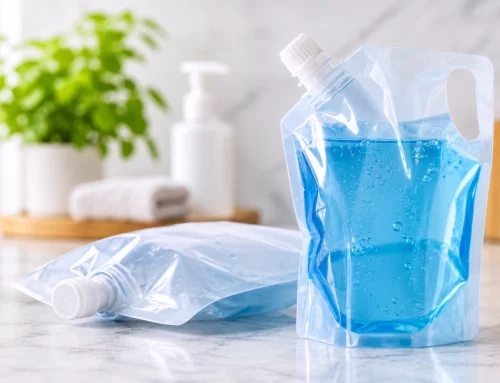
Spout pouches are worth considering for liquid or semi-liquid supplements that need controlled pouring or dispensing.
Potential applications include liquid nutritional products, concentrated supplements, and certain gel-based formulations. The appropriate design depends on:
- Product viscosity and flow behavior.
- Required fill volume.
- Spout diameter and position.
- Cap and closure requirements.
- Filling and capping equipment.
- Expected handling and transportation conditions.
A spout pouch is not automatically suitable for every liquid formula. The product must be compatible with the selected inner sealing layer, and the fitment-to-film connection and cap closure should be evaluated with the actual filling process.
For a first order, request samples and confirm that the proposed spout and cap work with your product before approving bulk production.
When Bottles or Other Rigid Packaging May Be More Practical
Rigid bottles remain a reasonable alternative for products such as capsules and tablets, especially when the contract manufacturer’s filling line is already designed around bottles.
However, if your first product is a powder, gummy, refill, or liquid supplement, it is worth comparing flexible pouch formats before committing to a rigid package. Consider total packaging and logistics requirements rather than comparing unit prices alone.
| Packaging format | Common supplement applications | Main considerations |
| Stand-up pouch | Powders, gummies, refills | Barrier structure, zipper, fill volume, pouch dimensions |
| Spout pouch | Liquid and gel supplements | Spout size, cap, viscosity, fitment sealing, filling method |
| Rigid bottle | Capsules, tablets, some powders | Bottle capacity, closure, induction seal, storage and shipping |
Five Costly First-Order Supplement Packaging Mistakes
A packaging decision that looks minor during product development can become expensive after thousands of printed units have been produced.
Mistake 1: Choosing the Wrong Barrier Material
Different supplement formulas have different protection requirements. Some powders are sensitive to moisture absorption, while ingredients containing oils may require particular attention to oxygen exposure. Light sensitivity may also influence the choice of laminate. Do not select a material simply because another supplement brand uses it.
Instead, share the following information with your packaging supplier:
- Product type and ingredient characteristics.
- Target shelf life.
- Expected storage conditions.
- Required moisture and oxygen protection, if known.
- Any existing material or barrier specifications.
The supplier can then discuss suitable material options. The final packaging system should be validated for the actual formula and intended conditions.
Mistake 2: Printing Before the Formula and Label Are Finalized
This is one of the easiest ways to waste a first packaging budget. Supplement packaging may include the product name, Supplement Facts panel, serving information, ingredients, warnings, barcode, lot identification, and other required details.
If the formula or serving size changes after printing, the artwork may need to be revised and previously printed packaging may become unusable.
A better sequence is:
1. Confirm the formula and serving information.
2. Prepare and review the label content.
3. Finalize the packaging dimensions and dieline.
4. Place the approved content into the artwork.
5. Check the final proof before printing.
The brand owner remains responsible for the accuracy and regulatory compliance of the supplement label. Have the label reviewed by a qualified regulatory professional for the target market before approving production.
Mistake 3: Ordering Too Much Packaging Too Early
A large first order can reduce the unit cost but increase inventory risk.
New brands may still be testing product positioning, flavor combinations, pricing, and sales channels. If the artwork or formula changes, excess packaging can become stranded inventory.
Ask suppliers to compare available quantities and printing methods. Digital printing may offer a different entry point from conventional gravure printing, but availability and minimum quantities depend on the pouch structure, size, artwork, and production process.
Compare the total order cost, not just the price per pouch.
Mistake 4: Assuming FDA Certification Automatically Covers the Finished Package
Food-contact compliance is not the same as a general FDA approval of a finished pouch.
The FDA regulates food-contact substances according to their intended use and applicable authorizations. A material’s regulatory status depends on its individual components and the conditions under which it is used.
Ask your supplier for documentation relevant to the proposed material structure and intended food-contact application. Do not rely on a general statement such as “FDA approved” without understanding what the documentation actually covers.
Your packaging supplier is responsible for providing appropriate information about its materials and manufacturing scope. Your brand remains responsible for the supplement formula, product claims, and applicable labeling requirements.
Mistake 5: Skipping Physical Samples
A digital mockup can show the artwork, but it cannot confirm how the finished pouch behaves.
Before approving a bulk order, evaluate samples for:
- Actual dimensions and usable filling capacity.
- Material appearance, flexibility, and feel.
- Zipper or spout operation.
- Heat-sealing compatibility.
- Product filling and handling.
- Package appearance after filling.
For liquid supplements, include appropriate leakage and closure checks. For powders, check filling convenience, sealing, and whether the selected pouch size works with the actual product volume.
A sample review is a practical way to identify problems before they affect the entire order.
How to Place Your First Supplement Packaging Order
A structured process helps founders compare suppliers and reduces the chance of late artwork changes or mismatched packaging specifications.
Step 1: Prepare a Packaging Brief
You do not need to know every technical detail before contacting a manufacturer. However, you should provide enough information for an accurate initial assessment.
Include:
- Supplement type and physical format.
- Target net weight or fill volume.
- Preferred pouch format.
- Approximate dimensions, if available.
- Target market and intended shelf life.
- Required barrier performance, if known.
- Closure and functional features.
- Estimated quantity per design.
- Artwork or brand guidelines.
If you are unsure about dimensions or material, send a reference package or product sample and ask the supplier to review the requirements.
Step 2: Request Comparable Quotations
Ask each supplier to quote against the same specifications. Otherwise, a lower price may simply reflect a thinner structure, different printing method, or fewer included features.
A useful quotation should clarify:
- Pouch dimensions and construction.
- Material structure and thickness.
- Printing method and number of colors.
- Zipper, spout, cap, and other options.
- Minimum order quantity per design.
- Sample and proofing arrangements.
- Production lead time and shipping terms.
If a supplier recommends a different structure, ask what problem the change is intended to solve.
Step 3: Approve Samples and Artwork
Review the physical sample with the actual supplement or a representative filling material. Confirm that the package works with your intended filling equipment and consumer-use requirements.
Then check the artwork carefully:
- Correct dimensions and dieline.
- Accurate Supplement Facts and label content.
- Correct spelling, ingredients, and serving information.
- Barcode placement and readability.
- Lot and expiration date coding area.
- Print colors and finishing details.
Approve the final artwork and written specifications before bulk production begins. Keep a copy of the approved sample and specification for future reorders.
How to Vet a Supplement Packaging Supplier
A suitable supplier should do more than offer an attractive unit price. For a startup, clear communication and reliable specification control are especially important.
Check Food-Contact Documentation and Quality Systems
Ask what documentation is available for the proposed material structure and its intended application. You may also request relevant quality-management or food-safety system certificates.
Check the scope and validity of each document. A factory management-system certificate does not automatically prove that every material or finished package is suitable for every supplement.
Compare MOQ, Printing Options, and Manufacturing Experience
Ask whether the supplier offers different printing methods and whether a smaller trial quantity is possible for your specific pouch design.
Minimum quantities can vary according to dimensions, laminate structure, printing process, and customization. Get the MOQ confirmed in writing for each SKU.
Manufacturing experience is also relevant. A supplier familiar with flexible packaging should be able to discuss material layers, closures, sealing requirements, and how the pouch will be filled and used.
RBD Packaging has manufactured custom packaging since 2005 and offers flexible packaging customization, sample support, and project-specific material discussions. Its team can review the product format, target quantity, artwork, and intended application before confirming a suitable specification and quotation.
Confirm Samples, Lead Time, and Communication
Before placing an order, ask:
- Can I review a physical sample before production?
- Can you provide a custom sample or artwork proof?
- What is the production lead time after final artwork approval?
- What inspections are included?
- How will any specification changes be documented?
- What are the payment and shipping terms?
A reliable supplier should be able to explain the approval process and identify which details still need confirmation.
Frequently Asked Questions
What packaging is best for supplement powders?
Stand-up pouches are a common option for protein powder, greens, collagen, electrolyte mixes, and other dry supplements. The material structure, pouch size, zipper, and opening should be selected according to the formula, fill weight, product volume, and storage requirements.
Do supplement pouches need a moisture and oxygen barrier?
That depends on the formula and its sensitivity. Some products need stronger moisture protection, while others require attention to oxygen or light exposure. Ask your formula manufacturer or stability specialist for the product requirements before selecting the laminate.
Are spout pouches suitable for liquid supplements?
They can be suitable for certain liquid and gel supplements. The product’s viscosity, fill volume, spout diameter, cap, fitment seal, and filling equipment all need to be considered. Test the proposed package with the actual product before bulk production.
What MOQ should I expect on my first order?
For custom printed flexible pouches, first-order MOQs typically start at 1,000 units per SKU for digital printing, and higher for high-volume flexo runs. Exact minimums depend on pouch size, material structure, and print colors.
Does FDA approve supplement packaging?
The FDA regulates food-contact substances and their intended uses. This is not the same as issuing a general FDA approval for every finished supplement pouch. Ask your supplier for documentation relevant to the specific material and intended application.
Should I test samples before placing a bulk order?
Yes. Check dimensions, material, closure performance, filling compatibility, sealing, and appearance using a representative product. For liquid supplements, include suitable leakage checks. Keep the approved sample and specification as a reference for production.
How long does custom supplement pouch production take?
After artwork approval, standard lead time for custom printed supplement pouches is typically 7–15 days for digital runs and slightly longer for large flexo runs. Pre-production samples add extra time. Always build buffer into your launch schedule, especially on a first order.
Ready to Place Your First Supplement Packaging Order?
Your first packaging order sets the tone for your product’s shelf life, brand perception, and launch budget. Get it right, and you protect your formula, impress customers, and scale smoothly. Get it wrong, and you can lose weeks of launch time and thousands of dollars in wasted inventory.
At RBD Packaging, we work with startup and growing supplement brands to build custom stand-up pouches and custom spout pouches that fit their launch volume, meet food-contact standards, and deliver premium shelf appearance. We offer low-MOQ custom printing, food-grade barrier laminates, and pre-production sampling so you can test before you commit.
If you are preparing your first supplement packaging order, send us your product format, target volume, and artwork brief. Our team will reply within one business day with a recommended pouch structure, transparent pricing, and next steps for sampling.