A stand-up pouch can look flawless when it leaves the factory but develop leaks after filling, handling, or transportation. For food brands and packaging buyers, this can mean damaged products, customer complaints, rejected shipments, and unnecessary costs.
One common mistake in packaging procurement is assuming that a strong seal is automatically a leak-free seal. These are two different quality requirements. A seal may require considerable force to peel apart but still contain a localized channel that allows air or liquid to pass through.
This guide explains how to evaluate stand-up pouch seal performance, check zipper compatibility, inspect bottom seals, and assess filled-pouch drop resistance. It also provides a practical checklist for buyers to use when reviewing samples and approving production.
Seal Integrity Quick Reference: What Are You Actually Testing?
| Testing Stage | What It Actually Checks | The Common Trap |
|---|---|---|
| Heat Seal | Is the seal strong enough, and is it continuous? | Assuming a seal that looks flat and neat has no micro-leaks. |
| Zipper | Does the zipper stay attached to the bag and open/close properly? | Blaming the zipper track when the real problem is the inner film it is sealed to. |
| Bottom Seal | Is the bottom gusset sealed uniformly despite the folds? | Using only empty bags to check, missing the stress caused by 1kg of product. |
| Drop Test | Does the filled bag survive real-world transportation? | Dropping empty pouches and assuming the result applies to full ones. |

Why Stand-Up Pouch Seal Integrity Matters
When a pouch seal fails, the cost is not just the packaging—it is the product loss, the retail returns, and the damage to your brand’s reputation. Imagine 5,000 units of premium coffee arriving at a distributor, only to find that 10% of the bags have gone stale because the bottom seal was compromised.
Buyers often confuse two different quality metrics. Understanding the difference is the first step to writing a better QA standard.
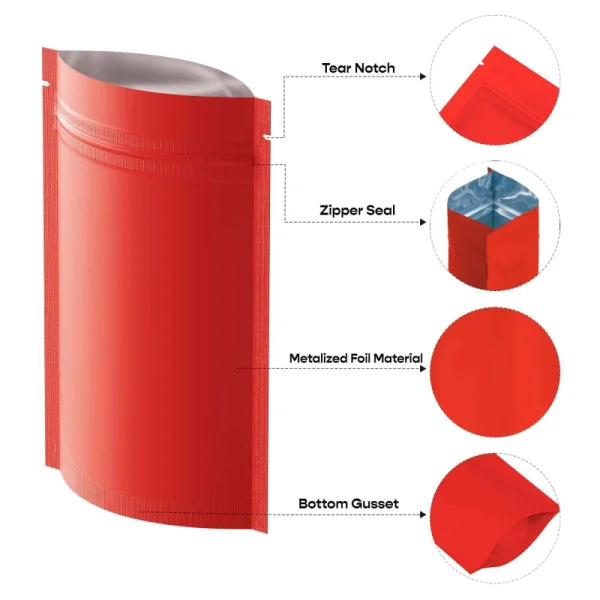
Stand-up pouches contain several areas that deserve attention:
- Top seal: The final heat-sealed area after the pouch is filled.
- Side seals: The sealed edges that help maintain the pouch structure.
- Bottom gusset: The folded base that allows the pouch to stand upright.
- Zipper attachment: The connection between the zipper flanges and the pouch film.
- Pouch body: The laminated film, which must resist damage under the intended handling conditions.
A defect in any of these areas may affect package performance.
Seal Strength vs. Seal Integrity vs. Leak Testing
| The Metric | What It Means in Plain English | How It Is Tested |
|---|---|---|
| Seal Strength | How hard is it to rip the seal open? (Peel force) | A machine pulls the sealed layers apart (e.g., ASTM F88 method). |
| Seal Integrity | Are there any microscopic channels or holes letting air/water in? | Dye penetration, vacuum leak testing, or burst testing. |
A strong seal is not necessarily a leak-free seal. Do not accept a supplier’s test report for “peel strength” as proof that the bag will not leak. You need to verify both.
How to Test Stand-Up Pouch Heat Seal Strength
Heat sealing joins the inner sealant surfaces of a flexible pouch to create a closed package. The quality of this seal depends on the material structure, sealing conditions, equipment, and condition of the sealing area.
A seal may appear smooth but still be weak or inconsistent. Conversely, a strong seal does not necessarily mean that every part of the package is free from leakage paths.
What Should Buyers Check?
There are three useful areas to evaluate:
1. Seal Appearance
Look for visible wrinkles, folds, incomplete seal areas, burn marks, or contamination. The seal should be consistent with the agreed sample and specification.
2. Seal Strength
A seal-strength test measures the force needed to separate the sealed layers. ASTM F88/F88M is a commonly used reference method for flexible material seals.
When reviewing a result, buyers should check the test method, specimen preparation, seal location, test conditions, and reporting units. Results from different test setups may not be directly comparable.
3. Seal Continuity
The seal should be continuous across the intended sealing area. Folded film, trapped product particles, oil, or other contamination can interfere with proper sealing.
What Causes Weak or Inconsistent Heat Seals?
Common contributing factors include:
- Incorrect sealing temperature, pressure, or dwell time.
- Contamination from powder, oil, liquid, or product particles.
- Wrinkles or folds in the sealing area.
- Inconsistent film positioning or material condition.
- Unsuitable material compatibility or pouch construction.
A pre-made stand-up pouch may have properly manufactured side and bottom seals, but its final top seal is created later on the customer’s filling line. Problems during filling or final sealing may therefore be related to the customer’s equipment, settings, or product contamination rather than the original pouch manufacturing process.
The Buying Rule: Ask your supplier to evaluate the relevant seals and explain how the samples were tested. If the pouch will be filled with powder, oil-containing food, or products that can contaminate the sealing area, include a filling trial before approving the final design.
How to Check Zipper Compatibility and Closure Performance
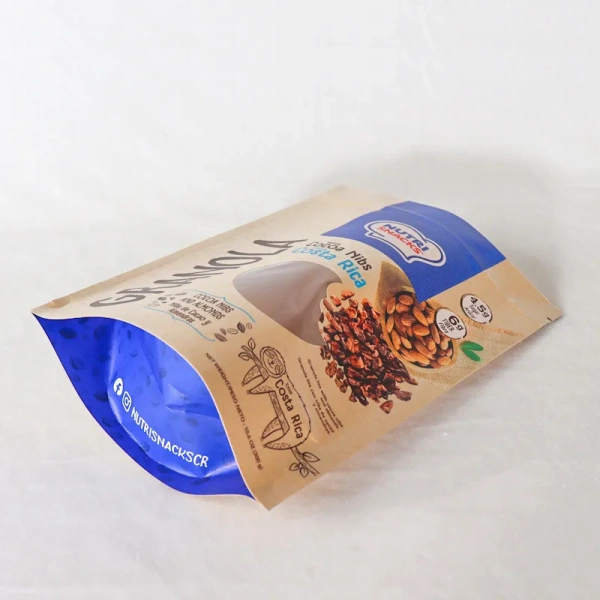
A resealable stand-up pouch has two important functional elements: the zipper track and the connection between the zipper and the pouch film.
The zipper must close properly, while its attachment must remain secure during normal opening, closing, filling, and handling.
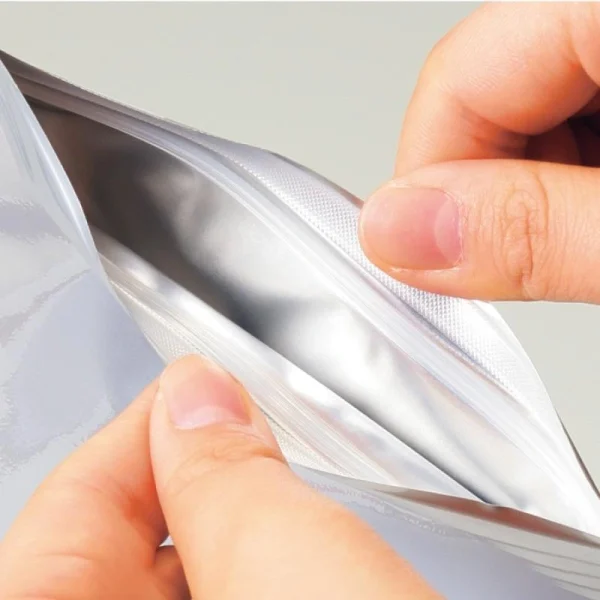
Zipper-to-Film Compatibility
The zipper flange must be compatible with the pouch’s inner sealant layer. The materials and sealing conditions need to work together to create a reliable attachment.
Film thickness alone does not determine zipper attachment strength. The zipper design, flange construction, sealant material, equipment settings, and sealing process can all affect the result.
Common Zipper Problems
| Common Problem | Possible Cause | What Buyers Should Check |
|---|---|---|
| Zipper peels off the bag | The inner sealant layer is too thin to grip the zipper flange. | Attachment strength (Pull test). |
| Zipper is hard to close | Misalignment or incorrect zipper profile for the product size. | Consumer functionality test. |
| Leaks near the zipper ends | The end-seal (where the zipper meets the side seal) is incomplete. | Visual inspection of the zipper termination points. |
For products with specific handling or storage requirements, conduct a filled-pouch trial using the intended product or a representative filling material.For more information about material structures and sealant layers, see our stand-up pouch material selection guide.
How to Inspect Stand-Up Pouch Bottom Seals
The bottom gusset is the most complex part of a stand-up pouch. Unlike a flat bag with a simple straight seal, a stand-up pouch has folded corners, overlapping film layers, and a bottom seal that has to hold the entire weight of the product when the bag is standing.
If a pouch leaks, the bottom is usually the first suspect.
What causes bottom seal failures?
- Wrinkles at the corners: When the film folds to create the stand-up base, it creates thick multi-layer joints. If heat and pressure are not perfectly balanced, these corners won’t seal completely.
- Pressure from the product: Once 500g of nuts or coffee is added, the bottom seal is under constant stress. A seal that barely passed an empty test will burst here.
- Overheating: If the seal temperature is too high, the inner film can shrink, causing the bottom base to curl up and not open properly.
What to check: Visually inspect the four corners of the bottom gusset. Look for any slight delamination or narrow seal width. A simple squeeze test on a filled bag can reveal if air is escaping through the bottom corners.
How to Perform a Filled Pouch Drop Test
A drop test helps evaluate how a filled pouch responds to impact during handling and transportation. It can reveal weaknesses that may not be visible during a basic visual inspection.
An empty pouch and a filled pouch do not behave in the same way. Product weight, fill volume, internal air, product shape, and pouch dimensions can all influence how impact forces affect the package.
For this reason, buyers should use the actual product or a representative filling material when evaluating performance for a specific application.
| What to Test | How to Do It | What You Are Looking For |
|---|---|---|
| Drop Test | Drop the filled pouch from waist height (or your standard shipping height) onto a hard surface (like concrete). | Splitting at the bottom seal, zipper bursting open, or side seals rupturing. |
| Compression Test | Stack heavy boxes on top of a filled pouch. | Zipper crushing or bottom gusset collapsing. |
The Buying Rule: When evaluating samples, send the supplier your actual product (or a weight/size equivalent). Ask them to perform a filled drop test and send you a video. If they drop empty bags, the test is invalid. (Note: ASTM D5276 is a common reference for free-fall drop testing, but your acceptance criteria should be based on your specific shipping environment, not a generic universal number).
Stand-Up Pouch Seal Testing Checklist for Buyers
You do not need to become a packaging engineer to evaluate a supplier’s samples. You do need to ask clear questions and request evidence that relates to your product and application.
What Should You Request from Your Supplier?
| Inspection Stage | What to Check | What to Request |
|---|---|---|
| Heat Seal | Seal appearance, continuity, and strength | Inspection records and applicable seal-strength results |
| Seal Integrity | Whether the package has detectable leakage paths | Suitable leak-test method and results, when required |
| Zipper | Opening, closing, and attachment | Functional and attachment evaluation |
| Bottom Gusset | Folded corners and sealing condition | Close-up inspection and filled-pouch evaluation |
| Drop Test | Package condition after impact | Test conditions, sample details, and results |
Not every pouch requires every laboratory test. The appropriate checks depend on the product, packaging structure, filling method, distribution conditions, and buyer’s quality requirements.
When Should Buyers Test Samples Before Mass Production?
Packaging evaluation should not be left until after a large production order has been completed. A staged approval process helps identify problems earlier.
| Stage | What Buyers Should Check | Main Purpose |
|---|---|---|
| Initial Sample Approval | Dimensions, material structure, zipper function, and visual quality | Confirm that the pouch design meets the basic requirements |
| Filling Trial | Filling compatibility, product contamination risks, and final top sealing | Check performance on the intended filling process |
| Pre-Production Approval | Finished pouch construction and agreed quality tests | Confirm the approved sample and testing requirements |
| Mass Production Inspection | Seal consistency, zipper attachment, appearance, and agreed specifications | Check that production remains consistent with the approved sample |
How we handle stand-up pouch seal integrity at RBD Packaging
RBD Packaging manufactures custom stand-up pouches with digital printing starting from 1,000 pcs per design, and gravure printing from 10,000 pcs. Our facility runs 30+ production lines. Lead time is typically 7–15 days after artwork approval.
To prevent leaks and zipper failures, our in-house lab runs seal strength, tensile, and air-tightness tests. Every order passes a QC check that specifically covers heat seals, zipper attachment, and bottom gusset integrity.
You don’t have to take our word for it. We provide physical samples (you pay freight) so you can run your own filled-pouch drop test and verify the seal performance before committing to mass production.
Frequently Asked Questions
How do you test the seal strength of a stand-up pouch?
Seal strength is commonly evaluated by separating a sealed specimen and measuring the force required. ASTM F88/F88M is a widely used reference method for flexible material seals. The result helps assess the strength of the tested seal, but it does not prove that the entire finished pouch is leak-free.
What is the difference between seal strength and seal integrity?
Seal strength measures the force required to separate a sealed area. Seal integrity concerns whether the sealed package maintains the required continuity without unacceptable defects. A pouch can have high seal strength and still contain a localized leak path, so the two properties should be evaluated separately.
What causes stand-up pouches to leak?
Potential causes include contamination in the sealing area, wrinkles, incomplete sealing, damaged film, zipper attachment problems, or defects around folded bottom corners. Sealing equipment conditions and filling operations may also contribute. The actual cause should be identified through inspection and appropriate testing.
How do you test a zipper pouch?
Evaluate both the zipper’s opening and closing function and its attachment to the pouch film. Check zipper alignment, engagement, flange sealing, and the zipper termination areas. For demanding applications, evaluate the filled pouch under representative handling conditions.
Why do stand-up pouches leak at the bottom?
The bottom gusset contains folded film layers and complex sealing areas. Wrinkles, incomplete sealing, contamination, construction problems, or stress after filling may contribute to leakage. Inspect the folded corners and evaluate the filled pouch rather than relying only on an empty-bag visual check.
Should stand-up pouches be drop tested after filling?
For applications where impact during handling or transportation is a concern, testing filled pouches can provide useful performance information. Use the actual product or a representative filling material, define suitable test conditions, and inspect all seals, the zipper, and the pouch body after testing. The procedure and acceptance criteria should reflect the intended distribution environment.