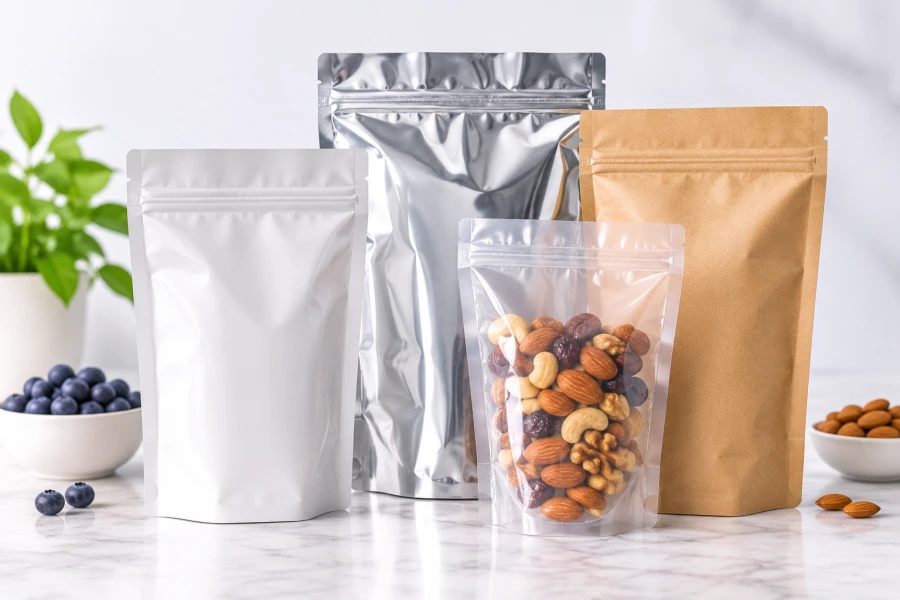
When sourcing custom stand-up pouches, one of the most expensive mistakes is choosing the wrong material structure. A pouch that is too basic may not protect your product throughout its intended shelf life, while an unnecessarily complex structure can increase packaging costs without providing meaningful benefits.
Many buyers assume that a thicker pouch is always stronger or that a high-barrier material is always the best choice. In reality, the right stand-up pouch material depends on your product, target shelf life, filling process and storage conditions.
This guide explains how to compare common pouch structures, understand barrier performance, choose the right sealant and thickness, and prepare an RFQ that helps suppliers provide suitable and comparable quotations.
Material Selection Quick Reference: What Matters Most?
Before comparing individual materials, identify what your packaging needs to protect against.
| Your Packaging Goal | What to Focus On | Common Mistake |
|---|---|---|
| Protect freshness and flavor | Oxygen and moisture barrier | Choosing a material based only on the term “high barrier” |
| Prevent leaks | Sealant compatibility and seal integrity | Focusing only on the outer film thickness |
| Keep the zipper functional | Zipper and inner-layer compatibility | Assuming any zipper works with any pouch structure |
| Avoid unnecessary costs | Material structure and total thickness | Paying for barrier performance your product does not need |
| Improve shipping durability | Puncture resistance and finished pouch strength | Selecting a film based only on its stated thickness |
The best material is not necessarily the most expensive one. It is the structure that provides the protection and durability your product actually requires.
How to Choose Stand-Up Pouch Materials Based on Your Product
Material selection starts with one question: what could damage or shorten the shelf life of your product? For some products, oxygen is the main concern. For others, moisture absorption, light exposure, leakage or physical damage during transportation may be more important.
You do not need to know every technical detail before contacting a supplier. Start by explaining what you are packaging, how long it needs to last and how it will be stored.
| Product | Main Packaging Concerns | Material Selection Direction |
|---|---|---|
| Coffee | Oxygen, aroma and light | Metallized or foil-based high-barrier laminates, depending on shelf-life requirements |
| Nuts | Oxygen and moisture | Barrier laminate selected according to oxidation sensitivity |
| Candy and gummies | Moisture and seal integrity | Moisture-resistant structure with reliable seals |
| Protein powder | Moisture, powder leakage and handling | Suitable moisture barrier and reliable sealing |
| Dried fruit | Oxygen, moisture and texture changes | Barrier structure selected according to product sensitivity |
| Freeze-dried food | Oxygen and moisture | High-barrier laminate with carefully controlled sealing |
These are starting points, not fixed material prescriptions. Two products in the same category may require different packaging because their ingredients, processing methods, shelf-life targets and storage environments differ.
For example, roasted coffee beans may require a different pouch specification from ground coffee. A coffee pouch may also need a degassing valve, depending on the product and packaging process.
Tell your supplier the product type, filling weight, target shelf life and storage conditions. These details are more useful than simply asking for a standard food-grade pouch.
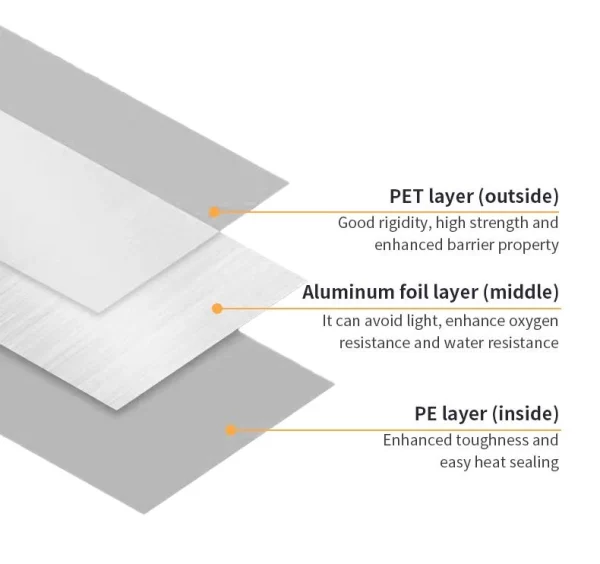
PET/PE vs. PET/VMPET/PE vs. PET/AL/PE: Which Structure Should You Choose?
A stand-up pouch is usually made by laminating multiple film layers together. Each layer has a different purpose.
The outer layer provides a printable surface and contributes to the pouch’s mechanical properties. The middle layer may provide additional barrier protection. The inner layer is designed to seal the pouch and contact the packaged product, subject to the applicable food-contact requirements.
Here are three commonly considered laminate structures.
PET/PE: A Basic Flexible Packaging Structure
PET/PE combines an outer PET layer with an inner PE sealing layer.
PET provides a suitable printing surface and contributes to the pouch’s strength. PE provides heat-sealing functionality.
This structure may be suitable for products with less demanding barrier requirements, depending on the product and intended shelf life.
PET/VMPET/PE: A Metallized Barrier Structure
VMPET is PET film with a thin deposited aluminum layer. It adds barrier protection against oxygen, moisture and light compared with a basic PET/PE structure.
It is commonly considered for snack foods, dried fruit and other products that require improved protection without using a conventional aluminum foil layer.
The actual barrier performance depends on the film specification, metallization quality, lamination and pouch conversion process.
PET/AL/PE: An Aluminum Foil Laminate
PET/AL/PE uses an aluminum foil layer between the outer PET and inner PE layers.
Aluminum foil generally provides stronger barrier protection than metallized film. It may be suitable for products with more demanding protection requirements or longer intended shelf lives.
However, the final performance also depends on laminate quality, pouch construction and seal integrity. Foil laminates need careful handling during conversion because damage to the foil layer can affect barrier performance.
How Do These Structures Compare?
| Structure | Main Feature | Typical Considerations |
|---|---|---|
| PET/PE | Basic two-layer laminate | Suitable when moderate barrier performance meets product requirements |
| PET/VMPET/PE | Metallized barrier layer | A balance of barrier performance and material cost for many applications |
| PET/AL/PE | Aluminum foil barrier layer | Consider when stronger barrier protection is required |
There is no universal rule that foil is always necessary for coffee or that metallized film is sufficient for every snack product. The right choice depends on the product’s sensitivity, target shelf life, storage conditions and required barrier performance.
If you are also considering recyclable packaging options, read our guide to mono-material stand-up pouch materials.
Ask suppliers to explain why they recommend a particular structure. A useful quotation should identify the complete laminate structure rather than simply describe the pouch as “high barrier.”
How to Understand OTR and WVTR Without Getting Confused
OTR and WVTR are two measurements that help buyers understand how well packaging materials resist oxygen and water vapor transmission.
You do not need to become a packaging engineer to use these figures. You just need to understand what they measure and how to compare them.
What Is OTR?
OTR stands for Oxygen Transmission Rate. It measures how much oxygen passes through a material over a specified area and period under defined test conditions. A lower OTR generally indicates better oxygen barrier performance.
This matters for products that can lose freshness, flavor or quality when exposed to oxygen, such as coffee, nuts and some dried foods.
What Is WVTR?
WVTR stands for Water Vapor Transmission Rate. It measures how much water vapor passes through a material under specified test conditions. A lower WVTR generally indicates better moisture barrier performance.
This is important for products such as powdered foods, candy, gummies and other moisture-sensitive products.
What Should Buyers Ask for When Comparing Barrier Data?
A single OTR or WVTR number is not enough to make a reliable comparison.
When requesting barrier information, ask your supplier:
- What are the OTR and WVTR values for the proposed material structure?
- Which test methods were used?
- What were the test temperature and humidity conditions?
- Does the result refer to the film material or the finished pouch?
ASTM D3985 is a commonly used method for measuring oxygen gas transmission through plastic film and sheeting. ASTM F1249 is commonly used for measuring water vapor transmission through plastic film and sheeting. Test conditions matter. Results obtained at different temperatures or humidity levels may not be directly comparable.
Also remember that a film test result does not automatically represent the performance of the finished pouch. Seals, folds, processing and other construction details can affect the protection provided by the complete package.
Do not accept “high barrier” as the only technical description. Ask for the relevant test data, test conditions and the exact material structure being evaluated.
How to Choose the Inner Sealant Layer and Zipper Structure
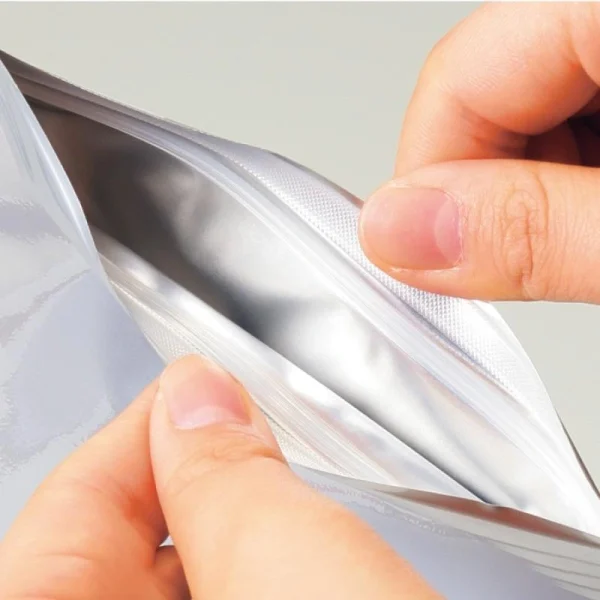
The inner layer (sealant) is what actually holds the bag together and attaches the zipper. You can buy the most expensive zipper in the world, but if the inner film is too thin, the zipper will peel off, and the bag will leak.
This is a very common problem with zipper pouches. The zipper track needs enough “grip” from the inner PE or CPP film. If the film is too thin at the zipper area, it will fail in transit.
What Should Buyers Test?
| What to Check | What to Ask Your Supplier | Why It Matters |
|---|---|---|
| Zipper compatibility | Is the zipper compatible with the inner sealant material? | Helps prevent zipper attachment problems |
| Seal integrity | Has the finished pouch been checked for seal quality? | Reduces the risk of leakage |
| Filling performance | Can the pouch handle the actual product weight and filling process? | Helps identify practical production problems |
| Drop resistance | Can filled samples withstand expected handling and transportation? | Evaluates the finished package under more realistic conditions |
For larger or heavier pouches, it is particularly useful to test samples with the actual product or a representative filling weight. Seal performance is influenced by more than film thickness. Sealing temperature, pressure, dwell time, equipment condition and pouch construction can all affect the result.
Do not simply request a zipper pouch. Tell your supplier the filling weight, zipper type and intended application, then ask for finished samples to evaluate before mass production.
How to Choose the Right Stand-Up Pouch Film Thickness
A thicker pouch is not automatically a better pouch. Thickness should be selected according to the product weight, packaging format, handling requirements and filling process. The total laminate thickness is one factor affecting the pouch’s stiffness and mechanical durability. However, it does not independently determine the pouch’s oxygen or moisture barrier performance.
Total Thickness vs. Individual Layer Thickness
When comparing quotations, confirm whether the stated thickness refers to the entire laminate or an individual film layer. For example, two suppliers may quote pouches with the same total thickness but use different layer combinations. Their barrier performance, sealing characteristics and mechanical properties may therefore differ.
Ask suppliers to provide the complete material structure and clarify the total laminate thickness.
What Happens When the Film Is Too Thin or Too Thick?
| Film Selection | Possible Consequences |
|---|---|
| Too thin for the application | The pouch may have insufficient stiffness or resistance to handling damage, depending on its structure and product |
| Too thick for the application | Material costs may increase without a meaningful improvement in packaging performance; the film may also require adjustments to the filling process |
The appropriate thickness also depends on whether the pouch contains lightweight powder, heavy granules, sharp-edged products or items that require additional puncture resistance.
Do not choose thickness by looking at one number alone. Ask for the complete layer breakdown, then evaluate the finished pouch with your actual product and filling requirements.
For a more specific discussion of flexible packaging thickness, see our custom Mylar bag thickness guide.
Stand-Up Pouch Material RFQ Checklist: What Buyers Should Specify
To get a quote that you can actually compare, do not just ask for “a price for a stand-up pouch.” Give the supplier the exact details they need to build the right structure.
Copy and paste these fields into your next email:
| RFQ Field | What You Should Write |
|---|---|
| Product Type & Weight | e.g., “Roasted coffee beans, 500g per bag.” |
| Target Shelf Life | e.g., “12 months in a dry warehouse.” |
| Main Protection Needed | e.g., “Oxygen and moisture are the biggest concerns.” |
| Structure Preference | e.g., “We are thinking PET/VMPET/PE, but open to recommendations.” |
| Total Thickness | e.g., “We need a durable bag for 500g” (Let them recommend the μm). |
| Zipper Requirement | e.g., “Press-to-close zipper that won’t break under 500g weight.” |
| Testing Requirements | e.g., “We need the supplier to provide OTR/WVTR test data.” |
If you don’t know the exact technical specs, that’s okay! Send the product details and shelf-life goal, and ask the supplier: “What structure do you recommend, and what are the OTR/WVTR values for that structure?”
Work with a Custom Stand-Up Pouch Manufacturer
Material selection is a conversation, not a guessing game. At RBD Packaging, we help brands and food manufacturers translate their product requirements into the exact laminate structure needed to protect their goods and their budget.
We provide custom structures, clear thickness definitions, and material recommendations based on your product type, shelf life, and filling method. Our quotes state the exact layer breakdown so you know what you are paying for.
Ready to start? Send us your product type, fill weight, target shelf life, and whether you need a zipper. We will help you select the right material and provide a quote for sampling.
Frequently Asked Questions
What is the best material for stand-up pouches?
There is no single best material for every stand-up pouch. PET/PE may be suitable when moderate barrier performance is sufficient. PET/VMPET/PE and PET/AL/PE are options when stronger oxygen, moisture or light protection is required. The final choice depends on the product, shelf life and storage conditions.
What is the difference between PET/PE and PET/VMPET/PE?
PET/PE is a basic laminate made with an outer PET layer and an inner PE sealing layer. PET/VMPET/PE adds a metallized PET layer that generally improves barrier protection against oxygen, moisture and light.
Is aluminum foil better than metallized film for stand-up pouches?
Aluminum foil laminates generally provide stronger barrier protection than metallized film laminates. However, the best choice depends on the product’s protection requirements, target shelf life, pouch construction and budget.
What thickness should a stand-up pouch be?
Pouch thickness depends on the product weight, packaging format, handling conditions and filling process. Buyers should confirm the total laminate thickness and material layer breakdown rather than selecting a pouch based on thickness alone.
How do I choose the right barrier material for food packaging?
Start by identifying what can affect your product’s quality, such as oxygen, moisture or light. Then provide your supplier with the product type, target shelf life and storage conditions. Ask for a recommended laminate structure and relevant OTR/WVTR test information.