TL;DR: Your first packaging order from China involves more than comparing unit prices. The true first-order cost includes sample fees, itemized tooling (dies and plates), and setup costs. Buyers must clarify tooling ownership, approve a physical production-ready sample, and separate material MOQ from product MOQ. Whether sourcing paper bags, folding cartons, or flexible pouches, a written specification and these eight pre-deposit confirmations will prevent unexpected costs and excess inventory.
Ordering custom packaging from China can help brands and distributors build packaging around their products. However, a low quotation rarely means a low total cost. A proforma invoice that says “USD 0.15 per unit” can easily become USD 0.32 once the sample fee, the die-cut tool, and the printing plates are added to the first run.
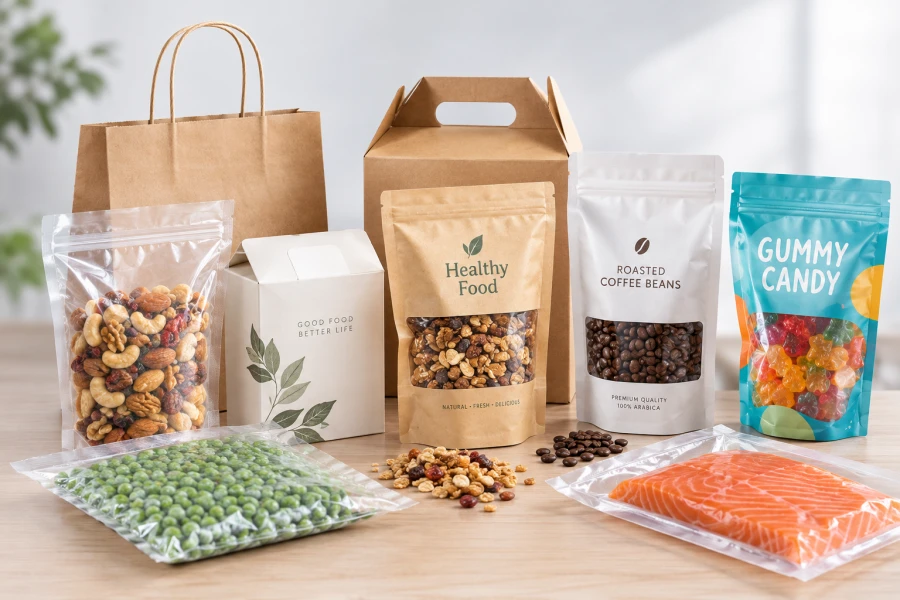
This guide explains what to confirm before paying a deposit, how to evaluate quotations, and how to plan a first order without committing more capital than necessary. It applies to custom paper bags, paper boxes, and flexible pouches—three formats that share the same cost logic but differ significantly in their tooling burden.
Why Does a First Packaging Order Go Over Budget?
A first order goes over budget because the buyer treats the unit price as the total cost, while the supplier treats it as the base material and machine time cost. Four specific issues account for most overruns:
- Incomplete quotations. The unit price is quoted without separating sample charges, printing plates, cutting dies, and artwork preparation.
- Unconfirmed specifications. Changes to dimensions or artwork after the die and plates are made require new tooling—a cost that lands on the buyer.
- Unclear ownership terms. Paying a die fee does not automatically grant the buyer title to the physical die or the right to transfer it.
- Excessive first-order quantities. Ordering to hit a lower unit price increases storage costs and risks obsolete stock if the branding changes.
The solution is not to negotiate harder on the unit price. It is to separate one-time development expenses from recurring production costs, and to treat the first order as a specification exercise rather than a price negotiation.
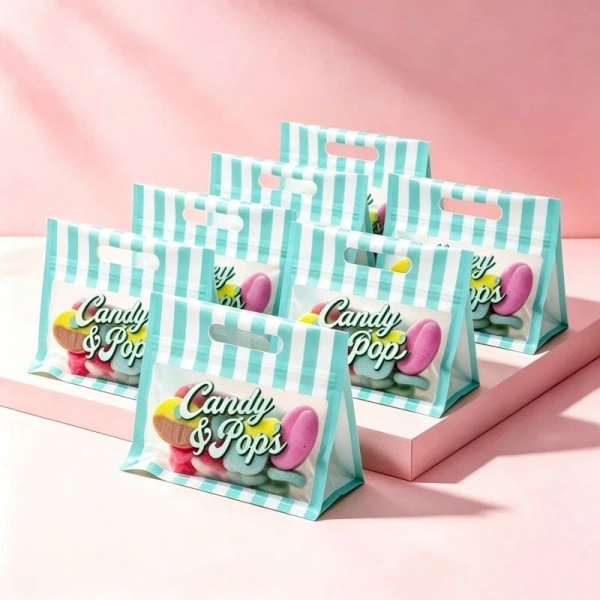
What Should You Budget for Packaging Samples and Setup Costs?
Expect to pay for samples and tooling as separate line items, not as a discount. The exact cost depends on the format, printing method, and structure, but the following ranges represent typical industry standards:
| Cost item | What it covers | Typical range (with conditions) | Paid again on reorder? |
|---|---|---|---|
| Sample fee | Physical prototype and courier | USD 4–20 per sample (RBD offers free samples, with shipping costs covered by the recipient.) | No, unless specs change |
| Cutting die / dieline | Steel-rule tool for paper bags and cartons | USD 80–350 (depending on complexity and size) | No, while structure is unchanged |
| Printing plates | Offset plates for cartons / flexo plates for bags | USD 30–80 per plate (a 4-color job needs 4 plates) | No, while artwork is unchanged |
| Gravure cylinders | Engraved copper cylinders for flexible pouches | USD 200–500 per color (a 6-color job is USD 1,200–3,000) | Often remade if artwork changes |
| Artwork / prepress | File adjustment, trapping, proofing | Varies by supplier; request as a separate line | Usually one-time per version |
Before approving a quote, ask the supplier: “Which of these lines will I pay again on my second order if I don’t change the design or dimensions?” The die and plates should not recur. The sample fee should only recur if the specification changes.
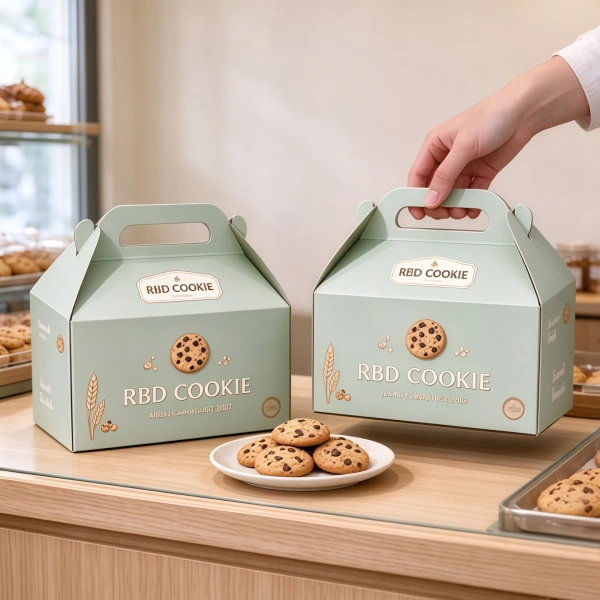
Who Owns Your Packaging Tooling and Artwork?
Paying for a cutting die or printing plate does not automatically mean you own it or can transfer it to another factory. Ownership is a contractual term, not a receipt.
When tooling is charged separately (not amortized into the unit price), the buyer should have written confirmation of ownership and transfer rights. When tooling is bundled into the unit price, the factory usually retains the tool but agrees not to re-charge after a specific volume—this amortization volume must be stated in writing.
The questions to put in writing before the deposit:
- What is the exact tooling item? (Cutting die, offset plate, gravure cylinder, emboss mould). A single “mold fee” line is insufficient.
- Who owns it? Does the buyer hold title, or is it retained by the factory?
- How long is it stored? A die discarded after 12 months is not a reusable asset, even if the buyer “owns” it.
- What is the transfer process? If the buyer switches suppliers, who packs the tool, who pays freight, and what condition is it expected to be in?
- Artwork rights: Digital artwork and physical tooling are separate assets. Confirm the file formats delivered and the usage rights included.
The buying rule: A die fee without an ownership clause is a payment, not a title. If you are paying for the tool as a separate line, ask for a written statement that the tool remains your property and can be transferred or destroyed upon request.
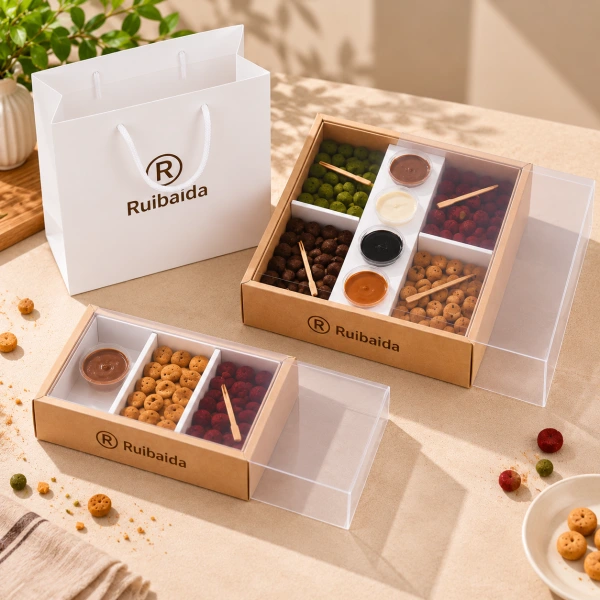
How Do Sample and Setup Costs Differ for Paper Bags, Boxes, and Flexible Pouches?
The cost logic is the same across formats—sample, tooling, unit price—but the tooling burden is completely different. A paper bag may need a die but no printing plate if flexo-printed; a folding carton needs both a die and a set of offset plates; a flexible pouch may need a rotogravure cylinder set that costs more than the pouch tooling itself.
| Format | Primary tooling | Sample cost profile | Cost driver to watch |
|---|---|---|---|
| Paper Bags | Cutting die (USD 80–350) + optional flexo plates | Lower; plain structural mock-ups are cheap | Handle attachment and paper grade |
| Folding Cartons | Cutting die (USD 80–350) + offset plates (USD 30–80/plate) | Medium; soft-touch lamination and spot UV raise the cost | Die accuracy and lamination |
| Flexible Pouches | Pouch-making die + optional gravure cylinders (USD 200–500/color) | Highest; structure and seal validation take multiple rounds | Film lamination schedule and cylinder cost |
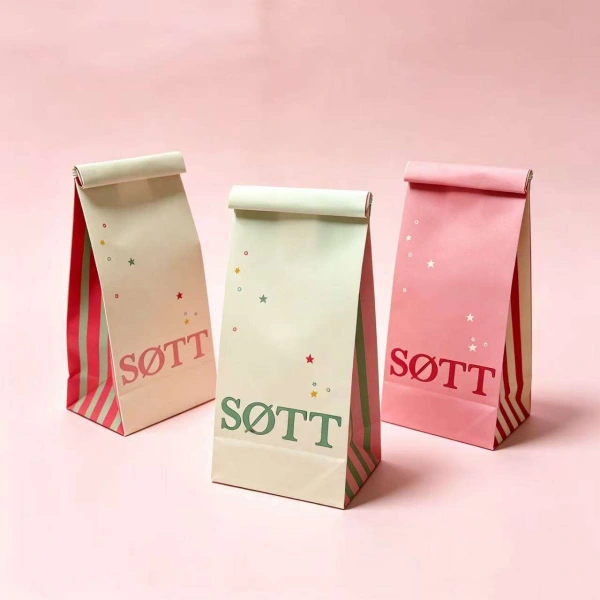
Custom paper bags
Pricing for custom paper bags is driven by paper grade and grammage, bag dimensions, handle construction, printing specifications, and any specialty surface finishes.
Before approving a pre-production sample, verify finished dimensions, handle attachment strength, paper stock, artwork placement, and suitability for your intended use. For bags designed to carry heavy or bulky items, always evaluate structural load capacity rather than judging by appearance alone.
For product-specific sourcing guidance and a full supplier audit checklist, see RBD Packaging’s complete guide: How to Buy Wholesale Bakery Paper Bags: What to Ask a Supplier.
Custom paper boxes
Custom paper boxes and folding cartons require structural engineering, a production dieline, custom cutting dies, and physical sample assembly. Buyers should validate internal clearance dimensions, folding sequence, closure reliability, product fit, and protective performance.
A design that looks flawless in a digital rendering can still fail in real-world folding or weight-bearing use. For applications where structural performance matters, always approve specifications based on a physical sample.
For detailed structural breakdowns and sourcing best practices, read our full Custom Folding Carton: Complete Buyer’s Guide.
Custom plastic bags and flexible pouches
Custom flexible packaging spans a wide range of material laminates, thicknesses, printing methods, seal requirements, and pouch formats.
Depending on the production process, orders may involve printing plates or cylinders, lamination, and dedicated bag-making setup. A transparent quotation should itemize these project-specific charges instead of bundling them into a vague unit price.
Before finalizing production, confirm the laminate structure, film thickness, finished dimensions, closure function, seal integrity, and artwork alignment. For food-contact applications, always request applicable material compliance documentation for your target market.
For deeper breakdowns of low-MOQ digital printing and full wholesale cost structures, see our guides to low MOQ stand-up pouches and custom Mylar bag guide.
How Do You Approve a Packaging Sample Before Mass Production?
A sample approval is not a confirmation that the factory can produce one good piece; it is the creation of a written, measurable reference that the mass production will be checked against. A sample approved by photograph or by “looks good” is a courtesy, not a quality gate.
- Approve structure and dimensions with tolerances. Measure the sample against target dimensions and record the acceptable tolerance range in writing.
- Approve print and color against a measurable standard. A digital proof is for layout; a physical printed sample is for color. Agree on the color reference (Pantone or physical sample) and the acceptable Delta E variation.
- Test the sample in its actual use condition. Load it, seal it, or drop it. A pouch that seals well on a hand sealer may fail on a high-speed line.
- Retain the approved sample and signed spec together. The pre-production sample is the binding reference for the entire order.
- Define the acceptance standard. For pre-shipment inspection, agree on the AQL level (commonly AQL 2.5 for major defects and 4.0 for minor defects) and the defect definitions.
A digital proof can help confirm artwork, but it cannot fully replace a physical sample when structural fit, material behavior, or actual use needs to be evaluated.
Most importantly, avoid approving a sample with the expectation that undocumented changes will be made during mass production. Any change to the approved specification should be reviewed and confirmed in writing.
How Should You Plan Your First Packaging Order?
The right first-order quantity balances expected demand, minimum order requirements, unit cost, cash flow, storage capacity, and the risk of future design changes.
Ordering more packaging can reduce the unit price in some cases, but it also increases the amount of money committed to inventory. The lowest quoted unit price does not automatically produce the lowest total business cost.
Estimate realistic demand
Start with a sales forecast for the product that will use the packaging. Consider expected sales, seasonality, the time needed to reorder, and the lead time for production and delivery.
Avoid basing the entire decision on an optimistic sales target, particularly when launching a new product or entering a new market.
Calculate the quantity for each SKU
If you have several product sizes, flavors, brands, or designs, estimate demand separately for each SKU.
A supplier’s minimum order quantity may apply per design, size, or production specification rather than across the entire project. Confirm how the MOQ is calculated before finalizing the order plan.
Compare a pilot batch with a commercial order
For a new product or untested design, a smaller initial run may help limit inventory risk if the supplier’s production process and MOQ allow it. However, a pilot batch is not always the cheapest option. Fixed setup charges can make smaller orders more expensive per unit, and some production processes may not support very low quantities.
Compare the total initial investment and expected inventory usage under different feasible order quantities before deciding.
Consider the cost of design changes
Packaging may need to change when a brand updates its logo, a product’s dimensions change, or labeling requirements are revised. Ordering too much too early can leave the buyer with unusable stock.
For products with uncertain demand or frequent design changes, inventory flexibility may be worth more than the lowest possible unit price.
The best first order is therefore the quantity that meets realistic demand while keeping the total cost, production constraints, and inventory risk manageable.
What Should You Confirm Before Paying the Deposit?
Before paying a deposit to a China packaging manufacturer, confirm that the quotation, approved specifications, sample, tooling terms, and production schedule are consistent with one another.
Use this checklist before authorizing the order:
- Packaging type, dimensions, material, and construction are documented.
- Artwork and the final sample version are approved.
- Sample, artwork, printing setup, and tooling charges are itemized where applicable.
- Tooling ownership, storage, reuse, and transfer terms are documented.
- MOQ, quantity per SKU, unit price, and total order value are confirmed.
- Production lead time and the event that starts the lead-time calculation are agreed upon.
- Inspection criteria and quality acceptance requirements are documented.
- Deposit, balance payment, and shipping terms are clear.
- Any additional costs or conditions that may apply to repeat orders have been discussed.
If a quotation leaves an important item unclear, request written clarification before paying. Resolving these details before production is generally easier than negotiating them after the order has started.
How Can You Start Your First Packaging Order with Less Risk?
The simplest way to reduce risk is to give the manufacturer a complete project brief and request a quotation that separates product costs from applicable development and setup charges.
When contacting RBD Packaging, prepare the following information where available:
- Packaging type: Custom paper bags, paper boxes, plastic bags, or flexible pouches.
- Product dimensions: The required packaging size or the dimensions of the product being packed.
- Quantity: Expected quantity per design or SKU.
- Material and structure: Your preferred specification, if known.
- Artwork: Existing print-ready files, a reference image, or a preliminary design.
- Application and target market: What the packaging will contain and where it will be sold.
- Delivery requirements: Your destination and expected delivery date.
If some specifications are not finalized, explain what you already know. A manufacturer can help identify which decisions must be made before sampling and which can be evaluated during development.
RBD Packaging supports custom packaging projects across paper bags, paper boxes, and flexible packaging. Share your product requirements to discuss suitable packaging options, sample arrangements, production requirements, and a quotation based on your project.
A first packaging order is easier to manage when costs, specifications, tooling arrangements, and approval responsibilities are clear before production begins. By comparing complete quotations and planning quantities around realistic demand, buyers can make better-informed decisions and build a more reliable foundation for repeat orders.
Frequently Asked Questions
Are packaging sample costs refundable after placing a bulk order?
Sample fees are not automatically refundable or deductible from a bulk order. The policy depends on the supplier and the agreed quotation. Confirm whether sample charges can be credited toward production before placing the order.
Who owns the printing plates or cutting dies after payment?
Ownership depends on the agreement between the buyer and supplier. Confirm who owns the physical tooling, who stores it, whether it can be reused, and whether it can be transferred to another manufacturer. Put the agreed terms in writing.
Can I order a small quantity for my first packaging run?
Possibly. The available quantity depends on the packaging format, production method, supplier MOQ, and setup costs. Ask for quotations at feasible quantities so you can compare unit price, total investment, and inventory risk.
Should I approve a digital proof or a physical sample before production?
A digital proof is useful for checking artwork and layout, while a physical sample helps evaluate dimensions, structure, materials, and relevant use characteristics. For custom packaging, the appropriate approval process depends on what needs to be verified.
What information should I send to a China packaging manufacturer for a quotation?
Provide the packaging type, dimensions, material requirements, quantity per design, artwork if available, intended application, target market, and delivery requirements. If you are unsure about the material or structure, describe the product and its intended use so the manufacturer can advise on suitable options.