Granola packaging that only looks good on the shelf is never enough. A wrong specification costs far more than a wrong quote. The right bag fits your granola’s exact volume and texture, delivers reliable moisture and oxygen protection, supports convenient storage, and communicates your brand clearly at retail. This guide explains the main granola packaging bag options and what food brands should evaluate before placing a custom bulk order.
- Bag structure: Matched to your fill weight and in-store display strategy
- Sizing: Calculated from actual product volume, not just nominal weight
- Barrier: Tuned to your shelf life target and product formulation
- Features: Zippers, windows and tear notches added only where they deliver real value
What Makes Granola Packaging Different?
Granola typically consists of baked oat clusters, whole grains, seeds, nuts, dried fruit, and natural sweeteners. Because recipes vary widely in density, oil content, and particle size, packaging must be engineered specifically for the product’s physical and chemical properties.
- Moisture Protection: Granola absorbs ambient humidity rapidly, causing clusters to soften and lose their desired crunch. The required moisture barrier depends on recipe formulation, factory climate, distribution humidity, and target shelf life.
- Oxidation Control: Recipes rich in natural oils, nuts, and seeds are susceptible to lipid oxidation. An effective oxygen barrier helps maintain product freshness, though overall shelf stability depends on the combined packaging system and recipe.
- Product Breakage & Crumbs: Large, delicate clusters can break down into crumbs during automated filling, shipping, and retail handling. Proper bag sizing, controlled headspace, and appropriate packaging design minimize mechanical stress.
- Grease & Oil Resistance: Baked goods containing high levels of natural oils require inner film layers (such as specialized PE grades) designed to prevent oil migration and staining.
- Retail Presentation: From artisanal breakfast brands to premium organic wellness lines, packaging must communicate brand positioning while remaining functional for commercial fulfillment.
Which Bag Type Is Best for Granola?
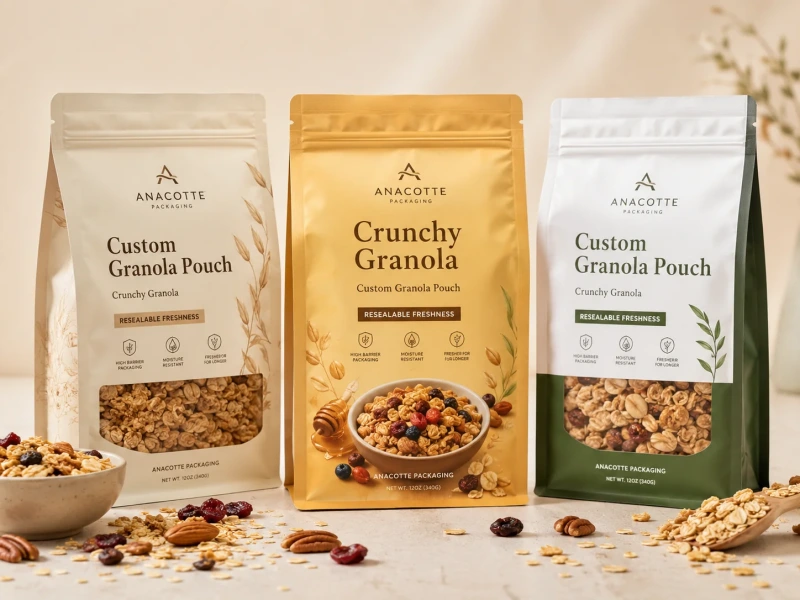
There is no single best bag for every granola product. The choice depends on the target fill weight, retail presentation, filling equipment, storage requirements, and budget.
| Bag Type | Main Advantages | Best Suited For | Points to Consider |
|---|---|---|---|
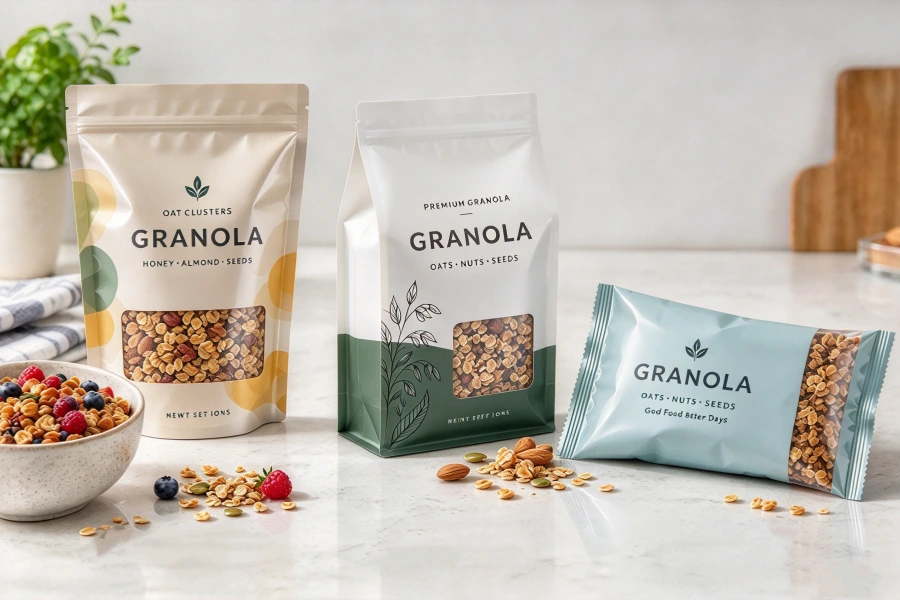
| Stand-up pouch | Upright display, broad printable front and back panels | Retail granola brands and smaller-to-medium pack sizes | Check base stability and usable filling volume |
| Flat-bottom bag | Structured shape and multiple display panels | Premium retail products and brands seeking a box-like appearance | May have a more complex construction and higher converting cost |
| Pillow pouch | Simple, compact format that can suit high-speed automated filling | Products packed on compatible form-fill-seal equipment | Equipment compatibility and sealing requirements are critical |
Stand-Up Pouches for Granola
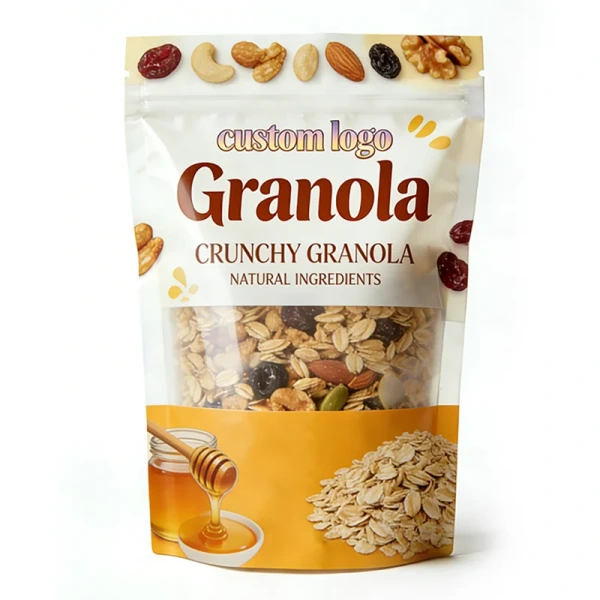
Stand-up pouches are a practical option for brands that want a flexible package with a visible retail presence. They can be produced with custom printing and, where the construction allows, features such as a resealable zipper or tear notch. They may suit granola sold through supermarkets, specialty food stores, and direct-to-consumer channels.
Before selecting a pouch, check whether the base can support the filled package, whether the opening is wide enough for the granola clusters, and whether the material structure meets the product’s protection requirements.
Flat-Bottom Bags for Granola
Flat-bottom bags provide a structured base and multiple panels for branding. They are often considered by brands seeking a more defined shelf presentation.
This format may be appropriate for premium granola lines, but it should not be selected on appearance alone. Compare the usable volume, filling convenience, storage efficiency, and total packaging cost with other structures.
Pillow Pouches for Automated Packing
Pillow pouches can be suitable for brands using compatible form-fill-seal equipment. They may offer an efficient format for products packed at scale. However, the pouch film, sealing system, filling equipment, and production speed must work together. A bag designed for manual filling may not be suitable for an automated line, and vice versa.
Practical recommendation: Compare at least two suitable bag structures using the same granola recipe and target fill weight. This makes it easier to evaluate usable capacity, shelf appearance, filling performance, and total cost.
How to Choose Granola Bag Sizes by Fill Weight
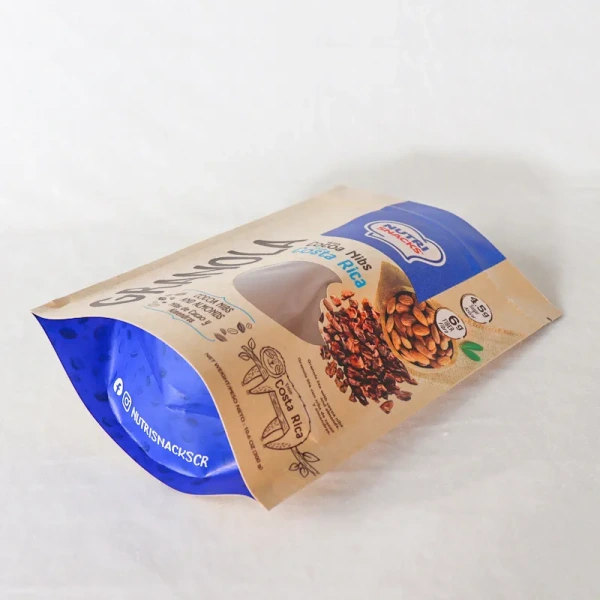
A common sourcing mistake is to select bag dimensions based on fill weight alone. Two bags holding 500 g of granola may need different dimensions if one contains dense clusters and the other contains larger, airier pieces.
The correct size depends on several factors:
- Target net weight
- Bulk density and product volume
- Cluster size and proportion of crumbs
- Required headspace for filling and sealing
- Bag structure and usable internal dimensions
- Whether the package must stand upright on a shelf
Start With Your Target Pack Sizes
Granola brands commonly develop different formats for trial purchases, standard retail packs, and larger household or refill packs. Possible target weights include 250 g, 500 g, and 1 kg, but these are planning examples rather than universal standards.
Use the following process to determine the dimensions.
- Confirm the target net weight. Decide how much granola each package must contain.
- Measure the product’s bulk density. A representative sample can help estimate the volume required for the target weight.
- Choose a preliminary bag structure. Compare the internal volume and opening of the candidate bags.
- Fill a physical sample. Check how the product settles, whether clusters are crushed, and whether there is enough room for sealing.
- Run filling and handling tests. For automated lines, verify compatibility with the actual equipment.
- Approve the final dimensions. Confirm the usable internal dimensions, gusset or base, seal area, and tolerances with the supplier.
Do not assume that a bag’s external dimensions equal its usable filling volume. Seals, gussets, and closure features reduce the space available for product.
If you are sourcing custom granola packaging, provide the target fill weight, a sample of the product, and any existing bag dimensions. These details are more useful than choosing a bag size based on grams alone.
Granola Packaging Materials and Barrier Requirements
The material structure affects moisture and oxygen transmission, puncture resistance, appearance, sealing performance, and cost. It should be selected according to the actual product and the conditions it will encounter.
Flexible Film Structures
Flexible granola bags may use multilayer structures combining layers for sealing, mechanical strength, printing, and barrier performance.
Depending on the requirements, available structures may include combinations of polyethylene (PE), polypropylene (PP), polyester (PET), barrier films, or other suitable materials. Foil-containing structures may be considered when higher barrier performance is required.
These materials are not interchangeable. Their performance depends on the specific grade, thickness, layer arrangement, seals, and conversion process.
When comparing material quotations, ask for the complete layer structure and relevant technical data rather than accepting a general description such as “high-barrier film.”
Paper-Look and Kraft-Style Granola Bags
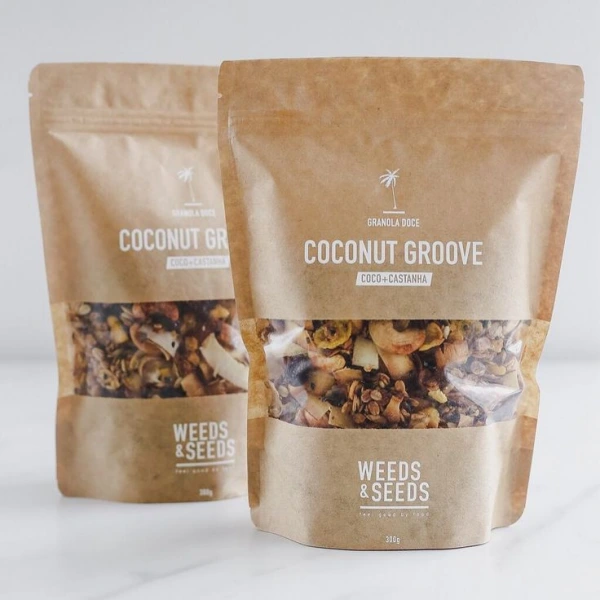
Kraft-style packaging can give granola a natural or artisanal appearance. However, the outer paper’s appearance does not establish the barrier performance of the complete package.
Paper-based bags may require an inner layer or a separate barrier structure to meet moisture, grease, or oxygen requirements. The suitability of a particular structure should be checked against the product and intended shelf life.
If your brand prefers a paper appearance, tell the supplier whether the priority is visual presentation, product protection, recyclability, or a combination of these factors.
How Much Barrier Protection Does Granola Need?
The answer depends on the formulation and the shelf-life target.
| Requirement | What to Evaluate |
|---|---|
| Moisture protection | Water vapor transmission data and expected storage humidity |
| Oxygen protection | Oxygen transmission data and susceptibility of the recipe to oxidation |
| Grease resistance | Compatibility of the inner layer with the recipe’s oils |
| Seal integrity | Seal strength, seal contamination risk, and leakage testing where relevant |
| Shelf-life performance | Testing with the actual product under representative storage conditions |
Ask the packaging supplier for technical specifications relevant to your product. Where shelf life is commercially important, conduct appropriate product and package testing before finalizing the structure. A material specification alone cannot guarantee a particular shelf life.
What About Recyclable or Compostable Granola Packaging?
Some brands want packaging with improved end-of-life characteristics. The available options depend on the bag structure, local collection systems, applicable regulations, and the performance required for the product.
Do not assume that a paper-look pouch, a mono-material film, or a compostable material is automatically suitable for every granola recipe. Confirm both packaging performance and the evidence needed for any environmental claim in the target market.
Do Granola Bags Need a Zipper, Window, or Heat Seal?
Packaging features should solve a defined customer or operational need. Adding every available option can increase cost without providing meaningful value.
Resealable Zipper
A zipper allows consumers to open and reclose a compatible pouch. It may be useful for multi-serving packs that are not consumed in one sitting.
However, a zipper is not necessarily an airtight seal. For products requiring specific oxygen or moisture protection, the initial heat seal, barrier structure, and complete package design should be evaluated separately.
Heat Seal
A heat seal can provide a closed package before first use when the material and sealing conditions are suitable. Seal integrity depends on the film structure, sealing temperature, pressure, dwell time, and product contamination in the seal area.
If the bag includes a zipper, clarify whether the package also requires a seal above the zipper.
Transparent Window
A window can help shoppers see the granola’s texture, clusters, and ingredients. It may suit brands that prioritize product visibility.
The window should not compromise the package’s required barrier performance. Confirm how the window is constructed and whether the complete bag meets the intended shelf-life requirements.
Tear Notch and Opening Design
A tear notch can make the package easier to open. The opening should be tested with the finished material and intended bag dimensions to ensure it works as expected.
How to decide: Start with the required shelf life and consumer usage. Then add a zipper, window, or other feature only if it supports those requirements.
Custom Printing and Retail Packaging Design
Custom printed granola bags help food brands maintain a consistent identity across product varieties and retail channels.
Before approving the artwork, consider the following:
- Brand visibility: Make the product name, flavor, and key brand elements easy to identify.
- Product range: Use a consistent visual system across different recipes and pack sizes.
- Finish: Compare matte, gloss, and other available finishes against the desired appearance and material construction.
- Product window: Decide whether visibility of the granola supports the product’s positioning.
- Retail requirements: Confirm the space needed for required product information, barcodes, and other market-specific labeling.
- Print method: Ask the supplier which printing process is suitable for the material, artwork, and order quantity.
If your brand is still developing the packaging, a reference image and a preliminary artwork file can help the manufacturer assess feasibility. Final artwork should be checked against the actual bag dimensions and printable area.
What Affects the Cost of Custom Granola Bags?
There is no reliable universal price for custom granola packaging. A quotation depends on the complete specification and the quantity ordered.
The main cost factors include:
- Bag size and structure: Larger bags generally use more material. Complex structures may require additional converting steps.
- Material composition: Film type, layer count, thickness, barrier requirements, and special finishes can affect material cost.
- Printing: Artwork complexity, color requirements, printing method, and setup costs can affect the unit price.
- Additional features: Zippers, windows, tear notches, valves where applicable, and other features may change the construction and cost.
- Order quantity: Larger orders may reduce the allocated setup cost per unit, but the actual price break depends on the supplier and specification.
- Shipping and packaging: Carton dimensions, order volume, shipping method, destination, and delivery terms affect the total landed cost.
When comparing suppliers, evaluate the same dimensions, material structure, printing, quantity, and delivery terms. A lower unit price is not necessarily the lower-cost option if the material does not meet your product requirements or the bags do not run reliably on your filling line.
How to Source Custom Granola Packaging in Bulk
A clear request for quotation helps the manufacturer recommend suitable options and reduces unnecessary revisions.
Information to Include in Your RFQ
Before requesting a quotation, prepare as much of the following information as possible:
| Information | What to Provide |
|---|---|
| Product | Granola recipe or general product description |
| Net weight | Target fill weight for each bag |
| Bag structure | Preferred format, if known |
| Dimensions | Existing dimensions or a reference sample |
| Material | Barrier or appearance requirements, if known |
| Features | Zipper, window, tear notch, and initial heat seal requirements |
| Printing | Artwork, logo, colors, and finish preferences |
| Quantity | Expected order quantity per size or design |
| Destination | Delivery country and postal code if available |
| Timing | Sample approval and required delivery date |
If you do not know the exact bag size or material, provide the product sample, target weight, and expected shelf life. A suitable manufacturer can help review possible constructions, but the final specification should be validated through testing.
Test Samples Before Bulk Production
A sample is useful for checking dimensions, appearance, opening, closure, and filling convenience. For granola, also assess whether the package handles the product without excessive crushing and whether the bag performs as expected during storage and distribution.
Where applicable, verify seal integrity and material barrier specifications. Shelf-life claims should be supported by suitable product and package testing rather than a visual inspection alone.
Confirm the Final Specification
Before production, approve the final artwork, bag dimensions, material structure, closure features, quantity, tolerances, and delivery schedule in writing.
For food-contact packaging, request documentation appropriate to the material and destination market. The required evidence depends on the applicable regulations and the intended use of the packaging.
Request a Quote for Custom Granola Packaging Bags
RBD Packaging works with businesses sourcing custom food packaging for branded retail and wholesale applications. If you are developing a granola product, the right starting point is your target fill weight, product characteristics, desired bag style, and order quantity.
Share your current bag dimensions or a reference sample if available. If you have not selected a bag structure yet, explain your shelf presentation and product protection requirements so the options can be assessed before quotation.
For bulk packaging inquiries, email the packaging expert at [email protected] with your target weight, bag size, artwork, quantity, and delivery destination.
Frequently Asked Questions
What type of packaging bag is best for granola?
Stand-up pouches, flat-bottom bags, side-gusset bags, and pillow pouches can all be suitable in different circumstances. The best option depends on product volume, barrier requirements, retail presentation, filling equipment, and budget.
What size bag do I need for 500 g of granola?
There is no universal dimension for a 500 g pack. The required size depends on bulk density, cluster size, crumbs, bag structure, and sealing space. Test a sample with the actual product before approving dimensions.
Does granola packaging need a high moisture barrier?
Granola that must retain a crisp texture may require moisture protection, but the required level depends on the recipe, storage conditions, and shelf-life target. Ask for material specifications and validate the complete package with suitable testing.
Should granola bags have a zipper?
A zipper can be useful for multi-serving packs because it allows consumers to reclose the bag. It does not automatically provide an airtight seal, so any additional barrier or sealing requirements should be assessed separately.
Can granola bags be custom printed?
Custom printing is available for many flexible packaging formats, subject to the material, printing method, artwork, and order quantity. Confirm the printable area and final artwork with the manufacturer before production.
What information is needed for a bulk granola bag quotation?
Provide the target fill weight, bag dimensions or reference sample, preferred structure, material requirements, artwork, order quantity, destination country, and required delivery date. If some details are not yet decided, share the product and intended use so suitable options can be reviewed.