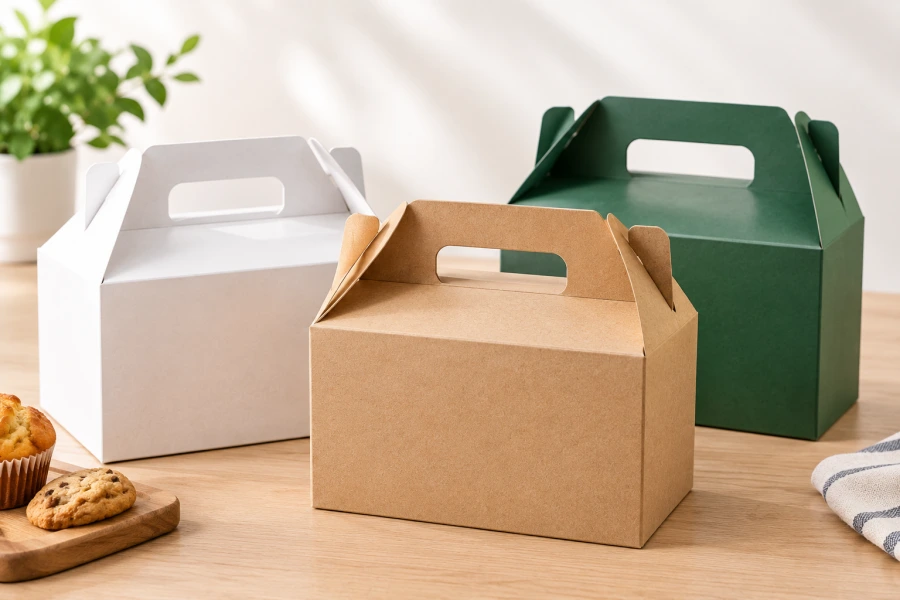
TL;DR: Gable box handle strength depends on more than paperboard GSM. Board grade, caliper, handle-opening design, score lines, base construction, adhesive bonding, and actual product weight all affect carrying performance. Before ordering custom gable boxes, define the filled weight, inspect the handle and base structure, and validate production-representative samples under agreed loading and carrying conditions.
What Determines Gable Box Handle Strength?
Gable box handle strength depends on how the handle, surrounding board, folded structure, and base work together under load. Choosing a higher paperboard GSM may improve stiffness, but it does not automatically prevent tearing or guarantee a specific carrying capacity.
The main factors are:
- Paperboard grade: Different board grades have different stiffness, strength, and folding characteristics at the same GSM.
- Caliper: Board thickness affects stiffness, folding behavior, and the space required by the box structure.
- Handle-opening design: The opening shape, edge geometry, and distance from nearby score lines influence where stress concentrates.
- Score lines and folds: Poorly positioned or excessively deep scores can weaken areas that carry tensile stress.
- Base construction: The bottom panel and its locking or bonding structure must support the contents without opening or deforming.
- Adhesive bonding: Glue coverage, bonding area, curing, and production consistency can affect structural reliability.
- Real carrying conditions: Product weight, weight distribution, moisture, handling, and repeated lifting all influence performance.
For procurement teams, the most reliable approach is to specify the actual packed weight and test the proposed box structure rather than relying on GSM alone.
Why Do Gable Box Handles Tear at the Score Line?
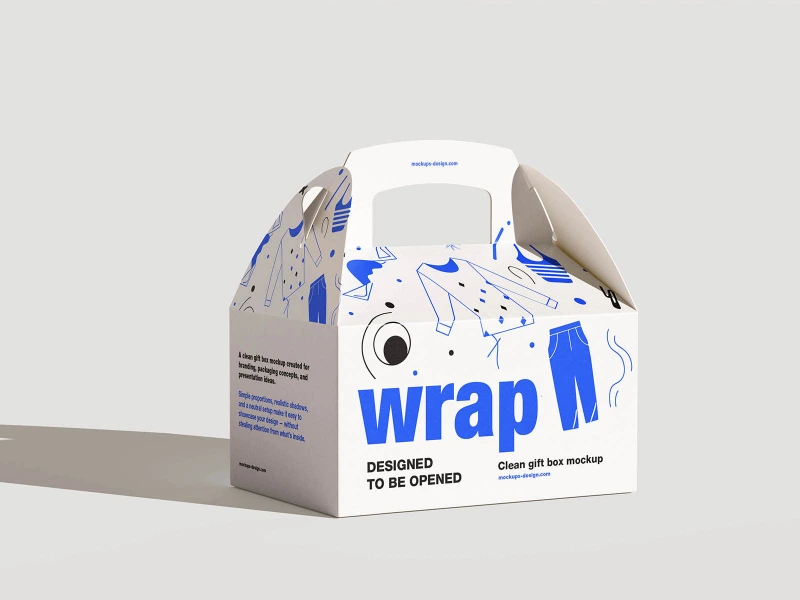
Gable box handle tearing often occurs when concentrated stress acts on a weakened area around the handle opening or a nearby fold. The precise failure location depends on the dieline, board properties, cutting quality, and how the box is loaded.
1. The handle opening concentrates stress
When a filled box is lifted, the handle transfers the contents’ weight into the surrounding paperboard. Narrow sections, sharp transitions, or insufficient material around the opening may concentrate stress and allow a tear to start.
A handle design should provide enough material around the opening while remaining comfortable to grip. The opening shape and surrounding clearances should be reviewed together with the complete dieline.
2. Score lines can weaken load-bearing areas
Scoring makes paperboard easier to fold, but it also changes the structure of the board. If a score line is too close to a highly stressed handle area, or if the scoring process damages the board excessively, tearing may begin along that line.
The solution is not simply to remove score lines. The box still needs to fold correctly. Instead, review the relationship between the handle opening, score position, board grade, and folding sequence.
3. Board selection may not match the application
A board that works for lightweight bakery items may not perform equally well when the same box contains several heavy products. Large box dimensions, uneven contents, and repeated carrying can also change the stress placed on the handle.
If samples tear during testing, evaluate the full structure before increasing GSM. A revised handle shape, greater reinforcement area, a different board grade, or a stronger base may be more effective than changing board weight alone.
4. Cutting and converting quality matter
Incomplete cuts, rough edges, damaged fibers, inconsistent scores, and variation between production runs can contribute to early failure. These issues are especially important around handle openings and narrow connecting sections.
When evaluating a supplier, inspect finished samples rather than approving the design from a flat dieline alone.

How Should You Choose Gable Box Board GSM and Caliper?
Choose paperboard based on the finished box dimensions, intended contents, structural design, and validation results. GSM measures mass per unit area; caliper measures thickness. They are related material properties, but there is no universal conversion between them.
GSM and caliper are not interchangeable
GSM tells you how much a square meter of board weighs. Caliper tells you how thick the board is. Two paperboards with the same GSM can have different thicknesses and mechanical properties because of differences in fiber composition, density, coating, and manufacturing.
For this reason, a specification should not state only “300 GSM board” or “350 GSM board” when structural performance matters. Ask the supplier to confirm the actual board grade and caliper for the proposed material.
| Specification | What it tells you | Why it matters |
|---|---|---|
| Board GSM | Mass per unit area | Helps define material weight and compare proposed grades |
| Board caliper | Material thickness | Influences stiffness, folds, and structural fit |
| Board grade | Type and properties of the paperboard | Helps determine whether the material suits the application |
| Grain direction | Fiber orientation in the board | Can affect folding behavior and resistance to cracking |
| Coating or lining | Surface treatment or added layer | May affect print quality, moisture resistance, and food-contact suitability |
| Handle structure | Opening shape and reinforcement design | Influences stress distribution around the grip |
| Base structure | Locking, folding, or bonding arrangement | Influences how the contents are supported |
A practical board-selection process
Use the following process when specifying custom gable boxes:
- Calculate the filled weight. Include the product, inner packaging, inserts, and accessories.
- Confirm the finished dimensions. Box width, depth, and height affect panel stiffness and how the contents distribute their weight.
- Identify the board grade and caliper. Request the proposed material specification instead of relying on GSM alone.
- Review the handle and base. Check the handle opening, surrounding material, score positions, bottom structure, and bonding areas.
- Test production-representative samples. Evaluate the complete box with the intended contents or a suitable simulated load.
- Approve the specification after validation. Record the material, dieline revision, construction, and test conditions so production matches the approved sample.
There is no single GSM value that guarantees a particular load capacity for every gable box. Any recommended board weight should be treated as a starting point until the finished design has been validated.
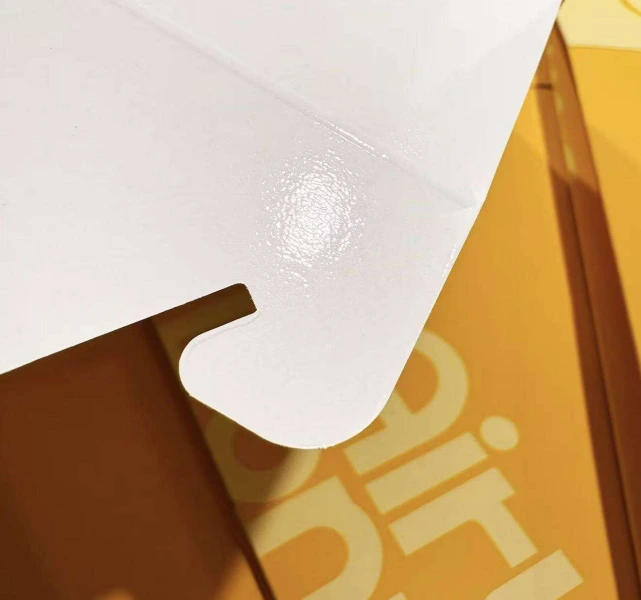
How Can You Prevent Gable Box Handle Tearing?
Preventing gable box handle tearing requires a coordinated review of material selection, handle geometry, reinforcement, base construction, and converting quality. Increasing board weight may help, but it should not be the only corrective action.
Optimize the handle opening
Review the opening shape, edge finish, and amount of material surrounding the grip. Avoid unnecessarily narrow sections or sharp transitions where the design allows alternatives. The handle must also remain comfortable and practical for the intended user.
Consider handle reinforcement
Depending on the box design, reinforcement may involve a doubled board section, an added reinforcement panel, or a revised handle structure. The best option depends on the dieline, board grade, available production methods, and the intended load.
Reinforcement should be designed into the structure and tested with the finished box. Adding material without checking folds, bonding, and stress distribution may introduce new weaknesses.
Match the base to the contents
A strong handle cannot compensate for a base that opens, buckles, or allows the contents to shift excessively. Review the bottom panel and locking or adhesive structure as part of the same load-bearing system.
For heavier contents, the supplier may need to revise the base geometry, bonding area, or overall box construction. The correct solution should be confirmed through sample testing.
Control scoring, cutting, and bonding
Inspect handle openings for rough edges and damaged fibers. Check whether score lines are consistent and whether the box folds without excessive cracking. For glued structures, verify adhesive coverage and bonding consistency.
If failures appear in production, compare the failed samples with the approved sample and identify whether the cause is material variation, converting quality, assembly, or design.

How to Test Gable Box Handle Load Capacity
Gable box load capacity should be established through an agreed test on the actual box design. A board GSM specification or a general packaging test standard cannot, by itself, establish a universal handle load rating.
The test should represent the intended packed product and normal carrying conditions as closely as practical.
Loaded-handle validation protocol
The following is an example of a project-specific validation protocol. It is not a universal industry standard; the buyer and supplier should agree on the test conditions and acceptance criteria before testing.
Step 1: Prepare production-representative samples
Use samples made with the intended board grade, caliper, dieline, handle construction, base, adhesive, and converting process. Record the material and design revision.
Step 2: Define the test load
Use the actual total packed weight, including the product, inserts, and inner packaging. Confirm how the load is distributed inside the box. If an overload condition is required, agree on the target load with the buyer and supplier before testing.
Step 3: Define the loading duration
Agree on how long the filled box must remain suspended or supported by its handle. The duration should reflect the intended use and the project’s risk requirements.
Step 4: Define the carrying cycles
If the box will be carried repeatedly, agree on the number of lifting and lowering cycles, the carrying distance, and any handling conditions that need to be simulated.
Step 5: Set pass/fail criteria
Before testing, agree on what constitutes failure. Criteria may include:
- No tearing that compromises handle use.
- No handle opening that expands enough to affect safe carrying.
- No base opening or structural collapse.
- No adhesive separation that compromises the box.
- No unacceptable permanent deformation after the test.
The specific limits should be documented rather than decided after the test has started.
Step 6: Record the results
Document the sample quantity, material specification, filled weight, test conditions, pass/fail results, and photographs of any deformation or failure locations. If a sample fails, use the evidence to revise the structure and repeat the agreed validation.
Which packaging tests are relevant?
Different tests evaluate different failure modes, so it is important not to treat them as interchangeable.
- Project-specific handle loading: Directly evaluates the handle and box under the agreed carrying conditions.
- ISTA 2A: A partial simulation test procedure for individual packaged products weighing up to 68 kg. It is not a dedicated gable box handle-pull test. Use it only when the distribution-testing scope matches the packaged product and the project’s requirements.
- TAPPI T 821: A pin adhesion test for corrugated board. It does not directly establish the carrying capacity of a paperboard gable box handle.
If a buyer requires a recognized test method, confirm the exact standard, specimen configuration, and acceptance criteria with the testing provider. Do not claim that a box has passed a particular standard unless the relevant test was actually performed.
What Should You Specify When Ordering Custom Gable Boxes with Handles?
A complete RFQ should describe the packed product, material, dimensions, handle design, base construction, and required performance. This gives the packaging manufacturer enough information to recommend a suitable structure and prepare samples for evaluation.
| RFQ item | Information to provide |
|---|---|
| Product | What will be packed inside the gable box? |
| Filled weight | Total weight of the product and all inner packaging |
| Box dimensions | Finished width × depth × height |
| Board specification | Preferred board grade and GSM, if known; request the proposed caliper |
| Printing | Artwork, number of colors, and finish requirements |
| Handle | Required grip opening, user requirements, and any reinforcement preference |
| Base | Preferred construction or requirements for supporting the contents |
| Product conditions | Whether the box may encounter moisture, oil, refrigeration, or other relevant conditions |
| Validation | Required load, duration, carrying cycles, sample quantity, and pass/fail criteria |
| Order details | Estimated quantity, destination market, and target delivery schedule |
If the board grade or construction is not yet decided, provide the filled weight, box dimensions, product photos, and intended use. The manufacturer can then propose a suitable structure for sampling and validation.
RFQ template for buyers
Copy and complete the following template when requesting a quotation:
- We are looking for custom gable boxes with handles for .
- Finished box dimensions: [W × D × H]
- Total filled weight: [weight]
- Estimated order quantity: [quantity]
- Board preference, if any: [grade/GSM]
- Printing and finish: [requirements]
- Handle and base requirements: [details]
- Product conditions: [dry, oily, chilled, or other]
- Required load-validation conditions: [load, duration, cycles, and acceptance criteria]
- Delivery destination: [country]
Please recommend a suitable board grade and caliper, review the handle and base structure, and provide a sample for approval before mass production.
Frequently Asked Questions
Does higher GSM always make a gable box handle stronger?
No. Higher GSM may contribute to a stiffer structure, but handle performance also depends on board grade, caliper, opening geometry, score lines, base construction, bonding, and converting quality. Validate the complete design under the intended load.
What GSM is best for a gable box with a handle?
There is no universal best GSM for every gable box. The appropriate material depends on the box dimensions, filled weight, board properties, and structural design. Ask the supplier to recommend a board grade and caliper, then test the finished sample.
Why does my gable box handle tear even when the board feels thick?
Thickness alone does not determine tear resistance. A handle may fail because of stress concentration, damaged fibers, unsuitable score placement, an insufficient reinforcement area, or inconsistent converting quality. Inspect the actual failure location before changing the material.
Should I reinforce the handle or increase the board GSM?
It depends on the failure mode. If tearing begins around the handle opening, revising the opening geometry or adding suitable reinforcement may help. If the entire box flexes excessively, a material or structural change may be more appropriate. Test the revised design before approving production.
Can a supplier guarantee gable box load capacity from GSM alone?
A reliable load rating should not be based on GSM alone. The supplier needs to consider the complete box construction and validate it under agreed test conditions. Any capacity claim should specify the tested design and conditions.
Is ISTA 2A a handle-strength test?
No. ISTA 2A is a partial simulation test procedure for individual packaged products up to 68 kg. It does not replace a project-specific test of the gable box handle under carrying loads.
What information should I provide to get a reliable gable box quotation?
Provide the product type, filled weight, box dimensions, order quantity, printing requirements, delivery destination, and any special product conditions. If handle strength is important, also define the expected load and agree on sample-validation criteria with the supplier.
Request Custom Gable Boxes with Handles
RBD Packaging provides custom packaging solutions for businesses that need packaging designed around their products, branding, and order requirements.
For custom gable boxes with handles, share your product details, finished dimensions, filled weight, printing artwork, and estimated order quantity. Our team can review the proposed construction, discuss board options, and help arrange samples for evaluation before mass production.
Request a quotation to discuss your custom gable box specifications and sampling requirements.