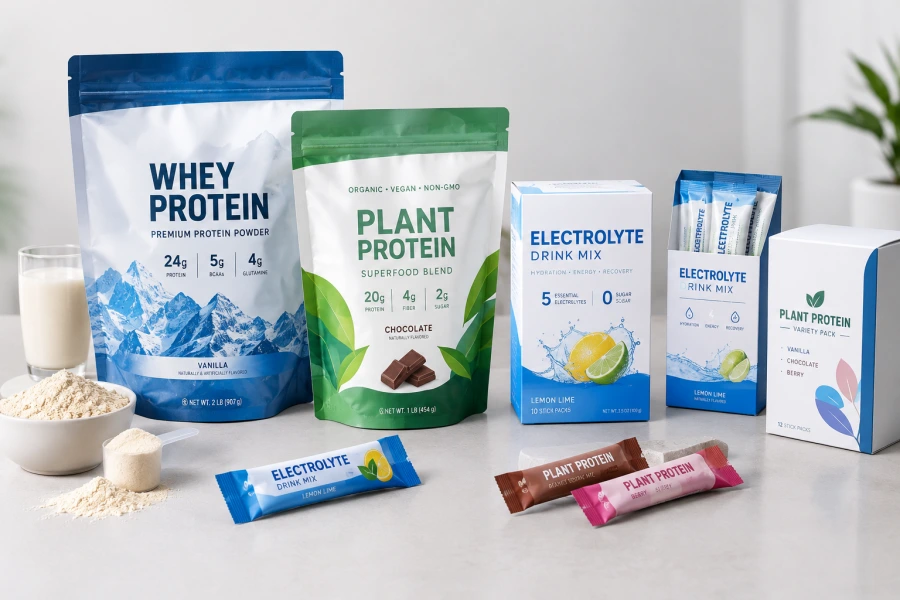
Choosing powder packaging bags and retail cartons as separate items can create avoidable problems: pouches may not fit the carton after filling, stick packs may be difficult to arrange, and artwork changes can delay quotations. For protein powder and electrolyte products, the practical approach is to plan primary packaging and secondary packaging together. This guide explains how to select compatible formats, confirm dimensions, organize multiple SKUs, and prepare a more accurate B2B packaging RFQ.
What Are Primary and Secondary Packaging for Powder Products?
Primary packaging directly contains the powder, while secondary packaging groups or presents the primary packs for retail sale. Their specifications should be coordinated before production.
Primary Packaging: Pouches, Sachets and Stick Packs
Protein powder sold in larger quantities commonly uses stand-up pouches or flat-bottom pouches. Depending on the product and filling process, these may include resealable zippers and laminated film structures.
Electrolyte powder is often packaged in single-serve stick packs or sachets. These formats support portion control and can be grouped into a printed retail carton. The appropriate structure depends on the filling equipment, target pack size, sealing requirements, and product protection needs.
Secondary Packaging: Printed Folding Cartons
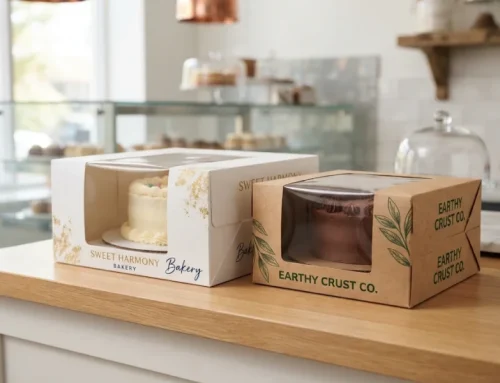
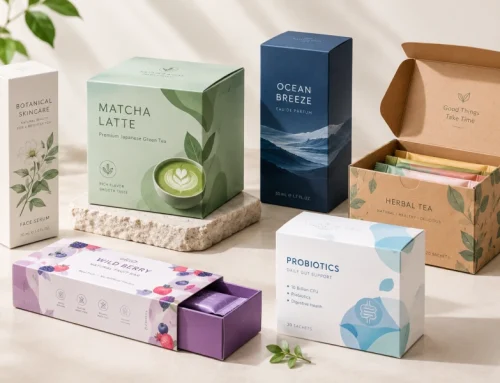
A retail carton can group several sachets or stick packs, carry product information, and support shelf presentation. Its internal dimensions and structure must accommodate the actual packaged units.
A retail carton is not the same as a shipping carton. Retail cartons are generally designed around product presentation and handling, while transport cartons are selected for distribution and shipping requirements.
Which Powder Packaging Bags and Retail Cartons Fit Your Product?
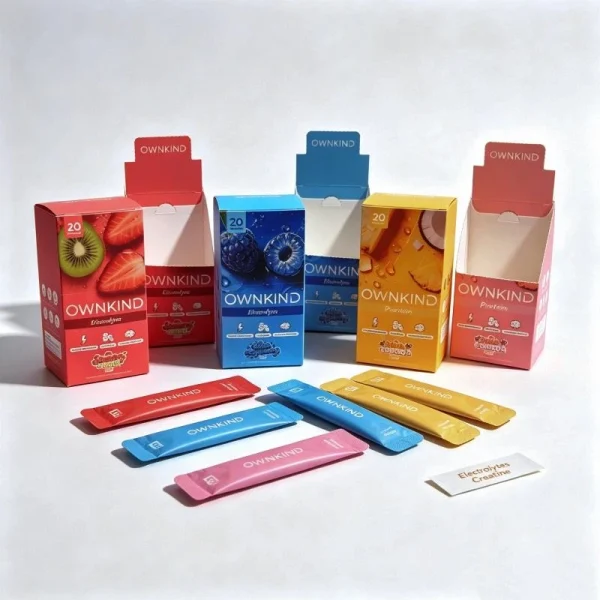
The best packaging combination depends on the serving format, filling method, sales channel, and how the product will be used after purchase.
| Product format | Primary packaging | Secondary packaging considerations |
|---|---|---|
| Protein powder for repeated use | Stand-up or flat-bottom pouch | Confirm filled pouch dimensions, closure position, and shelf presentation |
| Single-serve electrolyte powder | Stick packs or sachets | Confirm units per box, pack arrangement, and carton opening |
| Multi-flavor sampler pack | Individual sachets or small pouches | Check the number of variants, pack orientation, and space for inserts if required |
| Multi-unit retail pack | Multiple primary packs | Verify total packed volume, carton strength, and packing efficiency |
When Should You Use a Large Powder Pouch?
A larger pouch is worth evaluating when the product is sold in bulk quantities for repeated use. The selection should account for net weight, powder bulk density, filling method, pouch dimensions, closure type, and the way consumers access the product.
Net weight alone does not determine pouch size. Two powders with the same weight can occupy different volumes because their bulk densities differ. Confirm the actual filled volume and pouch dimensions with the packaging or filling team before finalizing the carton.
When Should You Use Stick Packs with a Retail Carton?
Stick packs are suitable for products sold in individual servings, travel formats, or multi-unit boxes. Before specifying a carton, confirm the stick pack’s finished dimensions, the number of packs per box, and how the packs will be arranged.
Do not calculate carton size from the nominal stick pack dimensions alone. Seals, folded ends, pack orientation, and the intended arrangement can affect the required internal space.
How Do You Match Pouch Dimensions with Carton Size?
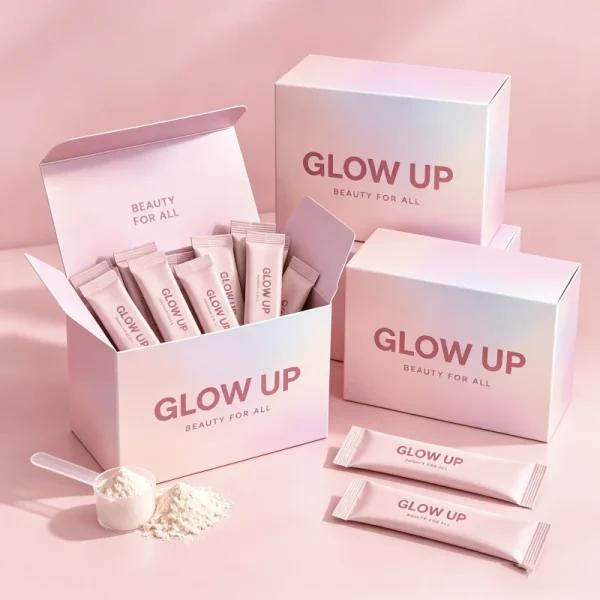
The carton should be sized around the actual filled package or final stick pack arrangement, not just an empty pouch or an unsealed film sample.
Measure the Filled Package, Not Just the Empty Bag
For a powder pouch, confirm:
- Finished width and height.
- Bottom gusset or side gusset dimensions, where applicable.
- Zipper and top-seal positions.
- Approximate filled thickness and overall shape.
- Any protruding features or areas that should not be compressed.
The filled package may have a different profile from the empty bag. Powder distribution, filling level, and pouch construction can all influence its final dimensions.
For stick packs, record the finished length and width, including the sealed ends. If the packs are folded or grouped inside the carton, document that arrangement as well.
Confirm Internal Carton Dimensions and Packing Layout
Carton dimensions should allow the intended units to fit without excessive pressure or unnecessary movement. Confirm internal dimensions rather than relying only on external measurements, because board thickness and carton construction affect usable space.
Before approving production, request a structural sample or conduct an actual packing test when the layout is uncertain. Check that the carton can be assembled, filled, closed, and opened as intended. This is particularly important when a carton contains multiple flavors or a high number of stick packs.
What Should You Confirm About Materials, Sealing and Printing?
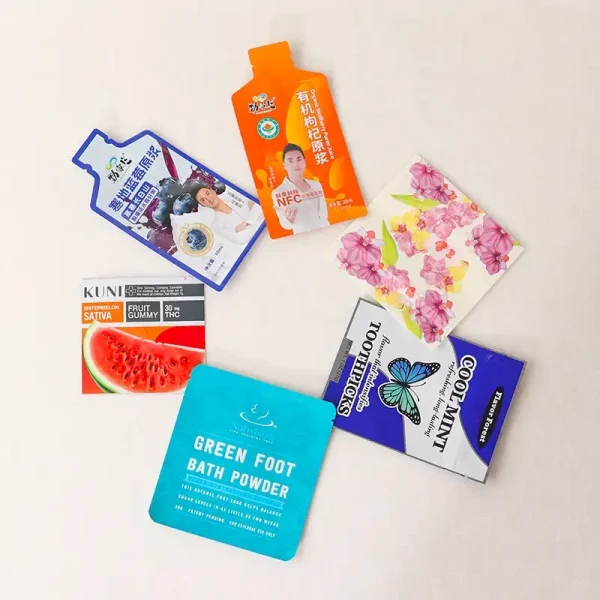
Flexible packaging and folding cartons perform different functions, so each should be specified according to its role and the product’s requirements.
Match Flexible Packaging to Product and Filling Requirements
Protein and electrolyte powders can be sensitive to moisture exposure, but the required packaging structure depends on the formulation, expected storage conditions, distribution route, and intended shelf life.
Ask the supplier to explain the proposed film structure and the evidence supporting its suitability. If barrier performance is critical, request relevant test data and confirm whether the data applies to the proposed finished structure. Seal integrity should also be evaluated under the intended filling and storage conditions.
For rollstock, confirm compatibility with the filling machine, including web width, roll specifications, sealing requirements, and print registration needs. For premade pouches, confirm the filling method and required opening dimensions.
Select Carton Board and Finishes for Retail Use
Carton board should be selected according to carton size, product weight, handling conditions, print requirements, and distribution needs. A larger carton or a heavier arrangement may require a different structural design from a small sampler box.
Coatings and decorative finishes should be selected only after considering the intended appearance, handling requirements, and applicable packaging specifications. A printed carton should not be assumed to provide the moisture barrier required by the powder; that function must be evaluated at the primary-packaging level.
Check Artwork and Required Product Information
Coordinate artwork across the pouch or stick pack and the retail carton. Confirm the product name, flavor, net weight, serving information, barcode placement, and other required information for the target market.
Regulatory requirements depend on the product category and destination country. The brand owner should approve the final copy and artwork before printing. The packaging supplier can help confirm available print areas and technical file requirements, but should not be assumed to provide regulatory approval.
How Do Multiple Flavors and SKUs Affect Packaging Procurement?
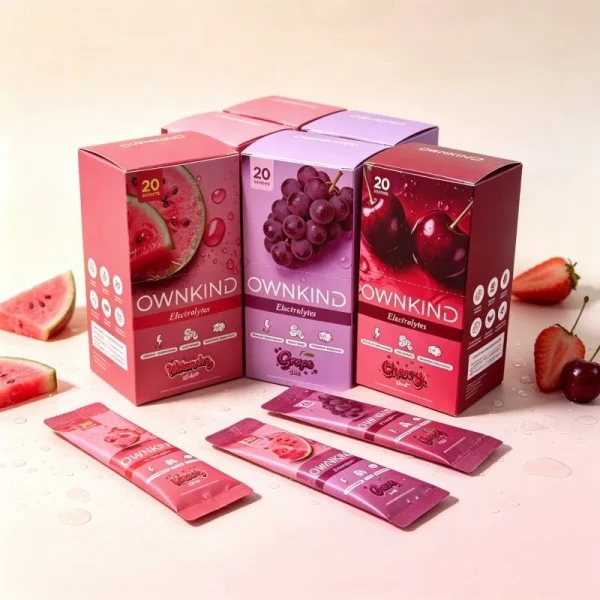
Each flavor, net weight, pack count, or artwork version may create a separate packaging specification, even when the basic format remains the same.
A brand may be able to standardize some dimensions across a product range, but this should be confirmed through actual fit and production requirements. Different powder volumes can change pouch dimensions, while different stick pack counts can require different carton layouts.
Before requesting a quotation, prepare a SKU matrix showing each product variant, primary-pack format, net weight or serving count, carton quantity, and artwork version. Ask the supplier which components can share a common structure and which require separate specifications or printing arrangements.
This review helps reduce quotation revisions and makes it easier to compare costs across the full product range. Do not assume that common dimensions automatically mean identical pricing or production requirements.
What Information Should You Include in a Powder Packaging RFQ?
A complete RFQ gives the supplier enough information to assess the packaging format, dimensions, materials, printing, and order scope.
Use this checklist before contacting a packaging manufacturer:
- Product details: Protein powder, electrolyte powder, or another supplement powder; net weight or serving size.
- Primary packaging: Stand-up pouch, flat-bottom pouch, stick pack, sachet, or rollstock.
- Filling process: Premade pouch filling or form-fill-seal equipment; provide available machine specifications where relevant.
- Secondary packaging: Retail carton type, intended pack count, and preferred pack arrangement.
- Dimensions: Existing pouch or stick pack drawings, samples, or preliminary measurements.
- Materials and performance: Required product protection, sealing needs, and any documented test or compliance requirements.
- SKU details: Number of flavors, sizes, artwork versions, and quantities per SKU.
- Artwork: Print-ready files if available, or confirmation that design work is still pending.
- Order and delivery: Estimated quantity, destination market, shipping destination, and target launch date.
- Sampling: Whether you need a structural sample, printed proof, or a sample made with the proposed production materials.
If some dimensions are not yet available, state that clearly. A supplier may be able to help assess the packaging structure, but final dimensions and pricing may depend on sample confirmation, equipment compatibility, and the approved specifications.
Frequently Asked Questions
Should powder pouches always be packed in a retail carton?
No. A retail carton is needed only when the sales format, product presentation, distribution requirements, or brand specifications call for one. Confirm whether the pouch alone meets the product’s handling and retail requirements.
How do you determine the right carton size for stick packs?
Measure the finished stick packs, determine the number of units per carton, and specify the intended arrangement. Confirm internal carton dimensions through a structural sample or packing test before approving production.
Can custom stick packs and folding cartons be ordered together?
They may be sourced as a coordinated packaging project if the supplier offers both formats or can coordinate the required production. Confirm the actual supply scope, material specifications, sampling process, and responsibilities for each component.
What information is needed for a custom powder packaging quote?
Provide the product type, net weight or serving count, primary-pack format, carton quantity, dimensions if available, artwork status, SKU count, order quantity, destination market, and target launch date. Missing specifications may need to be confirmed before a final quotation can be issued.
How do you choose packaging materials for protein or electrolyte powder?
Start with the product’s moisture sensitivity, expected storage conditions, filling process, and target shelf life. Ask the supplier to recommend a suitable structure and provide relevant technical evidence; verify performance through appropriate testing rather than relying on material names alone.
Request a Quote for Coordinated Powder Packaging
If you are sourcing custom powder pouches or stick packs together with printed retail cartons, prepare the available product and packaging specifications before requesting a quote.
Contact RBD Packaging with your product type, net weight or serving format, preferred primary packaging, carton pack count, SKU quantity, artwork status, and estimated order volume. If the dimensions are not finalized, share your current drawings or samples so the required specifications can be reviewed before quotation and sampling.