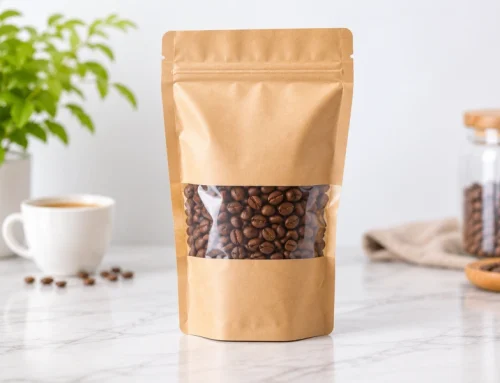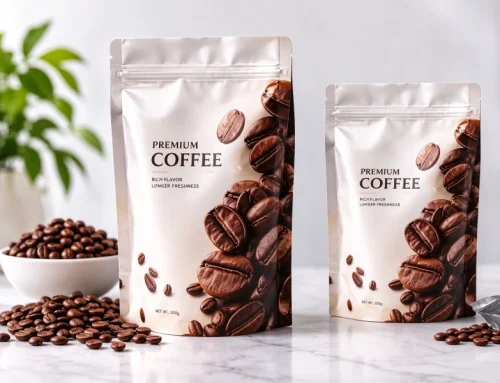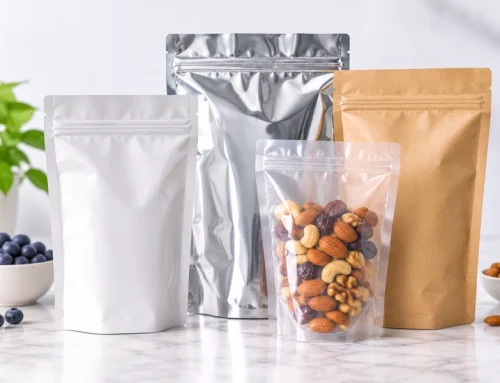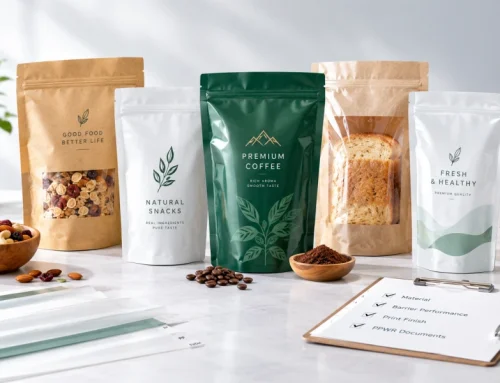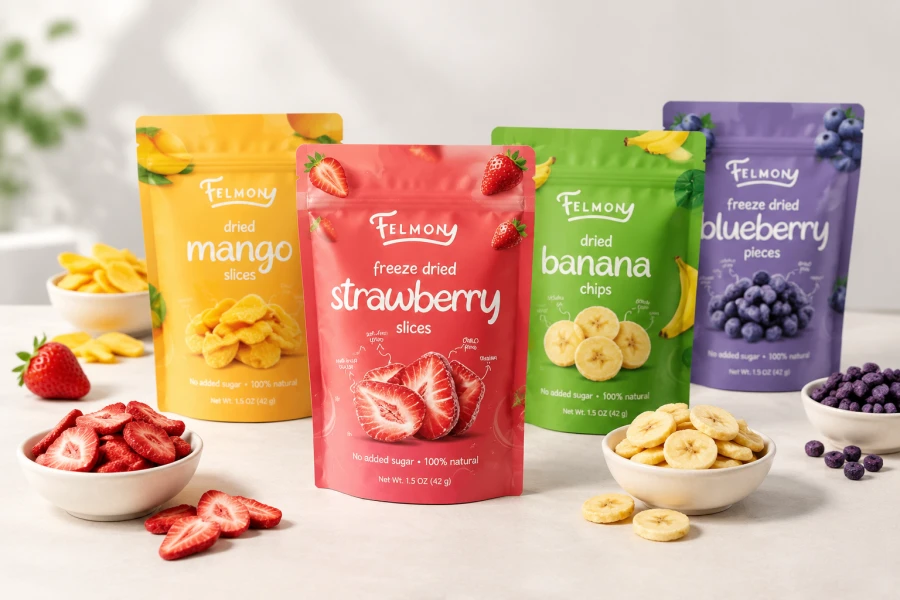
Dried fruit packaging must balance moisture protection, product fit, shelf presentation and packaging cost. Choosing a pouch based only on appearance can lead to poor fit, unsuitable barrier performance or unnecessary material costs. This guide explains how food brands, processors and packaging buyers can select dried fruit packaging, compare pouch styles, evaluate material options and prepare a clear request for quotation (RFQ).
What Should You Consider When Choosing Dried Fruit Packaging?
The right dried fruit packaging depends on the product’s moisture sensitivity, piece size, target shelf life, sales channel and expected pack quantity. Buyers should define these requirements before requesting samples or comparing supplier prices.
Start with five questions:
- Product type: Are you packaging raisins, dried mango, apple chips, banana chips, cranberries or mixed dried fruit?
- Product condition: Is the fruit soft and chewy, sticky, brittle or crisp?
- Pack size: What net weight and approximate product volume must the pouch accommodate?
- Storage requirements: What protection is needed against moisture, oxygen, light or aroma loss?
- Sales channel: Will the product be sold online, in supermarkets, through distributors or in bulk food channels?
These factors affect pouch construction, dimensions, closure options and printing requirements. A specification that works for chewy dried mango may not be suitable for crisp apple chips or freeze-dried strawberries.
Which Dried Fruit Packaging Pouch Style Should You Choose?
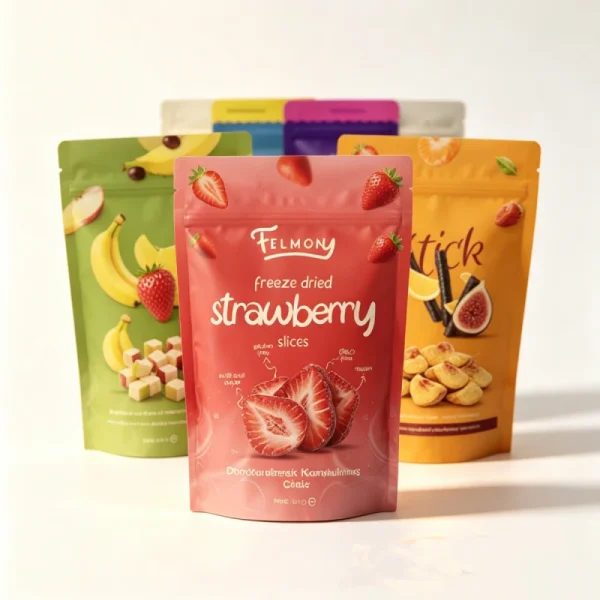
Stand-up pouches, flat pouches and flat-bottom bags serve different packaging and display requirements. The best structure depends on fill volume, shelf presentation, packing equipment and distribution needs.
| Pouch style | Potential advantages | Considerations | Suitable applications |
|---|---|---|---|
| Stand-up pouch | Upright shelf display and flexible size options | Requires sufficient bottom gusset and stable filling | Retail dried mango, raisins and mixed fruit |
| Flat pouch | Compact format and straightforward presentation | Limited self-standing ability unless specifically designed otherwise | Small snack packs, samples and lightweight portions |
| Flat-bottom bag | Structured base and a broad front display panel | Dimensions and construction should be matched to the required fill volume | Premium retail packs and larger snack formats |
| Pillow pouch or rollstock pack | Can suit automated packing operations | Depends on compatible filling and sealing equipment | High-volume production where the packing line supports the format |
A pouch’s nominal dimensions do not determine its usable capacity on their own. Product density, piece size, headspace, gusset dimensions and filling method all affect the finished pack.
Before approving a structure, request a sample in the proposed dimensions and test it with the actual dried fruit. Check filling efficiency, closure access, standing stability and the appearance of the filled pouch.
Which Materials Are Suitable for Dried Fruit Packaging?
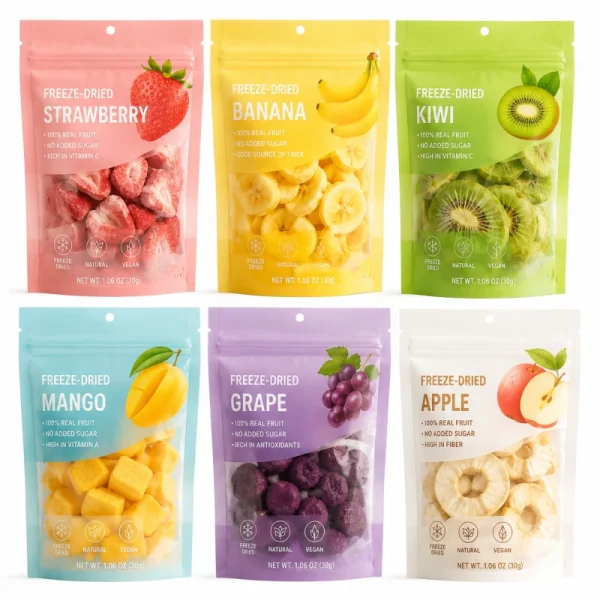
Material selection should be based on the product’s required barrier performance, storage conditions and intended shelf life—not on appearance or material names alone. Dried fruit can absorb moisture, while some products may also require protection against oxygen, light or aroma transfer.
Moisture and oxygen barrier requirements
Ask the supplier to recommend a material structure based on the product and target shelf life. Depending on the application, flexible packaging may use combinations of plastic films, metallized films or foil-based structures.
These structures are not interchangeable. Their barrier properties depend on the specific materials, thicknesses, construction and finished-package performance.
When evaluating a proposed structure, request:
- Available material-layer options and nominal thickness.
- Relevant water vapor transmission rate (WVTR) and oxygen transmission rate (OTR) data, where applicable.
- Test methods and conditions used to generate the data.
- Information about seal integrity and the effect of pouch construction.
- Confirmation of applicable food-contact requirements for the intended market.
Do not assume that a metallized pouch and an aluminum-foil laminate provide identical protection. Likewise, material data alone cannot guarantee the shelf life of the packed product.
Food-contact and regulatory requirements
Food packaging materials must be appropriate for their intended food-contact use and destination market. Buyers should specify the countries where the product will be sold and ask the supplier for relevant declarations, documentation or third-party test reports.
Avoid relying on broad descriptions such as “food grade” without confirming which materials, conditions and markets the documentation covers.
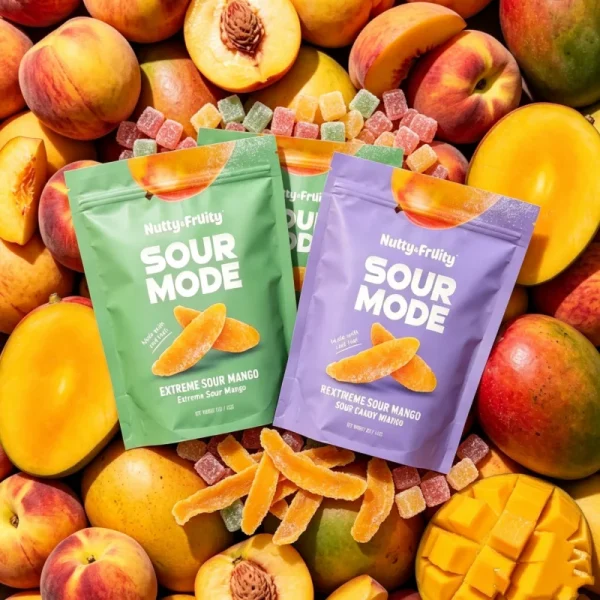
Should Dried Fruit Pouches Have a Zipper or a Clear Window?
A zipper can support repeated opening and closing, while a clear window can help consumers see the product. Neither feature should be selected without considering the product’s protection requirements and retail positioning.
When to use a resealable zipper
Resealable dried fruit pouches can be useful for multi-serving packs that consumers may open more than once. A zipper is less relevant for small, single-serving packs intended to be consumed immediately.
Before choosing a zipper, confirm:
- Whether the pouch is intended for single or repeated use.
- Whether the closure is compatible with the pouch structure and filling process.
- Whether the filled package can be sealed reliably.
- Whether consumers can open and close the zipper conveniently.
A zipper is not a substitute for the initial heat seal or the required barrier structure. Test the finished package to confirm the complete closure system meets the product’s needs.
When to use a transparent window
A window can display the color, size and appearance of dried fruit. However, it also changes the packaging structure and may affect the level of protection available in that area.
If light sensitivity or extended shelf life is a concern, ask the supplier to assess whether a window is appropriate. Compare a windowed pouch with a fully printed or opaque structure using the product’s actual storage and protection requirements.
How Do You Choose the Right Pouch Size for Dried Fruit?
Pouch dimensions should be established through product-fill trials rather than net weight alone. Two products with the same net weight may require different pouch sizes because their bulk density, shape and arrangement differ.
Use this process:
- Confirm the net weight. Define the target weight for each SKU.
- Measure the product. Check typical piece size, shape and bulk density.
- Select a preliminary pouch structure. Consider the base gusset, opening width and required headspace.
- Conduct a filling trial. Fill a sample using the intended product and packing method.
- Check the finished pack. Evaluate closure space, pouch stability, appearance and handling.
- Approve final dimensions. Confirm the dimensions with the supplier before finalizing artwork and production specifications.
For automated packing, also provide the machine type and any relevant filling or sealing constraints. For manual filling, consider opening access and the space needed for operators to fill and close the pouch consistently.
Do not approve a pouch based solely on a supplier’s suggested weight range without checking the actual product.
How Can Custom Printing Support Dried Fruit Packaging?
Custom printing helps distinguish flavors, communicate product information and maintain consistent branding across multiple SKUs. The design should fit the pouch structure and preserve space for required labeling.
Before artwork approval, confirm:
- Front-panel dimensions and printable areas.
- Brand colors, logos and flavor-specific design elements.
- Required ingredient, nutrition, allergen and net-weight information, as applicable.
- Barcode placement and scanning requirements.
- Artwork format, color expectations and proofing process.
- Whether different flavors require separate printing versions or quantities.
Buyers should confirm applicable labeling requirements for each destination market rather than assuming one layout meets every market’s rules.
For products sold in several flavors, establish a separate specification for each SKU. Confirm artwork versions, quantities per design and any order-level minimums before comparing quotes.
What Should You Include in a Dried Fruit Packaging RFQ?
A complete RFQ helps packaging suppliers recommend a suitable construction and provide a more comparable quotation. Missing specifications often lead to revised prices, repeated artwork changes or samples that do not match the intended application.
Dried fruit packaging procurement checklist
Send the following information when requesting a quote:
- Product type: Dried mango, raisins, apple chips, mixed fruit or another product.
- Net weight: Target weight per pouch and any serving-size requirements.
- Pouch style: Stand-up pouch, flat pouch, flat-bottom bag or another format.
- Dimensions: Existing dimensions or the results of a product-fill trial.
- Material requirements: Known material structure or the protection requirements to be evaluated.
- Closure: Heat seal only, zipper, tear notch or other required features.
- Window: Whether a transparent window is required or under consideration.
- Printing: Number of colors, artwork files and number of SKUs.
- Order quantity: Total quantity and quantity per design or flavor.
- Destination market: Countries where the packaged product will be sold.
- Packing method: Manual filling or the relevant automated packing line.
- Target timing: Sample approval and requested delivery schedule.
If you do not know the final dimensions or material structure, state that clearly. A supplier can assess the requirements and propose options for sampling, but the final choice should be validated before production.
Request a Quote for Custom Dried Fruit Packaging
RBD Packaging supports custom packaging inquiries for businesses sourcing printed food pouches. To help assess your dried fruit packaging requirements, provide your product type, target net weight, preferred pouch style, material needs, printing artwork, order quantity and destination market.
If you are unsure which pouch structure or material is suitable, share your product details and intended storage conditions first. The packaging options can then be reviewed before final specifications are approved.
A product sample and confirmed specifications should be reviewed before production to ensure the proposed pouch fits the product, filling process and intended use.
Frequently Asked Questions
What is the best packaging for dried fruit?
The best packaging is the structure that meets the product’s barrier, filling, storage and presentation requirements. Stand-up pouches, flat pouches and flat-bottom bags may all be suitable depending on the product and pack size.
Do dried fruit pouches need a moisture barrier?
Dried fruit packaging generally needs moisture protection appropriate to the product and its target shelf life. The required barrier level should be established from product sensitivity, storage conditions and packaging tests.
Are resealable pouches suitable for dried fruit?
Yes, resealable pouches can be suitable for multi-serving dried fruit products. Buyers should confirm zipper compatibility, initial heat-seal integrity and the performance of the complete finished package.
Can dried fruit packaging include a transparent window?
Yes, a transparent window may be incorporated if the pouch structure and product requirements allow it. Its suitability should be assessed against light sensitivity, required barrier performance and intended shelf life.
What information is needed to order custom dried fruit pouches?
Buyers should provide product type, net weight, pouch dimensions or target capacity, material requirements, closure options, artwork, order quantity and destination market. Product samples and final specifications should be approved before production.