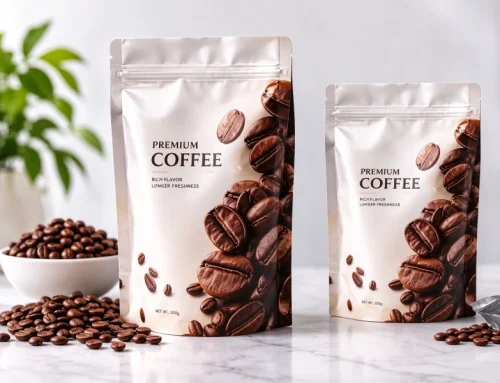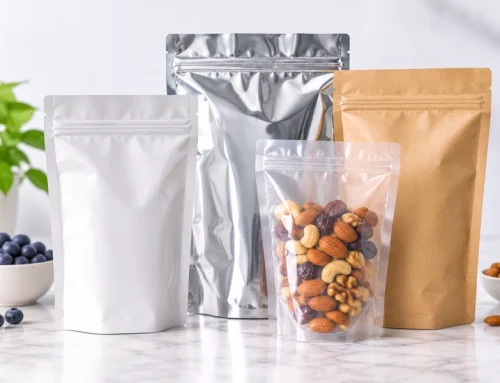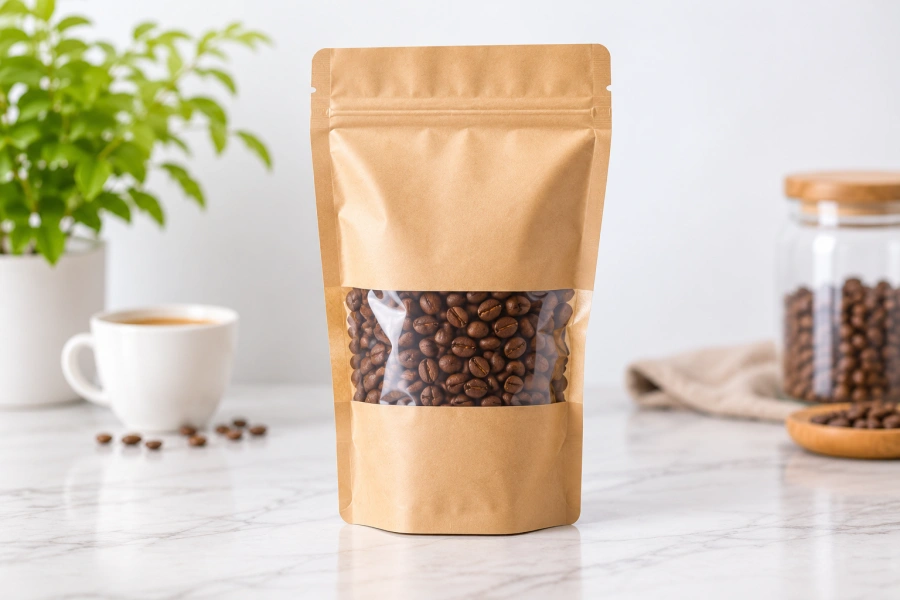
A stand-up pouch that leans, tips over, or refuses to stand properly after filling can create problems for retail display, storage, and packaging operations. The cause is not always weak film. In many cases, the bottom gusset, pouch dimensions, fill weight, product distribution, or material stiffness is not properly matched to the application.
This guide explains why stand-up pouches lose stability, how to identify the underlying cause, and what buyers should check when selecting and ordering custom stand-up pouches.
Key Takeaways
- Bottom gusset design: The gusset must open sufficiently to create a stable base after filling.
- Pouch dimensions: Width, height, and bottom gusset depth must be matched to the product’s actual volume and weight.
- Product distribution: Uneven filling, insufficient fill volume, or product settling can cause a pouch to lean.
- Material stiffness: Film flexibility and stiffness affect how easily the bottom gusset opens and how well the filled pouch maintains its shape.
- Sample testing: Always evaluate a filled pouch using the actual product before approving bulk production.
What Makes a Stand-Up Pouch Stand Upright?
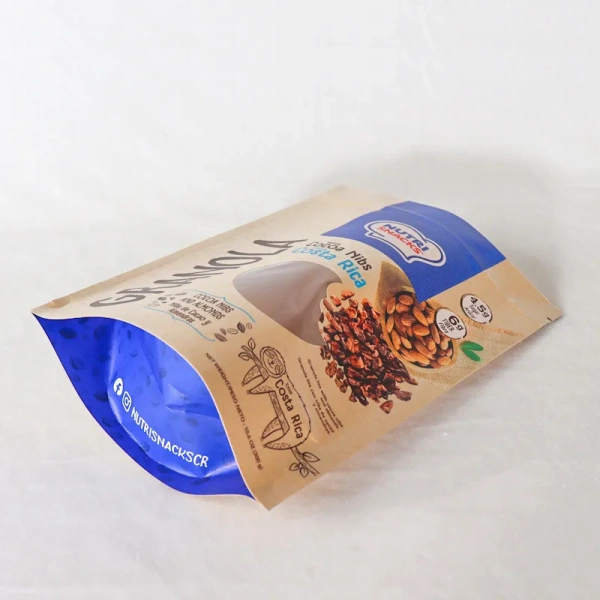
A stand-up pouch uses a folded bottom gusset that expands when the package is filled. As the product settles toward the bottom, the opened gusset creates a supporting base that allows the pouch to stand on a flat surface.
Unlike rigid containers, flexible pouches depend on the interaction between their structure and the contents inside. Their standing performance is therefore influenced by several factors working together.
The main components that affect stability include:
| Component | Function | Effect on Stability |
|---|---|---|
| Bottom gusset | Expands to form the base | Determines the available supporting footprint |
| Front and back panels | Form the main pouch body | Influence overall shape and balance |
| Side seals | Connect the pouch panels | Help maintain the intended structure |
| Laminate structure | Provides flexibility and mechanical properties | Affects how the pouch opens and maintains its shape |
| Product filling | Adds weight and volume | Helps the base expand and establishes the center of gravity |
A correctly designed pouch should stand reasonably upright when filled to its intended weight and used under the expected display conditions. However, an empty stand-up pouch is not necessarily expected to stand as securely as a filled one. The structure relies partly on the product inside to form its final shape.
Why Do Stand-Up Pouches Fall Over After Filling?
A stand-up pouch can lose stability for several reasons. The most common problems involve the bottom gusset, pouch dimensions, product filling, and material selection.
1 The Bottom Gusset Does Not Open Fully
The bottom gusset is the most important structural feature that allows a stand-up pouch to stand. If the gusset remains partially folded after filling, the pouch may rest on an uneven or rounded base instead of a stable footprint.
This can happen when:
- The bottom gusset is not properly matched to the pouch dimensions.
- The product does not distribute evenly into the bottom section.
- The filling process does not allow the gusset to expand fully.
- The laminate is too stiff for the selected gusset construction.
- The bottom folds are uneven or incorrectly formed.
How to fix it:
Check the bottom gusset on a filled sample rather than judging the empty pouch. Confirm that the base opens evenly and that the pouch rests naturally on a flat surface. If the base remains rounded or partially folded, review the gusset dimensions, folding geometry, laminate flexibility, and filling method before changing the entire material structure.
2 The Pouch Dimensions Are Not Balanced
A pouch can have sufficient capacity but still be difficult to keep upright. For example, a narrow pouch with a relatively tall body may have a smaller supporting footprint. If the product inside is also heavy or unevenly distributed, the package may lean more easily.
The three main dimensions must be considered together:
- Width: Determines the front-facing panel and contributes to the supporting footprint.
- Height: Affects the overall shape and height of the filled package.
- Bottom gusset depth: Determines how far the base can expand.
Increasing the gusset depth does not automatically improve stability. If the gusset is too large for the actual fill volume, it may not open properly. If the pouch is too narrow, the resulting base may still be unsuitable for the product.
There is no universal width-to-gusset ratio that works for every stand-up pouch. The appropriate dimensions depend on the product’s volume, density, shape, fill weight, and desired shelf appearance.
How to fix it:
Provide the manufacturer with the actual product and target fill weight. Use these details to evaluate the pouch width, height, and bottom gusset together. Do not select a pouch based only on a competitor’s dimensions or a generic size chart.
3 The Product Is Underfilled or Unevenly Distributed
A stand-up pouch relies on the weight and distribution of its contents to help the bottom gusset open. If the pouch is underfilled, the product may not provide enough weight to fully expand the base. This can leave the package looking loose, rounded, or unstable.
Uneven product distribution can create another problem. If most of the contents settle toward one side, the center of gravity may shift and cause the pouch to lean.
This is particularly relevant for:
- Lightweight snacks and puffed products
- Irregularly shaped dried fruit
- Products with different particle sizes
- Powders that settle or compact during handling
- Products with a large amount of headspace
How to fix it:
Confirm the actual fill weight and product volume before finalizing the pouch dimensions. For products that settle during transportation, evaluate the package after filling and after representative handling. A pouch that stands immediately after filling may behave differently once its contents settle.
If the fill volume is consistently too low for the selected pouch, consider adjusting the pouch size rather than simply increasing the material thickness.
4 The Film Structure Is Too Stiff or Too Flexible
The laminate structure affects how a stand-up pouch opens, bends, and maintains its filled shape.
A very stiff structure may resist the folding and expansion required for the bottom gusset to open properly. On the other hand, a structure with insufficient stiffness for the application may allow the pouch body to deform or lose its intended shape. This does not mean that thicker film is always better.
Material selection should consider the entire package, including:
- Outer-layer material and thickness
- Barrier-layer requirements
- Inner heat-sealing layer
- Overall laminate thickness
- Product weight and volume
- Filling and sealing conditions
For example, a pouch designed for lightweight candy may require a different balance of flexibility and stiffness from a larger pouch intended for dense powder or pet food.
How to fix it:
Ask the manufacturer to evaluate the laminate structure together with the pouch dimensions and actual filling requirements.
If a filled pouch does not stand properly, changing the film structure should be considered alongside the bottom gusset and product distribution. Increasing thickness without identifying the actual cause may increase material cost without solving the problem.
5 The Bottom Gusset or Seals Are Not Formed Evenly
A stand-up pouch depends on consistent bottom construction.
If the gusset folds are asymmetrical, or the bottom structure is not formed evenly, the pouch may have an uneven supporting surface. One side may touch the table before the other, causing the package to lean or rock.
The problem may become more visible after filling because the product weight puts the bottom structure into its working position.
How to fix it:
Inspect the bottom structure of filled samples from different positions. Check whether the gusset opens evenly, whether the base sits flat, and whether the pouch has visible asymmetry.
If the same problem appears repeatedly across samples, review the pouch dimensions, fold geometry, and converting consistency with the manufacturer.
6 The Filling Process Affects Pouch Stability
Sometimes the pouch itself is not the only problem. The filling process can affect how the product enters the package and how the bottom gusset expands.
For example, irregular filling, uneven product distribution, or an unsuitable filling setup can cause the pouch to take on an unbalanced shape. The issue may also appear when the pouch is filled manually compared with an automated filling line.
How to fix it:
Evaluate the pouch using the actual filling process whenever possible. Check whether the pouch is opened and supported correctly during filling, whether the product enters evenly, and whether the bottom gusset expands before the final top seal is applied.
For automated production, the pouch format and dimensions should also be compatible with the filling equipment.
How to Improve Stand-Up Pouch Stability
The most effective solution depends on the cause of the problem. Changing the pouch structure without identifying the issue can create unnecessary costs or introduce new production problems.
The following table provides a practical starting point.
| Observed Problem | Possible Cause | Recommended Action |
|---|---|---|
| Bottom remains rounded | Gusset does not open fully | Review gusset depth, fold geometry, and laminate flexibility |
| Pouch leans forward or backward | Unbalanced dimensions or fill distribution | Reassess pouch proportions and product distribution |
| Pouch tips to one side | Uneven filling or asymmetrical base | Check filling consistency and bottom construction |
| Pouch looks loose after filling | Insufficient fill volume or excessive headspace | Reassess pouch size against actual product volume |
| Pouch body loses its shape | Unsuitable material stiffness | Review laminate structure and thickness |
| Pouch stands inconsistently across samples | Dimensional or converting variation | Review manufacturing consistency and sample specifications |
Should You Choose a Different Bottom Structure?
If the standard stand-up pouch cannot provide the required shelf stability, another pouch construction may be worth evaluating.
Three common options include:
Doyen Stand-Up Pouch
A common stand-up pouch construction with a rounded bottom gusset. It offers a flexible packaging format for snacks, dried fruit, coffee, candy, and other retail products.
It can be a practical option when the pouch dimensions, filling volume, and product weight are properly matched.
K-Seal Stand-Up Pouch
A K-seal construction uses angled seals at the bottom corners. It can be considered for applications where the bottom structure needs to accommodate a different load distribution.
Its suitability still depends on the complete pouch design and actual product requirements.
Flat Bottom Pouch
A flat bottom pouch uses a more structured base and side gussets to create a box-like shape.
It is worth considering when a wider, more defined base and a consistent shelf presentation are important. However, it generally involves a different construction and cost structure from a conventional stand-up pouch.
The best format should be selected according to the product, filling process, shelf requirements, and budget rather than assuming that one bottom structure is always superior.
How to Choose the Right Stand-Up Pouch Specifications
Before requesting a quotation, buyers should prepare enough information for the manufacturer to evaluate the package structure. Choosing a pouch based only on the target fill weight is not sufficient. Two products with the same weight can occupy very different volumes.
The following specifications are particularly important.
| Specification | What to Provide | Why It Matters |
|---|---|---|
| Product type | Powder, granules, snacks, dried fruit, etc. | Determines product behavior and filling requirements |
| Fill weight | Target net weight per pouch | Helps establish the required package capacity |
| Product volume | Approximate volume or sample product | Helps determine pouch dimensions |
| Pouch width | Target width or reference sample | Determines the front panel and contributes to the base footprint |
| Pouch height | Target finished height | Influences package proportions |
| Bottom gusset | Target depth or manufacturer recommendation | Determines the expandable base |
| Material structure | Existing specification or required barrier performance | Affects flexibility, protection, and package performance |
| Closure | Zipper, heat seal, tear notch, etc. | Must match the filling and consumer-use requirements |
| Filling method | Manual or automated | Affects pouch opening, filling, and sealing requirements |
| Display conditions | Shelf, countertop, carton, or e-commerce | Determines the expected standing and handling conditions |
If you already have a reference pouch, send the physical sample or clear photographs showing its front, side, and opened bottom. A manufacturer can then review the existing construction and recommend adjustments based on the actual product.
How to Test Stand-Up Pouch Stability Before Bulk Ordering
An empty sample is useful for checking dimensions, printing, and construction, but it cannot fully demonstrate how the pouch will perform after filling.
For this reason, buyers should request samples and test them with the actual product before approving mass production.
Step 1: Fill the Pouch to the Target Weight
Use the intended product and target net weight.
Do not substitute a different material simply because it is easier to obtain. Product density, particle size, and shape can affect how the pouch fills and how the contents settle.
Step 2: Check the Bottom Gusset
After filling, confirm that the bottom gusset opens evenly.
The base should not remain folded on one side or form an excessively rounded supporting surface.
Step 3: Evaluate Standing Stability
Place the filled pouch on a flat surface.
Check whether it stands without external support and whether it leans forward, backward, or sideways.
Also compare the appearance of multiple samples rather than relying on a single pouch.
Step 4: Observe the Pouch After Product Settling
Some products change their distribution after filling and handling.
Allow the contents to settle under conditions representative of normal use. Then check whether the pouch continues to stand properly.
Step 5: Evaluate the Intended Storage and Display Conditions
If the pouches will be displayed in retail stores, stored in cartons, or transported over long distances, include those conditions in the sample evaluation.
Check whether the package maintains its intended shape after representative handling.
A successful standing test does not automatically establish seal integrity, barrier performance, or long-term durability. Those requirements should be evaluated separately according to the product and application.
What Should You Ask a Stand-Up Pouch Manufacturer?
When comparing suppliers, do not focus only on the unit price or advertised material thickness.
A suitable manufacturer should be able to discuss how the pouch structure relates to your product and filling requirements.
Before approving a bulk order, consider asking:
- Can you recommend the bottom gusset dimensions based on our product volume and fill weight?
- Which pouch construction is suitable for our intended shelf presentation?
- Can you evaluate the material structure and flexibility for the selected pouch dimensions?
- Can we review filled samples before approving mass production?
- What quality checks are available for pouch dimensions, bottom construction, and seal performance?
- Can the proposed pouch structure work with our existing filling equipment?
For a new packaging project, the supplier should understand more than the artwork and dimensions. The complete package needs to be evaluated against the product, filling process, storage conditions, and intended use.
Frequently Asked Questions
Why does my stand-up pouch not stand up after filling?
Common reasons include an incompletely opened bottom gusset, unsuitable pouch dimensions, insufficient fill volume, uneven product distribution, or unsuitable material stiffness. Check the filled pouch and its base before changing the film structure.
Does a larger bottom gusset make a stand-up pouch more stable?
Not necessarily. A larger gusset can provide a wider supporting footprint, but it must match the pouch width, product volume, and fill weight. An oversized gusset may not open properly if the product cannot fill the available space.
Does thicker film help stand-up pouches stand better?
Not always. Film stiffness affects how the pouch opens and maintains its shape, but excessive stiffness may make the bottom gusset more difficult to expand. The appropriate laminate should be evaluated together with the pouch construction and filling requirements.
Which is more stable: a stand-up pouch or a flat bottom pouch?
A flat bottom pouch generally provides a more defined, box-like supporting base. A conventional stand-up pouch offers a simpler flexible structure and can provide good shelf stability when properly designed and filled. The right option depends on the product, dimensions, and display requirements.
Can lightweight products use stand-up pouches?
Yes, but the pouch dimensions and bottom structure must be matched to the product’s volume and weight. Lightweight products may require particular attention to fill level and product distribution because their contents may not fully expand the bottom gusset.
How can I check whether a stand-up pouch will stand properly before ordering in bulk?
Request samples in the proposed dimensions and laminate structure. Fill them with the actual product at the intended net weight, check the bottom gusset, and evaluate standing stability after the product settles. Repeat the assessment under representative storage and handling conditions.
Get Custom Stand-Up Pouches Designed for Your Product
A stand-up pouch should do more than look attractive in a product photograph. It needs to accommodate the actual product, work with the filling process, and maintain a suitable shape during storage and retail display.
RBD Packaging provides customized flexible packaging solutions for different product types, pouch dimensions, material requirements, and printing needs.
When requesting a quotation, provide your product type, target fill weight, approximate volume, preferred pouch dimensions, and any reference packaging you already use. Our team can review the requirements and discuss a suitable pouch structure for your application.