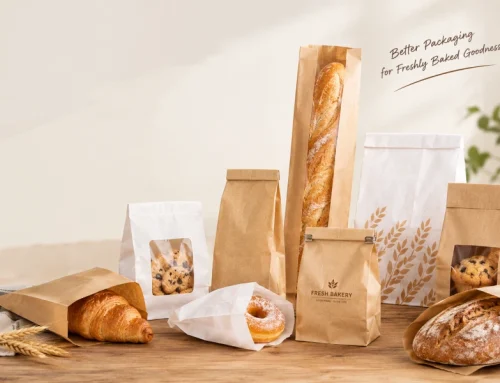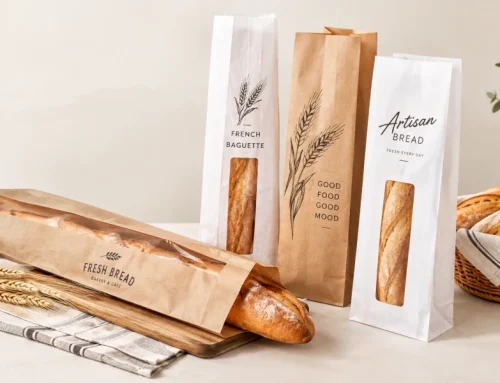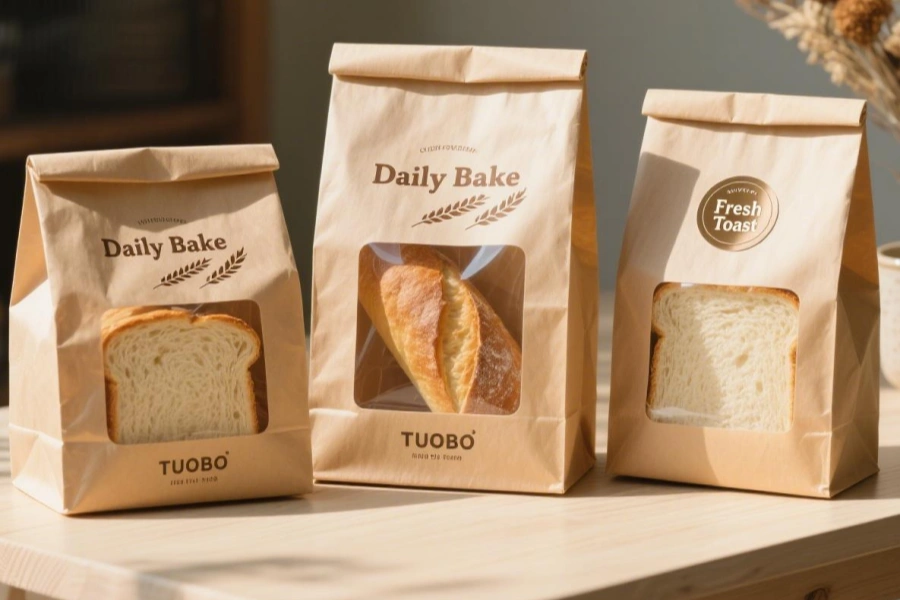
Toast bread bags are custom paper packaging bags designed to hold, protect, and display whole loaves or sliced toast bread for commercial bakeries, packaged bread brands, private labels, and food distributors. Choosing the right bag involves far more than picking a standard size or adding a logo — it requires aligning loaf dimensions, paper grade, window design, grease resistance, and packing workflows to your product and sales channel.
For B2B buyers, the goal is a paper bag that fits consistently, supports your presentation and handling requirements, and performs reliably across repeat bulk orders. This guide explains how to select specifications, prepare your request, and source custom toast bread bags from packaging manufacturers.
Core decisions for sourcing toast bread bags:
- Bag structure matched to your loaf shape, thickness, and packing method
- Paper grade selected for your product’s grease, moisture, and printing needs
- Window design balanced between product visibility and branding space
- Dimensions based on actual loaf measurements, not weight estimates
- Performance validated with physical samples before bulk production
What Are Toast Bread Bags?
In this guide, toast bread bags refer to paper packaging engineered for whole toast loaves or sliced sandwich bread. They are used across commercial bakeries, industrial bread manufacturers, and foodservice distribution channels.
These bags are available in kraft, white bleached, or grease-resistant paper, with options for flat or gusseted structures, transparent display windows, custom printing, and optional inner liners. Their core functions are product containment, handling protection, and retail presentation.
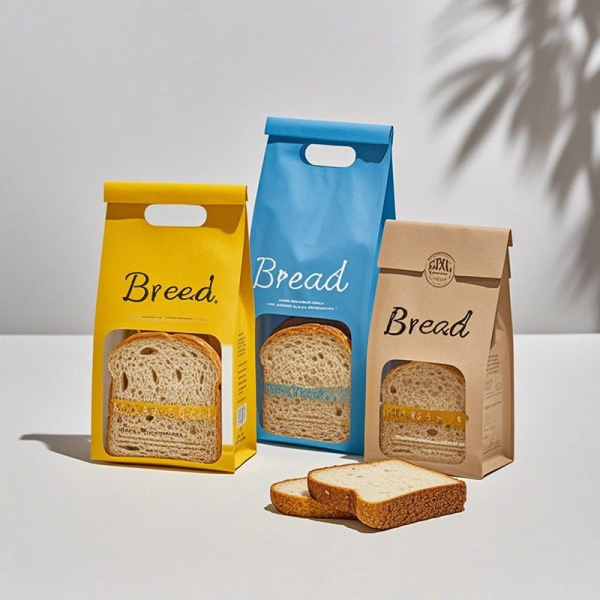
Types of Toast Bread Bags: Structures & Use Cases
The right bag structure depends on your loaf shape, thickness, packing method (manual or automated), and display requirements.
| Bag Type | Best For | Key Characteristics |
|---|---|---|
| Flat Paper Bags | Sliced bread, thin loaves, and portioned products | Simple, low-cost construction; minimal depth; best for products that fit cleanly without extra room |
| Gusseted Paper Bags | Thick whole loaves, large artisan loaves, and bulk packs | Expanding side gussets add internal depth; easier to load; accommodates varying loaf thickness |
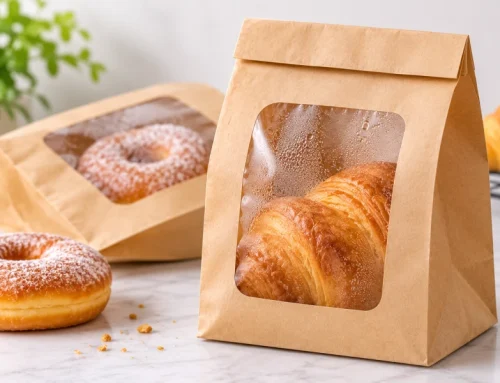
| Window Paper Bags | Retail shelf products where appearance drives sales | Clear OPP/PET window lets customers inspect crust color and slice structure; boosts impulse purchases |
| Grease-Resistant Paper Bags | Enriched loaves, butter toast, and high-fat breads | Treated paper or coating prevents oil seepage and stains; preserves packaging integrity |
| Lined Paper Bags | Extended shelf life, distribution, and high-humidity environments | Additional inner layer adds moisture or grease barrier; tailored to specific shelf life requirements |
How to Size Toast Bread Bags: Measurement Guide
Correct toast bread bag size depends on the loaf’s length, width, and height, plus clearance for smooth loading and closure. Always measure the actual finished loaf — never rely on weight alone. Two loaves of the same weight can have very different shapes and volumes.
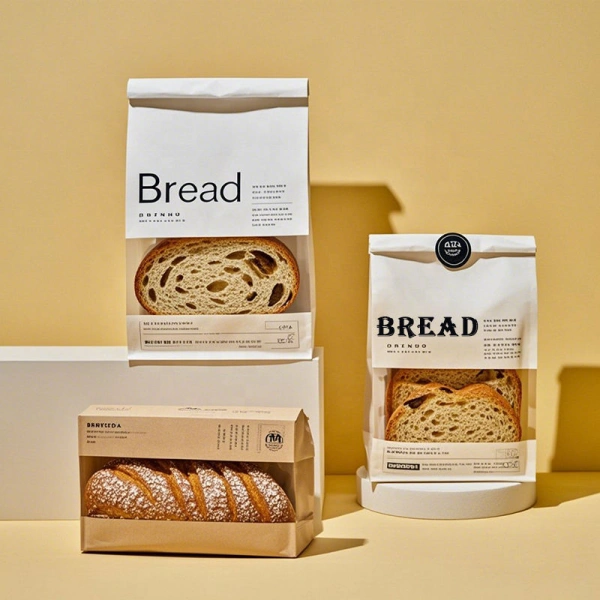
Standard sizing formula
Loaf dimensions + loading clearance + closure allowance = finished bag dimensions
For a custom quotation, prepare these specifications:
- Bread format: whole loaf / sliced toast
- Exact length, width, and height of the finished loaf (in mm)
- Preferred bag structure: flat / gusseted
- Closure type: fold-over, tin tie, sticker, or heat seal
- Window required: yes / no
- Estimated order quantity
Clearance guidelines
Add 8–12 mm of clearance per dimension for easy manual loading. For automated packing lines, tighten tolerance to 3–5 mm for consistent machine feeding. Always confirm final dimensions with a physical sample tested with your actual bread.
Paper Materials for Toast Bread Bags: Grades & Selection
Paper selection balances appearance, print quality, handling strength, and performance under your product’s specific packaging and storage conditions.
Common paper options
- Natural Kraft Paper: Traditional, artisanal appearance with good tear strength. Ideal for artisan bakeries and natural brand positioning. Works well with 1–2 color minimalist printing.
- White Kraft Paper: Bright, clean background that makes full-color branding and detailed graphics pop. Preferred for premium retail and supermarket bakery lines.
- Grease-Resistant Paper: Treated to resist oil and fat transfer. Recommended for brioche, garlic bread, and other enriched loaves with high butter or oil content.
Typical GSM ranges
- Standard sliced toast bags: 45–60 GSM
- Whole loaf gusseted bags: 60–80 GSM
- Heavy-duty distribution bags: 80–120 GSM
GSM is only one factor. Bag structure, print coverage, and product weight all determine real-world performance. A lighter paper with proper structural design can outperform a heavier, poorly sized bag.
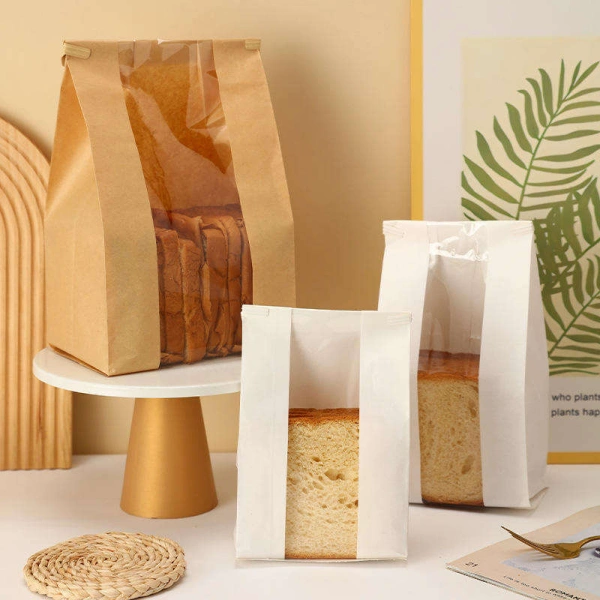
Should Toast Bread Bags Have a Window?
A display window lets customers inspect bread quality before purchase, making it a powerful tool for retail sales. It also changes construction cost, printable area, and moisture behavior.
| Factor | With Window | Without Window |
|---|---|---|
| Product visibility | Full view of crust, color, and slice structure | Bread fully covered; no visual quality signal |
| Printing space | Must work around window cutout; limited continuous branding area | Full uninterrupted surface for logos, product info, and design |
| Construction | Requires film lamination and die-cutting; slightly higher setup cost | Simpler construction; lower tooling cost |
| Best suited for | In-store retail, impulse purchases, premium artisanal lines | DTC shipping, bulk distribution, full-coverage branding |
A window does not reduce protection, and a windowless bag does not guarantee better moisture control — overall performance depends on the full material and construction specification. Always confirm window film is food-contact compliant for your target market.
Freshness, Ventilation & Moisture Protection
Bread packaging performance is directly tied to your cooling process and storage conditions. There is no one-size-fits-all solution for every toast bread product.
Bread packed while warm releases moisture that condenses inside the bag, softening crusts and promoting mold. For this reason, your packing temperature and cooling protocol must be considered alongside bag specification.
Before selecting a bag structure, clarify:
- Whether bread is fully cooled before packaging
- Whether it is sold fresh daily or intended for extended shelf life
- Whether the bag must protect bread during transit or only in-store display
- Whether specific moisture or barrier requirements apply
- Whether shelf life claims have been validated with the proposed packaging
Breathable kraft paper works well for fresh short-shelf-life products, but it does not provide a moisture barrier for extended distribution. Add liners only when you have verified a specific need — unnecessary liners increase cost and can trap moisture if misapplied.
For a deeper breakdown of barrier options, see our guide to whether bakery paper bags need an inner liner.
Custom Printing & Branding for Toast Bread Bags
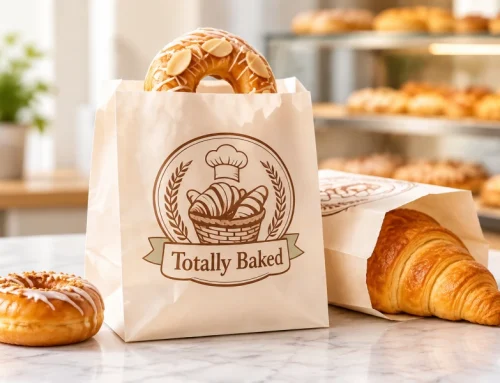
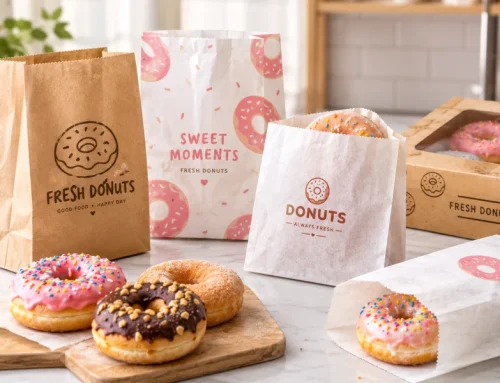
Custom printing creates consistent brand identity across retail shelves and distribution channels. Common elements include brand logos, product names, illustrations, nutritional information, recycling symbols, and batch coding zones.
Pre-production best practices
- Confirm printable area boundaries and avoid placing critical design elements across folds or gusset seams.
- Specify Pantone colors for brand consistency; request a printed swatch sample for color-critical designs.
- If using multiple bag sizes under one brand, confirm how artwork will be scaled to maintain legibility and proportion.
- Verify that paper, inks, and window films all meet food-contact regulations for your destination market (FDA, EU 10/2011, etc.).
How to RFQ Wholesale Toast Bread Bags
A clear, complete request for quotation (RFQ) helps suppliers recommend the right specification and deliver accurate, comparable pricing. You do not need full technical drawings to start.
Include these details in your inquiry:
- Product: Whole loaf / sliced toast / other bread format
- Dimensions: Length × width × height of the finished loaf
- Bag structure: Flat / gusseted / windowed / undecided
- Material: Kraft / white / grease-resistant / request recommendation
- Printing: Number of colors, artwork availability, window placement requirements
- Quantity: Total order volume and number of sizes / designs
- Destination: Delivery country and required timeline
- Samples: Unprinted structural sample / full printed sample
If your product is still in development, share photos of the bread and your current packaging. A good supplier will recommend a starting specification and validate it through sampling.
MOQ for Custom Toast Bread Bags
Custom printed bags have higher minimum order quantities than plain stock bags because of fixed pre-production setup costs: material preparation, printing plates, machine calibration, initial run waste, and quality checks.
These fixed costs apply regardless of order size. When spread across fewer units, they drive up the per-unit price — this is the core reason for MOQ differences between custom and stock bags.
MOQ varies by bag structure, paper grade, number of print colors, and production method. When comparing quotes, ask:
- What is the MOQ per size and per design?
- Are setup fees charged separately from unit price?
- How does unit price scale at higher volume tiers?
- Can multiple sizes combine to meet a single MOQ?
How to Validate Toast Bread Bag Samples
Always test samples with your actual finished bread using your standard packing method. An empty bag cannot confirm fit, closure, or real-world performance.
Sample checklist
- Loaf fits comfortably without crushing slices or tearing paper
- Opening width supports your packing process (manual or automated)
- Sufficient material for clean closure (fold-over, tin tie, etc.)
- Paper finish and print color match approved artwork
- Window position aligns correctly with the loaf inside
- Grease or moisture performance meets expectations under your storage conditions
Keep a retained sample and written specification record for future repeat orders to ensure consistency across production runs.
How to Compare Toast Bread Bag Suppliers
The lowest unit price rarely equals the best value. Suppliers often quote different paper grades, dimensions, window constructions, and print specifications.
Compare quotes on a like-for-like basis across:
- Finished bag dimensions and structure
- Paper grade and GSM
- Window material and construction
- Print method, number of colors, and finish
- Order quantity and MOQ terms
- Sample lead time and production lead time
- Delivery terms and certification included
For long-term partnerships, also evaluate technical communication quality. A reliable supplier will identify missing specifications, explain tradeoffs, and document approved specs for repeat orders.
Common Mistakes When Ordering Toast Bread Bags
Ordering by weight alone
The weight of a loaf does not determine its complete dimensions. Measure length, width and height before confirming the bag.
Choosing a window before confirming the product layout
A window may improve product visibility, but its position should work with the loaf shape and the printed design.
Assuming all paper bags provide the same moisture protection
Paper grade, liner construction and packaging conditions all affect performance. Confirm the actual requirement with the supplier.
Adding a liner without a clear reason
An inner layer can change the package’s material cost and moisture behavior. Evaluate it according to the product and storage requirements.
Comparing quotations with different specifications
A lower unit price may reflect a different material, size or printing scope. Confirm that all quotations cover the same requirements.
Skipping sample confirmation
A sample provides an opportunity to identify fit, opening, closure and presentation issues before committing to bulk production.
Frequently Asked Questions
What size paper bag is suitable for toast bread?
The appropriate size depends on the loaf’s length, width and height, along with the loading and closure method. Measure the actual bread and confirm the dimensions with a physical sample before bulk production.
Are kraft paper bags suitable for sliced toast bread?
Kraft paper bags can be suitable for sliced toast bread when the paper grade, bag dimensions and construction meet the product’s requirements. The final choice should also account for cooling, storage and any moisture-protection needs.
Should toast bread bags have a window?
A window is useful when customers benefit from seeing the bread before purchase. If full-surface printing or a simpler construction is more important, a windowless bag may be preferable.
Can toast bread bags be custom printed?
Yes. Custom paper bags can be printed with logos, brand colors, illustrations and other artwork. The available options depend on the material, printing process and bag construction.
Do toast bread bags need an inner liner?
Not necessarily. The need for a liner depends on the bread, its cooling and storage conditions, and the required moisture protection. Discuss the application with the supplier before adding one.
How can I request a wholesale quotation for toast bread bags?
Provide the bread dimensions, preferred bag style, paper requirements, printing artwork, estimated quantity and delivery destination. If you do not know the exact specifications, send product photographs and ask the manufacturer to recommend a suitable starting design.
Custom Bread Packaging From RBD Packaging
RBD Packaging has manufactured paper packaging since 2005, including custom bakery and bread bags in kraft, white, and greaseproof paper, with options for windows, closures, and full-colour printing. We also produce plastic film bread packaging for products requiring longer shelf life and wider distribution.
If you are sourcing packaging for toast bread, send us your loaf measurements, shelf-life requirement, and estimated quantity. Our engineering team will recommend the optimal material and structure — paper, plastic, or hybrid — and provide a detailed quotation with samples.