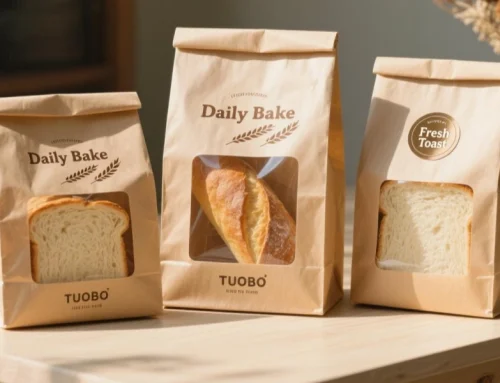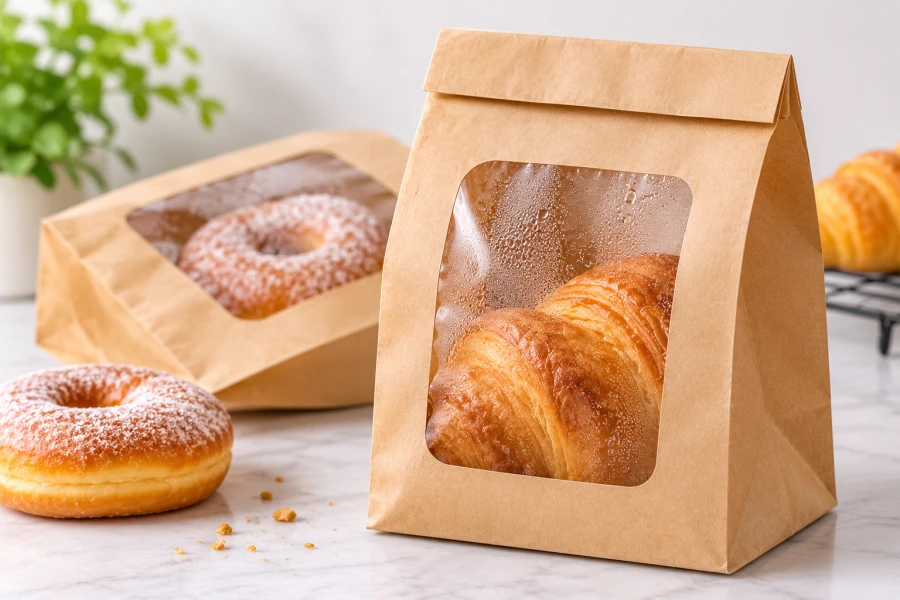
Bakery bag windows can fog up when moisture from freshly baked products condenses on the cooler film surface. The problem is often related to trapped moisture, packaging temperature, and window design rather than simply the quality of the film.
This guide explains what causes condensation, how anti-fog film differs from micro-perforation, and how to choose and test window bakery bags for different bread products.
Why Do Bakery Bag Windows Fog Up?
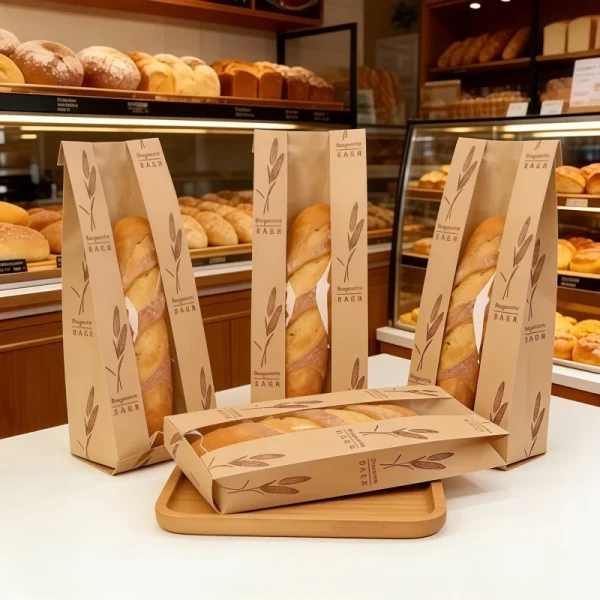
Bakery bag condensation occurs when water vapor inside the package meets a window surface that is cool enough for moisture to condense.
Freshly baked bread releases moisture as it cools. If the bread is packed while still warm, water vapor can accumulate inside the bag. When this vapor contacts a cooler transparent window, it may turn into small water droplets, making the window appear cloudy.
Several factors can contribute to this problem:
- Packing temperature: Warm bread introduces more heat and water vapor into the package.
- Insufficient ventilation: A bag with limited air exchange may trap moisture released by the product.
- Storage conditions: Temperature changes during storage, transportation, or retail display can encourage condensation.
- Window surface properties: The film’s surface characteristics influence whether condensed moisture forms visible droplets or spreads into a thinner layer.
- Bag design: Window size, position, and ventilation structure can affect moisture movement inside the package.
It is important to distinguish between condensation and poor film quality. A clear window can still fog up if moisture management is inadequate. Conversely, film selection and surface treatment can influence how visible the condensation becomes.
What Makes Window Bakery Bags More Prone to Fogging?

Not all bakery products release moisture in the same way. Product type, cooling time, and packaging conditions all influence the likelihood of condensation.
1. Packing Bread Before It Has Cooled Sufficiently
Freshly baked bread continues releasing moisture as it cools. Sealing it too early can trap warm, humid air inside the bag. This is one of the most common reasons for fogging in window bakery bags. The moisture has limited opportunities to escape, especially when the bag has a relatively closed structure.
What to do: Allow bread to cool under appropriate bakery handling conditions before packaging. The required cooling time depends on the product’s size, recipe, moisture content, and production process.
2. Limited Air Exchange Inside the Bag
A fully enclosed bag can retain moisture released by bread. This may increase condensation risk, particularly when warm products are packed directly into the packaging.
Ventilation features, including perforations in selected areas, can help moisture escape. However, adding openings is not always the right solution.
Too much ventilation may accelerate moisture loss and affect the texture of products that need to retain softness. The appropriate design depends on the type of bread and its expected storage conditions.
3. Temperature Changes During Storage and Display
Condensation is not limited to the moment of packaging. For example, a bag stored in a warmer environment may be moved into a cooler retail display area. Changes in temperature can cause moisture inside the package to condense on the window.
This is particularly relevant when bakery products pass through multiple stages of storage, transportation, and retail display.
4. Window Film Surface Characteristics
The window material also affects how condensation appears. When water vapor condenses on a film surface, it may form separate droplets that scatter light and create a foggy appearance. Depending on the surface properties and treatment, moisture may instead spread more evenly across the film.
This is why two transparent packaging films can behave differently under similar conditions.
How Does Window Material Affect Condensation?
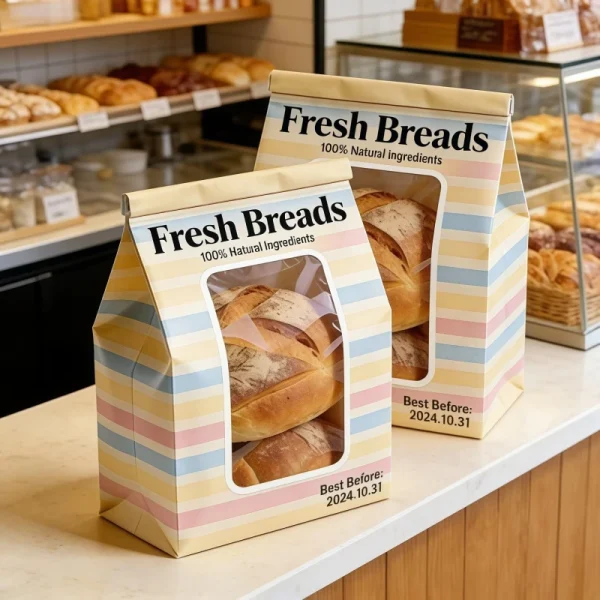
Transparent windows in bakery bags are commonly made from packaging films such as BOPP or PET, depending on the required appearance and packaging structure.
However, choosing a film based only on its transparency is not enough. Buyers should also consider its suitability for the product, required packaging performance, and condensation conditions.
Anti-Fog Film: Improving Window Clarity
Anti-fog film uses a surface treatment or formulation designed to change how condensed moisture behaves on the film.
Instead of forming many small, visible droplets, moisture can spread into a thinner and more uniform layer. This helps maintain a clearer appearance through the window.
Important: Anti-fog film does not remove water vapor from inside the bag. It helps reduce visible fogging on the film surface, but condensation may still occur when the packaging conditions create sufficient moisture.
For bakery products that need a clear retail presentation, anti-fog film may be worth evaluating as part of the packaging design.
Micro-Perforation: Allowing Moisture to Escape
Micro-perforation creates small openings in selected areas of the packaging. These openings allow air and water vapor to move between the inside and outside of the bag.
Unlike anti-fog film, micro-perforation addresses moisture accumulation by providing an exchange pathway rather than changing how moisture appears on the window surface.
However, perforation also affects the package’s ability to retain moisture. Excessive or poorly positioned openings may cause bread to dry out more quickly or reduce the protection required during handling and storage.
The design should therefore be evaluated against the product’s freshness requirements, not selected simply to eliminate fogging.
Anti-Fog Film vs. Micro-Perforation
| Feature | Anti-Fog Film | Micro-Perforation |
|---|---|---|
| Main function | Reduces visible fogging on the film | Allows air and moisture exchange |
| How it works | Changes how moisture spreads on the surface | Creates openings in the packaging |
| Removes water vapor | No | Can help moisture escape |
| Main consideration | Film performance under actual conditions | Ventilation versus moisture retention |
| Suitable evaluation | Window clarity and condensation appearance | Moisture release and product freshness |
These two approaches solve different parts of the problem. Anti-fog film may improve window visibility, while perforation may help reduce moisture accumulation. Neither guarantees a completely condensation-free package.
What Ventilation Spec Fits Your Bread Type?
The right window and ventilation design depends on the bread’s moisture content, crust characteristics, cooling requirements, and expected storage period.
| Bread Type | Packaging Considerations |
|---|---|
| Soft bread and sandwich bread | Balance moisture retention with sufficient ventilation to avoid excessive condensation |
| Sourdough and crusty bread | Avoid trapping excessive moisture that could soften the crust |
| Baguettes and artisan loaves | Consider how ventilation affects crust texture during storage and display |
| Sliced bread and toast | Prioritize freshness retention and evaluate whether additional ventilation is necessary |
| Pastries and baked snacks | Consider product moisture, grease, and the need for a clear product window |
There is no universal ventilation design for every bakery product. The number, size, and distribution of perforations should be evaluated according to the actual product and packaging conditions.
For products that need to maintain a soft texture, excessive ventilation may be undesirable. For crusty bread, limiting trapped moisture may be more important.
The best approach is to compare packaging samples using the actual bread product and realistic storage conditions.
What Specifications Should You Provide When Ordering Window Bakery Bags?
When requesting a quotation from a bakery bag manufacturer, providing only the bag dimensions and printing artwork may not be enough.
Window material, product type, packaging temperature, and ventilation requirements can all influence the final design.
Prepare the following information before requesting samples or a bulk quotation:
| Specification | Information to Provide |
|---|---|
| Bag dimensions | Width, height, and gusset dimensions, if applicable |
| Bread type | Soft bread, sliced bread, baguette, sourdough, pastries, etc. |
| Window material | Preferred film material, if already specified |
| Window size and position | Required visibility and product presentation |
| Anti-fog requirement | Whether improved window clarity is required |
| Perforation requirement | Whether ventilation openings are needed |
| Packing temperature | Whether products are packed after cooling or while still warm |
| Storage conditions | Expected storage, transportation, and retail display environment |
If you are unsure which window structure is appropriate, describe the product and its packaging process first. A packaging manufacturer can then assess possible material and structural options based on the actual requirements.
For broader packaging considerations, see our guide to why takeaway paper bags collapse or break.
How to Test Window Bakery Bags Before Bulk Ordering
A packaging sample should be evaluated with the actual bakery product rather than judged only by its appearance when empty.
A clear film sample does not necessarily mean the finished bag will remain clear after bread is packed.
1. Test with the Actual Bread Product
Use the same type of bread intended for commercial packaging. Different products release different amounts of moisture, so testing with an unrelated product may produce misleading results.
Record the product type, approximate product temperature, and packaging method.
2. Compare Different Window and Ventilation Designs
If condensation is a concern, compare samples with different relevant structures.
For example, evaluate a standard window against an anti-fog option or a suitable perforated design. Change one major factor at a time where practical, so you can identify which design performs better.
3. Observe Window Clarity Over Time
Check the window immediately after packaging and during the intended storage or display period.
Record:
- When visible fogging first appears
- Whether condensation forms droplets or a uniform moisture layer
- Which areas of the window are affected
- Whether the window becomes clearer as the product cools
- Whether the packaging remains visually acceptable during display
4. Check Product Freshness and Texture
A bag that keeps its window clear is not necessarily the best packaging choice.
Also evaluate whether the bread retains the required texture and quality. Excessive ventilation may reduce moisture retention, while insufficient ventilation may contribute to trapped moisture.
The final decision should balance product freshness, packaging performance, and retail presentation.
5. Test Under Realistic Storage Conditions
Where possible, repeat the evaluation under conditions that reflect the actual distribution and display environment.
Temperature, humidity, storage duration, and transportation conditions can all influence the result. Record these conditions so that sample comparisons are meaningful.
Do not treat a single short test as proof that the packaging will perform identically throughout its commercial storage period.
FAQ About Bakery Bag Condensation
Why Do Bread Bags with Windows Get Foggy?
Bread bags with windows get foggy when moisture released by the bread condenses on the cooler transparent film. This is more likely when bread is packed before it has cooled sufficiently or when the bag provides limited moisture exchange.
How Do You Prevent Condensation in Bread Packaging?
Allow bread to cool appropriately before packaging, then evaluate the bag’s ventilation and window material. Depending on the product, anti-fog film or a suitable perforation design may help improve window appearance or moisture management.
Does Anti-Fog Film Prevent Condensation Completely?
No. Anti-fog film is designed to reduce visible fogging by changing how moisture spreads across the film surface. It does not remove water vapor from the package, so condensation may still occur under high-moisture or changing-temperature conditions.
Are Micro-Perforated Windows Better for Warm Bread?
Not necessarily. Perforations can help moisture escape, but their effectiveness depends on the bread type, packaging temperature, opening design, and storage conditions. Excessive ventilation may also cause products to lose moisture too quickly.
Can Bakery Bags Have Both Anti-Fog Film and Perforations?
Some packaging designs may combine anti-fog film with perforations because the two features serve different functions. Anti-fog treatment improves the appearance of the window, while perforations provide an air and moisture exchange pathway. Whether combining them is appropriate depends on the product and should be evaluated through sample testing.
Choose Window Bakery Bags Based on Your Product
A foggy bakery bag window is often a sign that the packaging design and the product’s moisture behavior need to be considered together. Simply switching to a different transparent film may not solve the problem.
Before placing a bulk order for bakery bags with windows, evaluate the bread type, cooling process, window material, ventilation requirements, and storage conditions. Testing samples with the actual product is the most reliable way to compare packaging options.
RBD Packaging provides customized paper packaging solutions for bakery and food businesses. Contact our team at [email protected] with your bag dimensions, product details, window requirements, and estimated order quantity to discuss a suitable packaging solution.