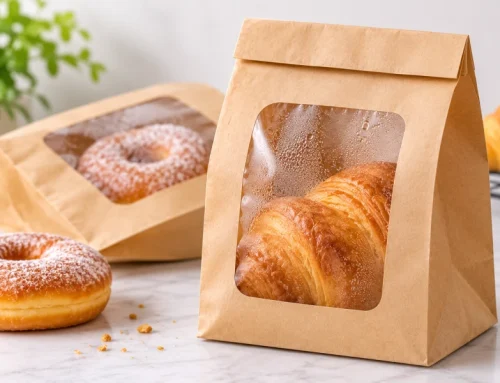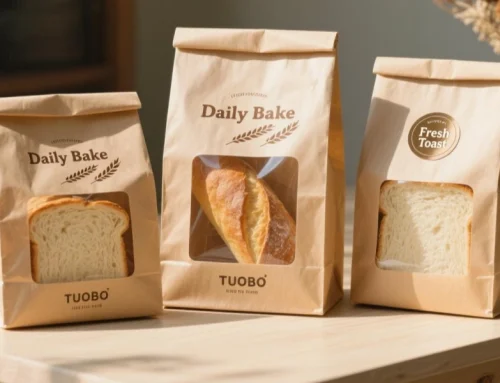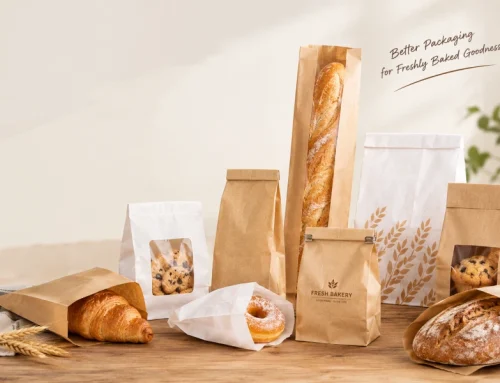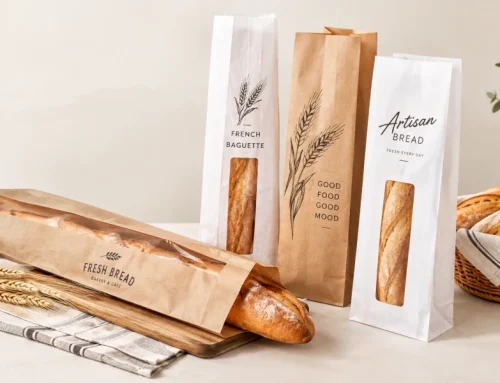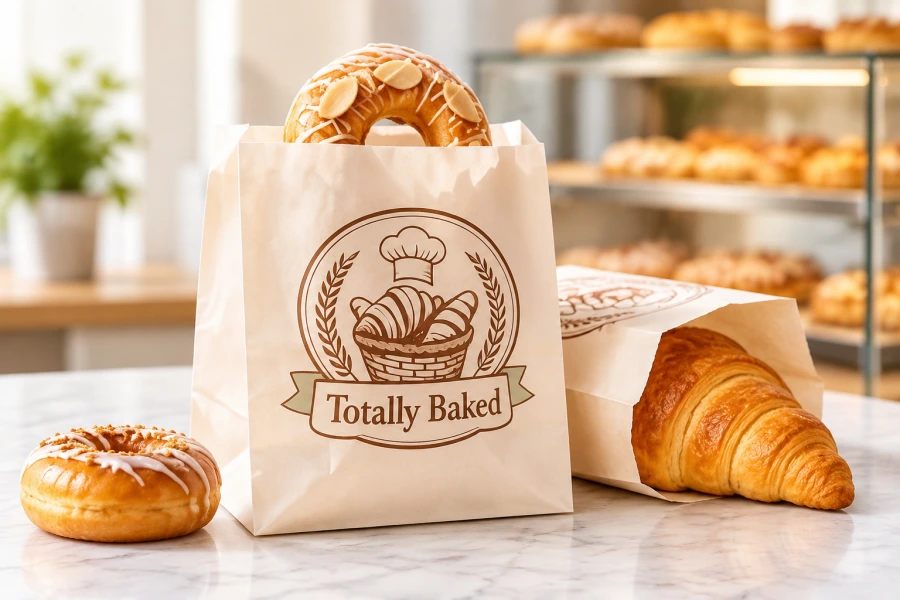
Yes, substances from printing ink on bakery bags can migrate to food under certain conditions. Even when the ink is printed on the outside, components may transfer through the paper or from the printed surface to the unprinted side during stacking and storage.
The actual risk depends on the ink formulation, paper structure, printing and drying conditions, and how the bag is used. For bakery brands and packaging buyers, understanding these factors is essential when choosing custom printed bags for bread, donuts, croissants, and other baked goods.
How Can Printing Ink Migrate from Bakery Bags into Food?
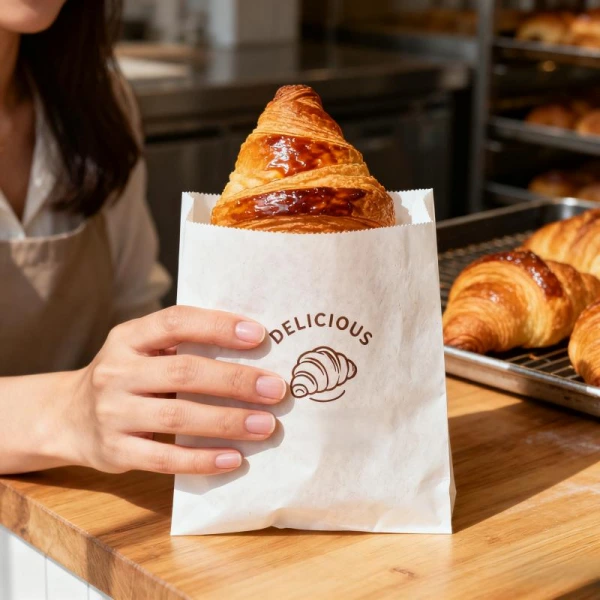
Ink migration refers to the transfer of substances from printing ink or other packaging components to food. For printed paper bags, two mechanisms deserve particular attention.
1. Set-Off Migration
Set-off migration occurs when the printed surface of one bag or sheet contacts the unprinted food-contact surface of another during stacking, storage, or converting. For example, if printed bakery bags are stacked before the ink is sufficiently dry, some ink components may transfer to the inside surface of adjacent bags.
This means that printing only on the outside does not automatically eliminate migration concerns. The way bags are printed, dried, stacked, and stored also matters.
2. Through-Migration
Through-migration occurs when substances from the printed layer pass through the paper substrate and reach the opposite surface. Paper is a porous material, and its ability to restrict the movement of different substances depends on its composition, density, thickness, coatings, and other structural properties.
A paper bag without a suitable functional barrier may require additional assessment, particularly when the food-contact surface is exposed to conditions that encourage substance transfer.
What About Direct Food Contact?
Direct contact is not a separate migration mechanism. It describes how food interacts with the packaging.
If a donut or croissant touches a printed area, the food may come into direct contact with ink components. Even when the printed surface is intended to remain outside, folded edges, seams, and bag construction should be considered during the packaging assessment.
What Factors Affect Ink Migration from Bakery Bags?
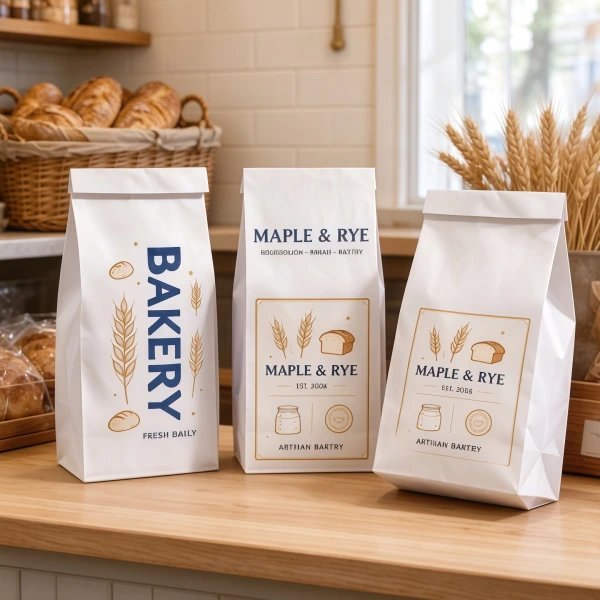
Ink migration is not determined by one material or printing choice. Several factors influence whether substances can transfer from a printed bakery bag to food.
1. Paper Structure and Barrier Properties
Paper grade, fiber structure, thickness, and surface treatment affect how substances move through the material.
An uncoated paper bag and a bag with a functional inner barrier may behave differently. However, the presence of a coating or lining does not automatically prove that the complete package is suitable for every food-contact application.
The relevant question is whether the finished structure has been assessed for its intended use.
2. Ink Formulation
Printing inks contain different components, including pigments, binders, resins, additives, and other substances. Water-based, solvent-based, and UV-curable inks use different formulation and curing systems. However, the ink category alone cannot establish food-contact suitability.
For example, describing an ink as water-based does not confirm that every pigment or additive in its formulation is appropriate for a particular food-contact application.
Buyers should request information about the specific ink system and its suitability for the intended packaging use rather than relying on general labels such as “water-based” or “soy-based.”
3. Printing Coverage and Drying Conditions
Printing coverage and ink application conditions can influence the amount of ink present on the paper.
A design with extensive printed coverage may apply more ink than a small logo, depending on the printing process and ink laydown.
Drying and curing conditions are also important. Inadequate drying may increase the potential for set-off during stacking or subsequent handling.
For this reason, printing quality control should consider both the appearance of the finished design and the conditions required to produce a stable printed surface.
4. Food Type and Intended Use
The food itself influences the conditions under which packaging is used.
Buyers should consider:
- Dry foods: Cookies, crackers, and dry bread generally present different contact conditions from freshly baked, oily products.
- High-fat foods: Butter-rich croissants, donuts, and pastries may require particular attention to substances that can transfer into fatty foods.
- Hot foods: Temperature can affect the transfer of certain substances, depending on their chemical properties.
- Contact time: Longer contact periods may change the amount of substance transferred.
There is no universal rule that a particular food type will always cause higher migration. The actual packaging structure, substances involved, and conditions of use must be evaluated together.
Are Printed Bakery Bags Safe for Direct Food Contact?
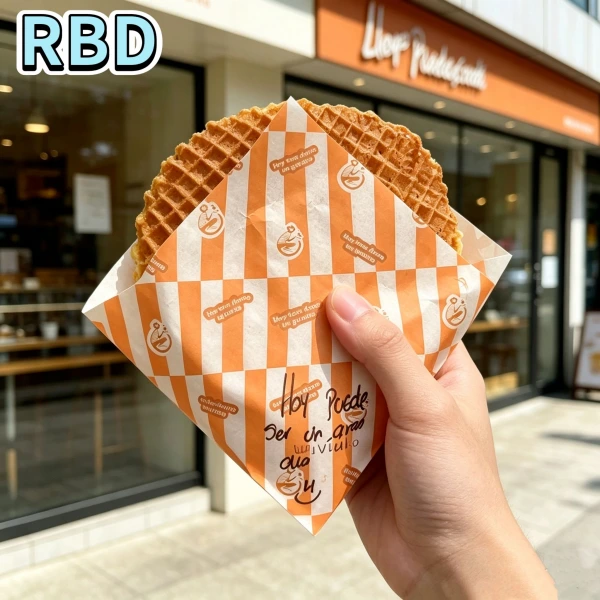
Printed bakery bags can be suitable for food packaging, but their suitability depends on the complete packaging system and its intended conditions of use.
A printed bag may have an unprinted inner surface designed to contact food. However, manufacturers still need to consider whether substances can reach that surface through the paper or by set-off during production and storage.
What Does the 2026 BfR Assessment Tell Us?
In February 2026, Germany’s Federal Institute for Risk Assessment (BfR) published Opinion No. 008/2026, examining the release of certain colourant components from food-contact materials, including printed bakery bags and coloured napkins.
The assessment covered four substances: naphthol AS, HNS, NAAX, and NDPA.
Among the findings:
- Several of the substances were detected in samples of paper packaging for baked goods.
- Naphthol AS was detected in 10 of the 51 samples examined.
- Two samples showed naphthol AS release above the BfR’s recommended assessment value of 50 μg/kg of food.
- The BfR concluded that an increased health risk from the reported transfers was very unlikely overall, while recommending that manufacturers test raw materials and finished products for relevant impurities or their release.
Importantly, the 50 μg/kg value is a BfR recommendation based on its toxicological assessment, not a legally binding, harmonised EU-wide migration limit. The study used a cold-water extraction method, so the figure should not be treated as a universal acceptance limit for every ink, paper bag, or food application.
The assessment highlights why checking the finished packaging matters. A printed design may look perfectly normal while certain substances still require chemical evaluation.
Buyers can consult the original BfR 2026 assessment of printed bakery bags for the full findings.
What Should Buyers Ask Their Bakery Bag Supplier?
Instead of simply asking whether an ink is “food-safe,” buyers should request information that allows the complete packaging structure to be evaluated.
The documentation should relate to the actual paper, ink, coatings, and intended food-contact conditions.
| Supplier’s Answer | What Buyers Should Check |
|---|---|
| “We use food-grade ink.” | Ask which ink formulation is used and what evidence supports its suitability for the intended application |
| “We use water-based ink.” | Confirm the formulation and whether its components have been assessed for the intended food-contact conditions |
| “We have FDA certification.” | Ask for the specific regulatory basis and supporting documentation applicable to the packaging components |
| “The printing is only on the outside.” | Ask how through-migration and set-off are controlled during printing, stacking, and storage |
| “We have a migration test report.” | Check whether the report covers the actual finished packaging structure and relevant conditions of use |
A useful assessment should cover more than an ink supplier’s general declaration. Depending on the application and market, buyers may need:
- Ink formulation or compliance information from the ink supplier.
- Paper and coating specifications.
- Food-contact suitability documentation.
- Relevant migration or extraction test reports.
- Manufacturing and quality-control records.
Understand the Requirements in Your Target Market
Food-contact requirements differ between markets.
For the European Union, Regulation (EC) No 1935/2004 establishes the general safety requirements for food-contact materials. Commission Regulation (EC) No 2023/2006 sets out Good Manufacturing Practice requirements, including specific provisions for printing inks applied to non-food-contact surfaces.
These provisions address transfer through the substrate and set-off during stacking or reel storage. They also require printed surfaces not to come into direct contact with food.
There is no single harmonised EU-specific measure covering all paper and board materials and printing inks. National requirements may therefore also be relevant.
For the United States, FDA requirements depend on the substances and their intended conditions of use. Relevant components may need an applicable regulatory authorisation, such as an appropriate food-contact regulation or Food Contact Notification.
The FDA does not issue a general certification for printed bakery bags. Buyers should ask suppliers to identify the specific regulatory basis supporting the intended use.
For more information, refer to the European Commission’s food-contact materials guidance, EU GMP Regulation 2023/2006, and FDA food packaging guidance.
How to Choose Food-Contact-Suitable Printed Bakery Bags
Before requesting a quotation, buyers should provide enough information for the supplier to understand the actual packaging application.
The following details help make the assessment more relevant.
1. Specify the Food Type
Identify whether the bags will hold dry bread, cookies, donuts, croissants, or other pastries. Fat content, moisture, and temperature can affect the required packaging structure.
2. Confirm the Food-Contact Surface
Explain whether the food will touch the inside paper surface directly or be wrapped in a separate food-contact material first.
This distinction helps determine which surfaces and materials need to be assessed.
3. Define the Printing Requirements
Provide the logo, artwork, number of colours, and approximate print coverage. Large printed areas and small logos may involve different ink application conditions.
4. Identify the Target Market
Specify whether the bags will be sold in the United States, European Union, or other markets. This allows the supplier to identify the relevant regulatory and documentation requirements.
5. Request Evidence for the Finished Structure
Ask whether the supplier can provide supporting documentation for the actual combination of paper, ink, coatings, and other relevant components.
If migration testing is necessary, the laboratory should select suitable test conditions and food simulants based on the intended food type, contact time, and temperature. A test report is only useful when its scope matches the packaging application being evaluated.
Frequently Asked Questions
Can Ink on the Outside of a Paper Bag Transfer to Food?
Yes. Ink components may transfer through the paper substrate or by set-off when the printed surface contacts the unprinted side of another bag during stacking or storage. Printing on the outside reduces direct contact but does not automatically eliminate migration concerns.
Is Water-Based Ink Safe for Food Packaging?
Not automatically. Water-based ink describes the liquid carrier system, not the overall food-contact suitability of the formulation. Pigments, binders, additives, and other components still need to be evaluated for the intended application.
What Is Set-Off Migration in Paper Packaging?
Set-off migration occurs when substances from a printed surface transfer to another surface through direct contact, commonly during stacking or reel storage. It can happen even when the food-contact side is not intentionally printed.
Do Printed Bakery Bags Need Migration Testing?
Testing requirements depend on the packaging structure, intended food contact, applicable regulations, and available compliance evidence. Migration or extraction testing may be appropriate when documentation alone is insufficient to demonstrate suitability for the intended use.
Can Printed Paper Bags Be Used for Greasy Food?
Yes, provided the complete packaging structure is suitable for the intended food and contact conditions. Buyers should consider grease resistance, potential ink migration, and whether an additional food-contact wrapper or functional barrier is needed.
Choosing Custom Printed Bakery Bags for Your Business
Custom printed bakery bags help bakeries create consistent brand presentation, but printing quality should go hand in hand with appropriate food-contact material selection.
For bakery brands, restaurant chains, and packaging distributors, the key is to evaluate the complete bag rather than relying on a single claim about paper or ink. Paper structure, ink formulation, printing conditions, and actual food-contact use all matter.
RBD Packaging provides custom paper bag solutions for food and retail applications. If you are sourcing printed bakery bags for your business, share your bag dimensions, artwork, food application, and target market with our team so the packaging requirements can be reviewed before sampling and bulk production.